|
Judge Thomas Wharton Collens, "Preaching" (March 1868)
Upton B. Sinclair, The Jungle (1905) (describes conditions when America was a Third World country under capitalism, before socialists, communists, unionists, and other reformers achieved the political and social climate and concern for passing laws such as job safety, unemployment compensation, pure food and drug, minimum wage, worker compensation, anti-fraud, and other laws. In that conservative / Third World era of America, increasing worker pay was rare. See Sheryl L. James, "Birth of the Middle Class," Hour Detroit, January 2014, p 86, "Doubling daily wages to $5 seems pretty unexciting today, but in 1914, it was beyond sensational. There was no middle class to speak of. Most people lived in poverty. They worked long hours at miserable jobs, and they could lose those jobs for no reason . . . . No one could afford to buy anything beyond subsistence items, and they weren't even assured of that. . . average line workers made $2.34 a day; some made less. It was hardly enough to live on, and there were no such things as insurance, pensions, or sick pay. People couldn't even go to the bathroom on company time." See also R. J. Eskow, "What America Would Look Like if Libertarians Got Their Way" (25 December 2014).
Machinists Monthly Journal Christian Socialism Series (August 1906)
Prof. Edward Alsworth Ross, Sin and Society: An Analysis of Latter-Day Iniquity (Boston and New York: Houghton Mifflin, 1907). Cited in Prof. Parenti's Land of Idols: Political Mythology in America (New York: St. Martin's Press, 1993), on "religious leaders" who "evade social issues such as poverty, oppression and militarism [the beam], and [instead focus solely] on personal pieties, sectarian intolerance, and a prudish moralism [the mote]. . . . Sin and virture are defined as private matters unrelated to economic issues. Thus a worker who filches something from the business firm is guilty of theft, but the firm owners who grow rich off the underpaid labor of workers [James 5:1-5] are not considered thieves. Government policy that tolerates 'pornography' in art and literature is sinful, while government policy that pursues wars of aggression and favors the rich over the poor is not. Virture is [solely] a matter of loving and obeying God, rather than [the Bible Society Management Laws] advancing the collective human condition," at pp 44 and 179. [See context, and Rev. Jackson Stitt Wilson (1868-1942), How I Became A Socialist (Berkeley, CA, 1911), saying similarly.]
Rev. Dennis Hird, Jesus the Socialist (London: The Clarion Press, 1908)
Upton B. Sinclair, The Profits Of Religion: An Essay in Economic Interpretation: A Study of Supernaturalism as a Source of Income and a Shield to Privilege (New York: Vanguard Press, 1917)
Prof. Joseph A. Schumpeter, Ph.D., Zur Soziologie der Imperialismen (Tübingen: Mohr, 1919), transl. Imperialism and Social Classes (1951), esp. p 51: "There was no corner of the known world where some interest was not alleged to be in danger or under actual attack. If the interests were not Roman, they were those of Rome's allies; and if Rome had no allies, the allies would be invented. When it was utterly impossible to contrive such an interest -- why, then it was the national honor that had been insulted. The fight was always invested with an aura of legality. Rome was always being attacked by evil-minded neighbors. . . . The whole world was pervaded by a host of enemies, it was manifestly Rome's duty to guard against their indubitably aggressive designs. Even less than in the cases that have already been discussed, can an attempt be made here to comprehend these wars of conquest from the point of view of concrete objectives. Here there was neither a warrior nation in our sense, nor, in the beginning, a military despotism or an aristocracy of specifically military orientation. Thus there is but one way to an understanding: scrutiny of domestic class interests, the question of who stood to gain." (Note: when debt results, it can be cancelled as "odious debt," "one that served to enrich the clique in power, rather than improving the living conditions of the people," says the article by Razmig Keucheyan, "The French Are Right: Tear Up Public Debt" (The Guardian, 9 June 2014).)
Count Richard von Coudenhove-Kalergi (1894-1972, "Pan-european" publicist and political figure), in Praktischer Idealismus ("Practical Idealism") (Vienna, 1925) ("Today democracy is a facade of plutocracy. Because the peoples will not tolerate naked plutocracy, power is nominally turned over to them, while real power rests in the hands of the plutocrats. In democracies, whether republican or monarchical, the statesmen are marionettes, and the capitalists are the wire pullers: they dictate the political guidelines, they control the voters by buying public opinion, through business and social connections [whereby they control] higher government officials . . . . The plutocracy of today is more powerful than the aristocracy of the past, because nothing stands above it except the state, which is its tool and helper." (Review)
Sinclair Lewis, Elmer Gantry (1927) (Excerpt)
Liston Pope, Millhands and Preachers (New Haven: Yale Univ Press, 1942)
(Cited in Prof. Michael Parenti, Land of Idols: Political Mythology in America (New York: St. Martin's Press, 1993): "most Protestant and Catholic Church leaders in Europe and North America approved of the business community's [secular, anti-Biblical] views on property and economic inequality. Labor unions, strikes, minimum wage laws, and other reforms were denounced as interferences with 'natural law' [not, note, with the Bible Society Management Laws]. . . . Sin was defined [primarily] in personal terms, a failure to restrain pleasureable impulses and other self-indulgences, an infection of the soul arising from flawed spiritual development rather than from damaging social conditions [existing in defiance of the Bible Society Management Laws]. Religion was used to teach workers the virtues of hard work, punctuality, and compliance to managerial authoroity. . . . Religion had little effect in softening the practices of capitalists, even the [allegedly] more religious ones. . . . The collusion betweeen state [big business] and church in the defense of economic privileges [inequities contrary to
the Bible Society Management Laws] and ideological monopoly continues to this day," at pp 50 and 180. [See context.]
Charles Wright Mills, Ph.D., White Collar: The American Middle Classes (1951)
Prof. Richard Hofstadter, Anti-Intellectualism in American Life (New York: Alfred A. Knopf, 1962-4) (Excerpt)
Rev. Gustavo Gutiérrez, Theology of Liberation (1971) and The Power of the Poor in History aka La fuerza histórica de los pobres: selección de trabajos (1979, trans. Robert R. Barr:Maryknoll, NY: Orbis Books, 1983) (Context) (Povery is not "accidental but structural, something that society conspires to ensure, so that there will always be enough poor people to keep wages down. . . . the God of the Bible makes 'a preferential option for the poor,' rather than (as the institutional church so often implied) for the rich. God loves all persons, but has a special concern for the victims, and sides with them in their struggle for justice. The true concern of both the Bible and the Christian tradition . . . is the promise of liberation, a three-fold liberation from unjust social structures, from a sense of fate, and from personal sin and guilt.")
Philip Agee, Inside the Company: A CIA Diary (1975) (exposing CIA interference in other nation's internal affairs, interference the US would not accept inside itself; the CIA interferes to prevent morality, especially economic morality, being from being enacted into law)
John Stockwell, In Search of Enemies A CIA Story (1978)
Philip Agee and Louis Wolf, Dirty Work: The CIA in Western Europe (Lyle Stuart, Inc., 1978)
Philip Agee and Louis Wolf (Editor), Dirty Work 2: The CIA in Africa (Lyle Stuart, Inc., January 1979)
Allan Francovich, Inside the CIA: On Company Business (1980) (documentary on the "CIA's history, from its founding as an instrument for secret interventions [against progressives] in 1947; its role in [corrupting] the Italian elections a few months later; 1950's propaganda and trade union operations in Europe; the coups in Iran and Guatemala; the Bay of Pigs invasion of Cuba; assassination attempts [and actions] against foreign leaders such as Patrice Lumumba; the coups, torture and murder in Brazil and Chile; and paramilitary operations in Angola in the mid-70's [thereby depicting] the hypocrisy and behind-the-scenes violence that pervaded U.S. foreign policy," says the next reference below, p 334; and "union bashing operations in France--all started in the 1940's," p 385. And see CIA response video)
Philip Agee, On the Run (Lyle Stuart, Inc., 1987) (on CIA reprisal and retaliation against Agee for his above-cited writings exposing agency misconduct)
Prof. Howard Zinn, A People's History of the United States (New York: Harper and Row, 1980, reprinted, HarperPerennial, 1990)
(Written Excerpt; Video, and Video Excerpt; see also his “Three Holy Wars Video”)
William Blum, The CIA: A Forgotten History (London: Zed Books, 1986)
Prof. David E. Stannard, American Holocaust: The Conquest of the New World (Oxford Univ. Press, 1992), e.g., pp 150, 242, etc. ("For four hundred years - from the first Spanish assaults against the Arawak people of Hispaniola in the 1490s to the U.S. Army's massacre of Sioux Indians at Wounded Knee in the 1890s - the indigenous inhabitants of North and South America endured an unending firestorm of violence. During that time the native population of the Western Hemisphere declined by as many as one hundred million people. Indeed, as historian David E. Stannard argues in this stunning new book, the European and white American destruction of the native peoples of the Americas was the most massive act of genocide in the history of the world. Stannard begins with a portrait of the enormous richness and diversity of life in the Americas prior to Columbus's fateful voyage in 1492. He then follows the path of genocide from the Indies to Mexico and Central and South America, then north to Florida, Virginia, and New England, and finally out across the Great Plains and Southwest to California and the North Pacific Coast. Stannard reveals that wherever Europeans or white Americans went, the native people were caught between imported plagues and barbarous atrocities, typically resulting in the annihilation of 95 percent of their populations."
Donald L. Barlett and James B. Steele, America: What Went Wrong? (Kansas City: Andrews and McMeel, 1992) (how the rulemakers in Washington and the dealmakers on Wall Street have changed the rules . . .to favor the privileged, the powerful, and the influential--at the expense of everyone else")
Paul
Farmer, M.D., Ph.D., The Uses of Haiti (Common Courage Press, 1994 and 2006) (on Haiti history including U.S. imperialism vs Haiti) (Excerpts; Critical Review)
Prof. Ulrich Duchrow, Alternatives to Global Capitalism: Drawn from Biblical History Designed for Political Action (Utrecht: International Books, 1995)
William Blum, Killing Hope (Common Courage Press, 1995)
William Blum, Rogue State: A Guide to the World's Only Superpower (Common Courage Press, 2001 and 2002) (Review)
Prof. Eric Alterman (English, Brooklyn College), What Liberal Media?: The Truth About Bias and the News (Perseus Books, 2003) (“Until now, not a single journalist has undertaken an investigation, let alone a refutation, of the myth that the mainstream media slants the news to the left, thereby duping the American public and keeping it ignorant of the truth about the world in which we live. In What Liberal Media? Eric Alterman takes these accusations seriously and in brisk, light-hearted prose exposes the fallacy of the vast left-wing conspiracy that never was. . . It isn't individual journalists who dictate the news, he claims, but rather the corporate news structure--be it television or print--that determines what we see and read. This very structure, much more than the personal ideologies of prominent news figures, defines the current state of the media--one that Alterman describes as more conservatively oriented than critics on the right are willing to admit. Armed with data that debunk many of the more inflammatory accusations made against the media and expose just who controls the purse strings of the press, What Liberal Media? is a must-read for all those outraged, confused, or just plain disgusted at the current critical stalemate about who the media serves and why it exists. . . . The idea that the media might, for reasons of ownership, economics, class or outside pressure, actually be more sympathetic to conservative causes than to liberal ones is widely considered to be simply beyond the pale of civilized discourse [censored].”) See also
"15 things everyone would know if there were a liberal media" (7 August 2013), and Prof.
Parenti's "Myth of the Leftist Media" (video).
Prof. Orson Scott Card, “Introduction,” The War of the Worlds (Scholastic, 2003) (“Relatively slight technological advantages had allowed Europeans to establish colonies on every continent. . . . those nations that resisted the European presence soon discovered the Europeans' advantage in weaponry. . . . In 1898 [Europeans' superior] weaponry was still being used against ill-armed and badly organized natives or against colonials with no way to compete with the force the great European empires could bring to bear against them. The great rush to colonize Africa was underway . . . wherever a European nation decided to establish its authority, it could sweep away all resistance the way someone might brush a spider off his arm. . . . There was a very good reason why Africa had not been colonized years before [the late 19th century]. It wasn't for lack of [European] trying. . . . Why no invasion? Because Africa, the oldest home of the human race, had developed many endemic diseases that Africans had adapted to, but Europeans had not . . . . So when Europeans first [centuries earlier] tried to land and establish fortresses on the shores of sub-Saharan Africa, they were wiped out by plagues. . . . . It was not until medicines like quinine made it possible for Europeans to survive malaira—and mosquito netting made it possible to avoid catching it in the first place—that the colonization of Africa became possible. . . . disease [had] served sub-Saharan Africa as an impregnable fortress for more than three centuries. . . . . so H. G. Wells was not writing about some remote, unimaginable future, or some fantastical universe in which impossible things might happen. He was writing about things that had already happened many times in fairly recent history. The only important thing he [Wells] changed about the story was that he put the shoe on the other foot: It was the world's only superpower, England, that was being invaded by technologically irresistible enemies, and it was not some secret weapon but rather a common, endemic disease that protected the natives from the alien invaders.”)
Franz J. Hinkelammert, Ph.D., and Prof. Ulrich. Duchrow, Property for People, Not for Profit: Alternatives to the Global Tyranny of Capital (2004)
CUBA: Weathering the Storm: Lessons in Risk Reduction from Cuba (An Oxfam America Report, 2004) ("there is no comprehensive substitute for reducing poverty and promoting social and economic equity as the fundamental long-term strategies to reduce vulnerability to hazards [e.g., hurricanes]. Giving the whole population access to resources like literacy, roads, and electricity, as is the case in Cuba, multiplies the effect of disaster preparation and response measures. Countries without those levels of social development do not have these multiplying effects for their risk reduction measures. . . . it is clear that Cuba has a real advantage in this.")
Prof. Greg Grandin, Ph.D., The Last Colonial Massacre: Latin America in the Cold War (University of Chicago Press, 2004)
John Perkins, Confessions of an Economic Hit Man (San Francisco: Berrett-Koehler Pub, 2004) (cites role in helping the U.S. cheat impoverished countries by (a) loans above ability to repay, then (b) taking their economies over, with (c) assassinations of officials who catch on) (Review 1; Review 2)
William Blum, Killing Hope: U.S. Military and C.I.A. Interventions Since World War II (Zed Press, 2003; Common Courage Press, rev. ed., 2004) (Excerpt)
Prof. Greg Grandin, Ph.D., Empire’s Workshop: Latin America, the United States, and the Rise of the New Imperialism (American Empire Project, Metropolitan Books, 2006)
Prof. Howard Zinn, Paul Buhle, and Michael Konopacki, A People's History of American Empire (Macmillan, April 2008) (Video)
Prof. Adam Howard, "Unlearning the Lessons of Privilege," Teaching Social Responsibility, Vol. 66(#8), May 2009) (has example of contempt of the affluent capitalist class for non-members of same). (Prof. Parenti in
Land of Idols: Political Mythology in America (New York: St. Martin's Press, 1993), Chapter 8, “Class Myth and Class Bigotry,” § 3, “Class Distances,” pp 105-106, elaborates, and concludes, “class consciousness is not left to chance.” The next step for the rich is depicted in § 4, “Class Injury: Hating the Poor,” pp 106-112.) See also "SECRET VIDEO: Romney Tells Millionaire Donors What He REALLY Thinks of Obama Voters" (17 September 2012) ("When he doesn't know a camera's rolling, the GOP candidate shows his disdain for half of America." Romney's contempt for America and the non-super-rich comes through. The 1913 income tax was intended to tax only what are now called "the 1%" -- people making over $300,000 - $400,000, inflation adjusted. For example of the rich vehemently opposing being taxed, demanding the poor and middle class be taxed instead, finally after centuries leading to revolution, see, e.g., "The Rise and Fall of Versailles" (Video Series, 8 July 2013), especially Part 3.
Prof. Adam Howard, Learning Privilege: Lessons of Power and Identity in Affluent Schooling (London: Routledge, 2007) ("Explores what educators, students and families at elite schools value most in education and how these values guide ways of knowing and doing that both create high standards for their educational programs and reinforce privilege as a collective identity. This book illustrates the ways that affluent students construct their own privilege.") See also Rev. S. R. Shearer's analysis of the actual pro-death beliefs of such people whose policies intentionally increase the death rate among the non-elite, in "How the GOP and its ally, the Religious Right, have created a Death Cult" (10 February 2012) ("Contemporary conservatism is bent on destroying the social safety net (basic programs such as Social Security and unemployment insurance). . . . As recent data suggests, poverty leads to death and a diminished lifespan. When the ... Republicans stand against food stamps, unemployment insurance, Medicaid, and other programs for those displaced by the Great Recession, through actions both direct and indirect, they are in fact killing people." Such people talk pro-life, but in fact are pro-death by their voting. And they support debtors' prisons, see Eric Ruder, "Guilty of being poor" (13 March 2012).)
Phillip Bannowsky, “Capitalism Produces Rich Bankers, but Socialism Produces Happiness” (The News Journal [Delaware], 24 May 2009) (“Socialism is better than capitalism. So say 20 percent of Americans, and another 27 percent say they can't say which is better, according to an April 9 Rasmussen poll. . . . Forbes Magazine . . . report this month that the happiest countries tend to be Scandinavian socialist democracies. . . . enjoy entitlements like free college, extensive elder care, and 52-week paid maternity leave.”)
(See also James Kirkup, "Occupy protesters were right, says Bank of England official" (Telegraph, 29 Oct 2012) (Occupy exposed that "at the heart of the global financial crisis, were — and are — problems of deep and rising inequality.”)
Pam Martens, "Our Economy Is Going to Keep Tanking Until We Stop Shoveling Billions to Rich People (CounterPunch, 2 June 2009) ("we have been a nation ignoring massive wealth transfer and wealth concentration through a rigged Wall Street. As simple and clear as this picture is [politicians] are unwilling to connect the cause and effect of wealth in too few hands to bankruptcies and a tanking economy. Wealth-deprived consumers can't buy the goods and services being produced. This leads to repetitive cycles of layoffs and growing unemployment which leads to more wealth-deprived consumers leading to more overcapacity in production plants, more layoffs, more shrinking purchasing power. The accompanying, and equally dangerous, problem is that concentrated wealth stifles the very innovation that is necessary to create new industries, new jobs and lead us out of the downward economic spiral. Let's think about the individuals who tapped into Wall Street's rigged wealth transfer system and what they have done with their ill-gotten loot: typically, they own three or more homes, fancy cars, multiple country club memberships, airplanes, yachts, and numbered offshore bank accounts. The problem is, they just can't buy enough to compensate for the purchases they have deprived hundreds of thousands of other consumers from being able to make.")
Thom Hartmann, “Profiling CEOs and Their Sociopathic Paychecks” (Common- Dreams.org, 27 July 2009) (“Executives and other highly compensated employees now receive more than one-third of all pay in the US . . . Highly paid employees received nearly $2.1 trillion of the $6.4 trillion in total US pay in 2007, the latest figures available.” —citing the Wall Street Journal) (Context.)
Malcolm Gladwell, Outliers: The Story of Success (2009) ("Challenging our cherished belief of the 'self-made man,' he makes the democratic assertion that superstars don't arise out of nowhere, propelled by genius and talent. Examining the lives of outliers from Mozart to Bill Gates, he builds a convincing case that successful people rise on a tide of advantages, 'some deserved, some not, some earned, some just plain lucky.'")
Jonathan Tasini, The Audacity of Greed: Free Markets, Corporate Thieves, and the Looting fxof America (IG Pub, 1 September 2009) ("There’s only so much money in a company, so that money that was taken by the few was then not available for the many–the workers. The larger robbery was what happened to American workers in that they weren’t paid in relation to how hard they’d worked. Over the last 30 years productivity has skyrocketed, and yet wages have been flat. And so the robbery is of workers who were not paid for a fair share of their productivity. This is the notion of the American Dream–that you worked hard and kept your nose clean, you would get a fair day’s pay. And that just vanished from the American scene.") (Interview)

Naomi Klein, The Rise
of Disaster Capitalism (27 October 2009) ("the author debunks the idea that capitalism and peace go hand in hand. Instead, she discusses the role of greed in war, hitting on moments from contemporary Iraq to South America in the 1970s [and explains] the ideas and research behind her bestselling book, The Shock
Doctrine: The Rise of Disaster Capitalism [Henry Holt and Co., 2007]. In this riveting lecture and interview, Klein challenges and exposes the popular myth of the free market economy’s peaceful global victory. Around the world there are people with power who are cashing in on chaos, exploiting bloodshed and catastrophe to brutally implement their policies. They are the shock doctors. From Chile in 1973 to Iraq today, this is the chilling tale of how a few are making a killing while more are getting killed." [See video, and background.])
Laurence M. Vance, Ph.D., "Military Doublespeak" (19 November 2009)
Jon Carroll, "Opium headaches" (Friday, 4 December 2009) (on the looking the other on opium in Afghanistan)
Danny Glover, "Legacy of US-Haitian Relations Dating Back to 1804" (January 2010)
Tom Gallagher, "The Remarkable Resilience of This Socialism Thing" (1 June 2010) ("Twenty-nine percent of the nation, it seems, has "a positive reaction to the word "socialism" (with 59% in the negative) -- according to the Pew Research Center's latest findings. [And see] the February 16, 2009 Newsweek cover announcing, "'We are all socialists now' . . . someone explained how he held a "positive view of socialism because after all it's what Our Lady [Bible Religion] wants.'"
Prof. Paul R. Krugman, Ph.D., "Defining Prosperity Down" (New York Times, 1 August 2010) ("our governing elite just doesn't care - that a once-unthinkable level of economic distress is in the process of becoming the new normal . . . will soon declare that high unemployment is 'structural,' a permanent part of the economic landscape . . . condemning large numbers of Americans to long-term joblessness.")
George Monbiot, "The Tea Party Movement: Deluded and Inspired by Billionaires: By funding numerous rightwing organisations, the mega-rich Koch brothers have duped millions into supporting big business" (The Guardian/UK, Monday, 25 October 2010) ("An Astroturf campaign is a fake grassroots movement: it purports to be a spontaneous uprising of concerned citizens, but in reality it is founded and funded by elite interests. Some Astroturf campaigns have no grassroots component at all. Others catalyse and direct real mobilisations. The Tea Party belongs in the second category. It is mostly composed of passionate, well-meaning people who think they are fighting elite power, unaware that they have been organised by the very interests they believe they are confronting. We now have powerful evidence that the movement was established and has been guided with the help of money from billionaires and big business.")
Bill Quigley, “Socialism? The Rich Are Winning the US Class War: Facts Show Rich Getting Richer, Everyone Else Poorer” (CommonDreams.org, Monday, 25 October 2010) (“The rich and their paid false prophets are doing a bang up job deceiving the poor and middle class. They have convinced many that an evil socialism is alive in the land and it is taking their fair share. But the deception cannot last – facts say otherwise. Yes, there is a class war – the war of the rich on the poor and the middle class – and the rich are winning. That war has been going on for years. Look at the facts – facts the rich and their false paid prophets do not want people to know. Let Glen Beck go on about socialists descending on Washington. Allow Rush Limbaugh to rail about 'class warfare for a leftist agenda that will destroy our society.' They are well compensated false prophets for the rich. The truth is that for the several decades the rich in the US have been getting richer and the poor and middle class have been getting poorer.”
Todd, "Mexico: A War Against Organized Crime Becomes a War Against Organized Labor" (27 October 2010) ("the US . . . hides its military involvement in Mexico on behalf of America's 'richy-riches' -- and it is doing so under cover of the 'War on Drugs' -- a war that is directed more at independent unions in Mexico fighting for the welfare of Mexico's huge underclass than anything else. . . . the government of Felipe Calderon, who was imposed by fraud in the July 2006 presidential election, closed the public utility co. Luz y Fuerza del Centro with the aim of privatizing this nationalized corporation and destroying the powerful and militant Mexican Electrical Workers Union (Sindicato Mexicano de Electricistas, or SME)."
During the 1950's McCarthy era purges, "universities . . . ousted . . . thousands of . . . professors [to] decimate the country's intellectual life," says Chris Hedges, M.Th., "The Origin of America’s Intellectual Vacuum" (Truthdig, 15 November 2010). " The purges, most carried out internally and away from public view, announced to everyone inside the universities that dissent was not protected. The confrontation of ideas was killed. 'Political discourse has been impoverished since then.' . . . . The result is an impoverishment of ideas and analysis at a moment when we desperately need radical voices to make sense of the corporate destruction of the global economy and the ecosystem. . . . . 'Ideas which were on the agenda a hundred years ago and sixty years ago have dropped out of memory . . . .'" (And see Michael Steven Smith, J.D.,
"Purging the Educators" (5 June 2013), and general education decline context.
This attack on education had included earlier attacks such as described by Ronald W. Evans, This Happened in America: Harold Rugg and the Censure of Social Studies (2007). See Prof. Harold Rugg's Introduction to the Problems of American Culture that because of its honesty and integrity, was attacked for social and economic analysis, thus ending that part of education in U.S. history texts.
Prof. Juan R. I. Cole, Ph.D., "Labor movement drives Egypt, Tunisia protests" (Detroit News, 10 February 2011), pp 1B and 3B.
Dave Johnson, "Nine Pictures Of The Extreme Income/Wealth Gap" (14 February 2011) (“Many people don’t understand our country’s problem of concentration of income and wealth because they don’t see it. People just don't understand how much wealth there is at the top now. The wealth at the top is so extreme that it is beyond most people’s ability to comprehend. . . . What do people do with all that money? Good question. After you own a stable of politicians who will cut your taxes, there are still a few more things you can buy. . . . . Worse Than Egypt In fact our country's concentration of wealth is worse than Egypt.”
Michael Moore, "America is NOT Broke" (Madison, Wisconsin, 5 March 2011)
John Nichols, "How Socialists built America" (The Nation, 13 April 2011)
Robert Scheer, "The New Corporate World Order" (20 April 2011) ("The debate over Republicans’ insistence on continued tax breaks for the superrich and the corporations they run should come to a screeching halt with the report in Tuesday’s Wall Street Journal headlined 'Big U.S. Firms Shift Hiring Abroad.' Those tax breaks over the past decade, leaving some corporations such as General Electric to pay no taxes at all, were supposed to lead to job creation, but just the opposite has occurred. As the WSJ put it, the multinational companies 'cut their work forces in the U.S. by 2.9 million during the 2000s while increasing employment overseas by 2.4 million, new data from the U.S. Commerce Department show.'”)
Rania Khalek, "In America, Being Poor is a Criminal Offense" (CommonDreams, 14 May 2011) ("I can’t recall any Republicans or Democrats demanding that the CEO of Bank of America or JP Morgan disclose inventory of their vacation homes, private jets, and yachts before bailing them out in what amounts to corporate welfare. Nor did they insist that these CEOs submit to alcohol and drug screenings before receiving taxpayer money.")
Kathy Nathan, "Pinkney Interview: Benton Harbor: The Stolen Town" (Saturday, 28 May 2011) ("on corporate crime and Benton Harbor")
Prof. Robert Reich, "The Truth About the American Economy" (30 May 2011) ("During three decades from 1947 to 1977, the nation implemented what might be called a basic bargain with American workers. Employers paid them enough to buy what they produced. . . . The middle class had the means to buy, and their buying created new jobs. As the economy grew, the national debt shrank as a percentage of it. . . . Americans also enjoyed economic security against the risks of economic life — not only unemployment benefits but also, through Social Security, insurance against disability, loss of a major breadwinner, workplace injury and inability to save enough for retirement. In 1965 came health insurance for the elderly and the poor (Medicare and Medicaid). Economic security proved the handmaiden of prosperity. In requiring Americans to share the costs of adversity it enabled them to share the benefits of peace of mind. . . . [Post 1977] Government could have enforced the basic bargain. But it did the opposite. It slashed public goods and investments — whacking school budgets, increasing the cost of public higher education, reducing job training, cutting public transportation and allowing bridges, ports and highways to corrode. . . . All three coping mechanisms have been exhausted. The fundamental economic challenge ahead is to restore the vast American middle class. . . . we cannot have a growing and vibrant economy without a growing and vibrant middle class.")
Prof. Charles S. Merrill, "Americans returning to feudal times" (Lexington (Ky.) Herald-Leader, 4 June 2011) ("a bunch of really sordid fat cats are pushing hard to reconfigure us as the Feudal States of America.
. . . Either we wake up and push back, or they succeed, and we are all serfs. Again.")
Mike Elk, "The Good News in Wisconsin That the Media Isn’t Covering" (In These Times, 8 June 2011) (on unions re-implementing "the old-school style of unionism with our rank-and-file members . . . to involve people in their unions and make them feel like they run the unions, not their staff representatives")
Robert Parry, "How Greed Destroys America: America’s corporate chieftains are living like kings while the middle class stagnates and shrivels" (28 June 2011) ("the threat to a healthy democracy from concentrated wealth had been known to American leaders for generations. A century ago, it was Republican President Theodore Roosevelt who advocated for a progressive income tax and an estate tax."
Michael Moore, "30 Years Ago Today: The Day the Middle Class Died" (5 August 2011) ("Beginning on this date, 30 years ago, Big Business and the Right Wing decided to 'go for it' -- to see if they could actually destroy the middle class so that they could become richer themselves.")
Frank Schaeffer, "How Christian Fundamentalism Helped Empower the Top 1% to Exploit the 99%" (13 October 2011) (" without the fundamentalists and their 'values' issues, many in the lower 99 percent could not have been convinced to vote against their (our) economic self-interest; in other words, vote for Republicans who only serve billionaires. . . . Republicans . . . pander to the Religious Right on the social issues -- abortion, gay rights, prayer in schools, creationism in textbooks, and not so subtly the endorsement of religious schools to help white evangelicals and Roman Catholics avoid integration -- as long as the Religious Right turned a blind eye to the fact that the Republican Party would sell the soul of the country to corporate America, a country-within-a-country where 1 percent of the population have more wealth than the 99 percent."
 Michael Winterbottom, Mat Whitecross, and Naomi Klein, The Shock Doctrine: Disaster Capitalism in Action (18 October 2011) ("Naomi Klein's . . . book which explores how both natural and man-made disasters are used to force disadvantageous political and economic changes on unwilling governments is brought to the screen in this documentary . . . . Using electroshock treatment as a metaphor -- a harsh jolt to the body and brain that, after being embraced as a healing method, was in turn discovered to cause more harm than good -- THE SHOCK DOCTRINE explores how the United States, with the help of the C.I.A., became enamored of Milton Friedman's [anti-Biblical] interpretation of free-market capitalism and attempted to persuade developing nations of its value. However, since fully unregulated markets tended to create an unbalanced economic climate in which a small number of people became extremely wealthy and vast numbers were plunged into poverty, the United States was only successful at selling free market deregulation to countries in crisis who had no practical choice than to do what the wealthiest and most powerful nation on Earth demanded. The results led to both widespread privation and violence in Russia, Poland, Chile, South Africa and the Middle East, and THE SHOCK DOCTRINE explains how this happened, where it's still going on, and what can be done to stop it.")
"Why Did They Kill Muammar Gaddafi/" (26 October 2011) (provides background on the social justice projects in Libya under Gaddafi)
"'Near Poor' Struggling Just Above Poverty Startle the Census" (Friday, 18 November 2011) (census data showing "51 million people with incomes less than 50 percent above the poverty line. That number of Americans is 76 percent higher than the official account, published in September. All told, that places 100 million people — one in three Americans — either in poverty or in the fretful zone just above it")
Michael A. McCarthy, "What the Labor Movement Can Learn From an Art Auction" (Sunday, 20 November 2011) ("Disruptive tactics were the basis of labor's revival in the 1930s. Most labor historians call the 1920s the nonunion era. Inequality in society during those years was roughly at today's level, and unions were even more beaten back and subdued than the ones around us. . . . Yet in the wake of the economic depression emanating from the 1929 stock market crash, working people - those with and without jobs - put themselves on the line. In many cases they got arrested, and in some cases, their fates were worse. But on balance, their engagement in more heated forms of disruption shut down business as usual and became the core force behind the Wagner Act and the Social Security Act in 1935. Three of the most famous strikes in American history occurred in 1934: the Auto-Lite strike in Toledo, the Teamster-led general strike in Minneapolis, and the San Francisco general strike started by the longshore and maritime workers. Part of what made these strikes so incredibly important to American history and the American labor movement was just how highly charged they were. They involved clashes with the police and national guardsman, the destruction of property, and the occupation of workplaces. Strikers and their supporters put a lot on the line, and because they did, they won. Actually, we all won. Those kinds of disruptive strategies were central to reviving the labor movement and building real social protections that many Americans still enjoy.")
Matt Stoller, "Towards a Creditor State - One in Seven Americans Pursued by Debt Collectors" (Saturday, 3 March 2012) ("Ten years ago, one in fourteen American consumers were pursued by debt collectors. Today it’s one in seven. . . . There are now thousands of people legally jailed because they aren’t paying their bills, ie. debtor’s prisons have returned. Occasionally elites let it slip that this is not an accident, but is their goal – former Comptroller General David Walker has wistfully pined for debtor’s prisons overtly (on CNBC, no less). . . . the percentage of people being tracked down by third party collection agencies suggests we live in a different country than we did just ten years ago.")
Rebecca Solnit, "American Dystopia: Welcome to the 2012 Hunger Games: Sending Debt Peonage, Poverty, and Freaky Weather Into the Arena"
(1 May 2012) ("The Return of Debt Peonage: In The Hunger Games, kids in poor families take out extra chances in their District lottery -- that is, extra chances to die -- in return for extra food rations; in ours, poor kids enlist in the military to feed their families and maybe escape economic doom. Many are seduced by military recruiters who stalk them in high school with promises as slippery as those the slave trade uses to recruit poor young women for sex work abroad. . . . we’re creating a new generation of debt peonage. . . . 36,000,000 Americans have student debts. These have increased more than fivefold since 1999, creating a debt load that’s approaching a trillion dollars, with students borrowing $96 billion more every year to pay for their educations. Two-thirds of college students find themselves in this trap nowadays. As commentator Malcolm Harris put it in N + 1 magazine: “Since 1978, the price of tuition at U.S. colleges has increased over 900%, 650 points above inflation.'")
Rev. S. R. Shearer, "The Greek Crisis and the Inevitable American Military Intervention" (19 May 2012) ("The results of last weekend's elections in Greece [Sunday, May 5th] sent a message that has been heard around the world: Working people want an end to the austerity agenda that has plunged Greece's economy into a depression and slashed living standards everywhere [a depression brought on NOT by the so-called profligacy of the Greek people, as the American and European financial elites want people to believe, but by the greed and avarice of Wall Street].")
"Robert Reich explains how Mitt Romney got obscenely rich" (23 May 2012) (This video in eight steps de-mystifies Willard (Mitt) Romney's excess luxury wealth, on his extracting other people's wealth in such an amoral way, screwing taxpayers, and the government all the while).
Christina Rexrode and Bernard Condon, "Typical CEO made $9.6M last year," Macomb Daily (Saturday, 26 May 2012), p A1 ("The head of a typical public company made $9.6 million in 2011 . . . using data from Equilar, an executive pay research firm. That was up more than 6 percent from the previous year, and is the second year in a row increase. The figure is also the highest since the AP began tracking executive compensation in 2006.")
Robert Reich, "Why The Economy Can’t Get Out of First Gear: The Rich Have Sucked It Dry" (Wednesday, 13 June 2012) ("American consumers, whose spending is 70 percent of economic activity, don’t have the dough to buy enough to boost the economy – and they can no longer borrow like they could before the crash of 2008.
. . . Median family income was $49,600 in 2007. By 2010 it was $45,800 – a drop of 7.7%. All of the gains from economic growth have been going to the richest 1 percent – who, because they’re so rich, spend no more than half what they take in. Can I say this any more simply? The earnings of the great American middle class fueled the great American expansion for three decades after World War II. Their relative lack of earnings in more recent years set us up for the great American bust.")
Matthew Taibbi, "Senators Grovel, Embarrass Themselves at Dimon Hearing"(Friday, 15 June 2012) ("Most of the rest of the senators not only supplicated before the blowdried banker like love-struck schoolgirls or hotel bellhops, they also almost all revealed themselves to be total ignoramuses with no grasp of the material they were supposed to be investigating. That most of them had absolutely no conception of even the basics of the derivatives market was obvious. But what was even more amazing was that several of them had serious trouble even reading aloud the questions their more learned staffers prepared for them. Many seemed to be reading their own questions for the first time.")
Ethan Bronner, “Poor Land in Jail as Companies Add Huge Fees for Probation" (New York Times, 2 July 2012) ( “the mushrooming of fines and fees levied . . . across the country and the for-profit businesses that administer the system [with] The result . . . that growing numbers of poor people, like Ms. Ray, are ending up jailed and in debt for minor infractions. . . . In a 2010 study, the Brennan Center for Justice at the New York University School of Law examined the fee structure in the 15 states — including California, Florida and Texas — with the largest prison populations. It asserted: 'Many states are imposing new and often onerous ‘user fees’ on individuals with criminal convictions. Yet far from being easy money, these fees impose severe — and often hidden — costs on communities, taxpayers and indigent people convicted of crimes. They create new paths to prison for those unable to pay their debts and make it harder to find employment and housing as well as to meet child support obligations.'")
Jeff Spross, "5 Ways Republicans Have Sabotaged Job Growth (ThinkProgess, Friday, 6 July 2012) ("1. Filibustering the American Jobs Act. . . . 2. Stonewalling monetary stimulus. . . . 3. Threatening a debt default. . . . 4. Cutting discretionary spending in the debt ceiling deal. . . . 5. Cutting discretionary spending in the budget deal. . . . There have also been a few near-misses, in which the GOP almost prevented help from coming to the economy. The Republicans in the House delayed a transportation bill that saved as many as 1.9 million jobs. House Committees run by the GOP have passed proposals aimed at cutting billions from food stamps, and the party has repeatedly threatened to kill extensions of unemployment insurance and cuts to the payroll tax. According to the Congressional Budget Office, those policies — the payroll tax cut, food stamps, unemployment insurance, and discretionary spending for low-income Americans — have the highest multipliers, meaning more job boosting potential per dollar.")
Chris Hayes, "The Return of Debtors Prisons" (MSNBC Video, 7 July 2012)
George Monbiot, "After 800 Years, the Barons are Back in Control of Britain" (Guardian/UK, Tuesday, 17 July 2012) ("The promise the old hold out to the young is a lifetime of rent, debt and insecurity. A rentier class holds the nation's children to ransom. Faced with these conditions, who can blame people for seeking an alternative? But the alternatives have also been shut down: you are excluded yet you cannot opt out. The land – even disused land – is guarded as fiercely as the rest of the economy. Its ownership is scarcely less concentrated than it was when the Magna Carta was written. . . . our illegitimate rulers sustain a system of ancient injustices, which curtail alternatives and lock the poor into rent and debt. . . . I remember a political postcard from the early 1990s titled "Britain in 2020", which depicted the police rounding up some scruffy-looking people with the words, "you're under arrest for not owning or renting property". It was funny then; it's less funny today. . . . The young men and women camping at Runnymede are trying to revive a different tradition, largely forgotten in the new age of robber barons. They are seeking, in the words of the Diggers of 1649, to make 'the Earth a common treasury for all … not one lording over another, but all looking upon each other as equals in the creation'.")
"Super-Rich Hold Up To $32 Trillion In Offshore Havens: Report" (Reuters, 22 July 2012) ("Rich individuals and their families have as much as $32 trillion of hidden financial assets in offshore tax havens. . . . The research was carried out . . . by James Henry, former chief economist at consultants McKinsey & Co. . . . Private wealth held offshore represents 'a huge black hole in the world economy,' Henry said in a statement."
Mark Engler, "Student Debt Crisis: It's Time for a Jubilee " (Sunday, 5 August 2012) ("With soaring tuition, poor job prospects, and loans that take decades to pay off, there’s no question that students need a year of jubilee.")
Richard Eskow, "Happy 151st Birthday, Federal Income Tax!" (5 August 2012) ("The Civil War was straining the Federal government's budget. There were fears that the Confederacy would capture major Atlantic seaports, depriving it of a major income source from import tariffs. Lincoln conferred with members of his . . . Cabinet about Constitutional approaches to taxation, and they agreed on a tax for high earners. In those days that meant anyone earning more than $600, a figure which excluded most Americans of the time. The new tax was progressive even above the $600 mark: Earnings up to $10,000 were taxed at 3 percent, while those above that figure were taxed at five percent.")
Barry Grey, "Romney's Words (WSWS, 19 September 2012) ("The video of a Mitt Romney campaign fundraiser posted Monday on the Mother Jones web site has provided a revealing glimpse of what the financial magnates think and what they say to one another in the privacy of their board rooms and mansions. Romney's words, secretly filmed and leaked . . . were addressed to attendees at a $50,000-a-plate dinner held last May at the Boca Raton, Florida home of a fellow private equity multi-millionaire, Marc Leder. They express the arrogant and misanthropic outlook of the financial parasites who dominate economic life and control both big business parties. They reflect as well the contempt and hatred of these social layers for the working class and their determination to destroy what remains of social programs upon which tens of millions of people depend.")
Dan Burns, "Rich getting richer: Richest 400 Americans' net worth jumps 13%"
(The Globe and Mail, 19 Sep 2012)
("The average net worth of the 400 wealthiest Americans rose to a record $4.2-billion, the magazine said. Collectively, this group's net worth is the equivalent of one-eighth of the entire U.S. economy, which stood at $13.56-trillion in real terms according to the latest government data.")
Economics Prof. Edward N. Wolff, “Study: American Households Hit 43-Year Low In Net Worth” (30 November 2012) (“The median net worth of American households has dropped to a 43-year low as the lower and middle classes appear poorer and less stable than they have been since 1969. . . . between 1983 and 2010, the percentage of households with less than $10,000 in assets (using constant 1995 dollars) rose from 29.7 percent to 37.1 percent. The 'less than $10,000' figure includes the numerous households that have no assets at all, or 'negative assets,'which is otherwise known as 'debt.' Over that same period of time, the wealthiest 1 percent of American households increased their average wealth by 71 percent.”)
"Louisiana Will Stop Providing End of Life Care to Low-Income Americans" (20 January 2013) (Conservative Gov. Bobby Jindahl's policies mean that "low-income Louisianans with terminal illnesses, debilitating disabilities, and chronic long-term medical problems will no longer have access to the essential home and medical care that they need").
Alasdair Fotheringham, "27% of Spaniards are Out of Work. Yet in One Town Everyone Has a Job" (The Independent, 12 May 2013) (That town "is run along the lines of . . . Utopia and boasts collectivised lands . . . which offer every villager the opportunity to work")
Paul Buchheit, "The 4 Big Ways That Insatiable Corporate Hunger for Profits Has Devastated American Life -- and the World Along with It" (19 May 2013) (summarizes adverse impact in terms of Health Care, Education, Household Wealth, and Water and Food)
Jillian Bergman, "Union Membership Decline Boosts Corporate Profit At Workers' Expense" (30 May 2013) (“Corporate profit has been soaring for years at workers' expense and a decline in union membership is to blame -- not a rise in technology, a new study found. The jump in corporate profit over the past few decades can be explained largely by a decline in union membership over the same period, according to a study by Tali Kristal, a sociologist at the University of Haifa in Israel. The boost in companies’ bottom line comes at workers’ expense, Kristal wrote in an email to The Huffington Post. 'It’s a zero sum game: whatever is not going to workers, goes to corporations,” Kristal said. “Union decline not only increased wage gaps among workers, but also enabled capitalists to grab a larger slice of the national income pie at the expense of all workers, including the highly skilled . . . 'The rights of workers to join a union has helped create the middle class in this country and the middle class has been hammered in the past 20 years as unions have declined.'”)
Robert Reich, “The Quiet Closing of Washington” (10 June 2013) (“For more than a century 'states rights' has been a euphemism for the efforts of some whites to repress or deny the votes of black Americans. Now that minorities are gaining substantial political strength nationally, devolution of government to the states could play into the hands of modern-day white supremacists.”) Michael Winterbottom, Mat Whitecross, and Naomi Klein, The Shock Doctrine: Disaster Capitalism in Action (18 October 2011) ("Naomi Klein's . . . book which explores how both natural and man-made disasters are used to force disadvantageous political and economic changes on unwilling governments is brought to the screen in this documentary . . . . Using electroshock treatment as a metaphor -- a harsh jolt to the body and brain that, after being embraced as a healing method, was in turn discovered to cause more harm than good -- THE SHOCK DOCTRINE explores how the United States, with the help of the C.I.A., became enamored of Milton Friedman's [anti-Biblical] interpretation of free-market capitalism and attempted to persuade developing nations of its value. However, since fully unregulated markets tended to create an unbalanced economic climate in which a small number of people became extremely wealthy and vast numbers were plunged into poverty, the United States was only successful at selling free market deregulation to countries in crisis who had no practical choice than to do what the wealthiest and most powerful nation on Earth demanded. The results led to both widespread privation and violence in Russia, Poland, Chile, South Africa and the Middle East, and THE SHOCK DOCTRINE explains how this happened, where it's still going on, and what can be done to stop it.")
"Why Did They Kill Muammar Gaddafi/" (26 October 2011) (provides background on the social justice projects in Libya under Gaddafi)
"'Near Poor' Struggling Just Above Poverty Startle the Census" (Friday, 18 November 2011) (census data showing "51 million people with incomes less than 50 percent above the poverty line. That number of Americans is 76 percent higher than the official account, published in September. All told, that places 100 million people — one in three Americans — either in poverty or in the fretful zone just above it")
Michael A. McCarthy, "What the Labor Movement Can Learn From an Art Auction" (Sunday, 20 November 2011) ("Disruptive tactics were the basis of labor's revival in the 1930s. Most labor historians call the 1920s the nonunion era. Inequality in society during those years was roughly at today's level, and unions were even more beaten back and subdued than the ones around us. . . . Yet in the wake of the economic depression emanating from the 1929 stock market crash, working people - those with and without jobs - put themselves on the line. In many cases they got arrested, and in some cases, their fates were worse. But on balance, their engagement in more heated forms of disruption shut down business as usual and became the core force behind the Wagner Act and the Social Security Act in 1935. Three of the most famous strikes in American history occurred in 1934: the Auto-Lite strike in Toledo, the Teamster-led general strike in Minneapolis, and the San Francisco general strike started by the longshore and maritime workers. Part of what made these strikes so incredibly important to American history and the American labor movement was just how highly charged they were. They involved clashes with the police and national guardsman, the destruction of property, and the occupation of workplaces. Strikers and their supporters put a lot on the line, and because they did, they won. Actually, we all won. Those kinds of disruptive strategies were central to reviving the labor movement and building real social protections that many Americans still enjoy.")
Matt Stoller, "Towards a Creditor State - One in Seven Americans Pursued by Debt Collectors" (Saturday, 3 March 2012) ("Ten years ago, one in fourteen American consumers were pursued by debt collectors. Today it’s one in seven. . . . There are now thousands of people legally jailed because they aren’t paying their bills, ie. debtor’s prisons have returned. Occasionally elites let it slip that this is not an accident, but is their goal – former Comptroller General David Walker has wistfully pined for debtor’s prisons overtly (on CNBC, no less). . . . the percentage of people being tracked down by third party collection agencies suggests we live in a different country than we did just ten years ago.")
Rebecca Solnit, "American Dystopia: Welcome to the 2012 Hunger Games: Sending Debt Peonage, Poverty, and Freaky Weather Into the Arena"
(1 May 2012) ("The Return of Debt Peonage: In The Hunger Games, kids in poor families take out extra chances in their District lottery -- that is, extra chances to die -- in return for extra food rations; in ours, poor kids enlist in the military to feed their families and maybe escape economic doom. Many are seduced by military recruiters who stalk them in high school with promises as slippery as those the slave trade uses to recruit poor young women for sex work abroad. . . . we’re creating a new generation of debt peonage. . . . 36,000,000 Americans have student debts. These have increased more than fivefold since 1999, creating a debt load that’s approaching a trillion dollars, with students borrowing $96 billion more every year to pay for their educations. Two-thirds of college students find themselves in this trap nowadays. As commentator Malcolm Harris put it in N + 1 magazine: “Since 1978, the price of tuition at U.S. colleges has increased over 900%, 650 points above inflation.'")
Rev. S. R. Shearer, "The Greek Crisis and the Inevitable American Military Intervention" (19 May 2012) ("The results of last weekend's elections in Greece [Sunday, May 5th] sent a message that has been heard around the world: Working people want an end to the austerity agenda that has plunged Greece's economy into a depression and slashed living standards everywhere [a depression brought on NOT by the so-called profligacy of the Greek people, as the American and European financial elites want people to believe, but by the greed and avarice of Wall Street].")
"Robert Reich explains how Mitt Romney got obscenely rich" (23 May 2012) (This video in eight steps de-mystifies Willard (Mitt) Romney's excess luxury wealth, on his extracting other people's wealth in such an amoral way, screwing taxpayers, and the government all the while).
Christina Rexrode and Bernard Condon, "Typical CEO made $9.6M last year," Macomb Daily (Saturday, 26 May 2012), p A1 ("The head of a typical public company made $9.6 million in 2011 . . . using data from Equilar, an executive pay research firm. That was up more than 6 percent from the previous year, and is the second year in a row increase. The figure is also the highest since the AP began tracking executive compensation in 2006.")
Robert Reich, "Why The Economy Can’t Get Out of First Gear: The Rich Have Sucked It Dry" (Wednesday, 13 June 2012) ("American consumers, whose spending is 70 percent of economic activity, don’t have the dough to buy enough to boost the economy – and they can no longer borrow like they could before the crash of 2008.
. . . Median family income was $49,600 in 2007. By 2010 it was $45,800 – a drop of 7.7%. All of the gains from economic growth have been going to the richest 1 percent – who, because they’re so rich, spend no more than half what they take in. Can I say this any more simply? The earnings of the great American middle class fueled the great American expansion for three decades after World War II. Their relative lack of earnings in more recent years set us up for the great American bust.")
Matthew Taibbi, "Senators Grovel, Embarrass Themselves at Dimon Hearing"(Friday, 15 June 2012) ("Most of the rest of the senators not only supplicated before the blowdried banker like love-struck schoolgirls or hotel bellhops, they also almost all revealed themselves to be total ignoramuses with no grasp of the material they were supposed to be investigating. That most of them had absolutely no conception of even the basics of the derivatives market was obvious. But what was even more amazing was that several of them had serious trouble even reading aloud the questions their more learned staffers prepared for them. Many seemed to be reading their own questions for the first time.")
Ethan Bronner, “Poor Land in Jail as Companies Add Huge Fees for Probation" (New York Times, 2 July 2012) ( “the mushrooming of fines and fees levied . . . across the country and the for-profit businesses that administer the system [with] The result . . . that growing numbers of poor people, like Ms. Ray, are ending up jailed and in debt for minor infractions. . . . In a 2010 study, the Brennan Center for Justice at the New York University School of Law examined the fee structure in the 15 states — including California, Florida and Texas — with the largest prison populations. It asserted: 'Many states are imposing new and often onerous ‘user fees’ on individuals with criminal convictions. Yet far from being easy money, these fees impose severe — and often hidden — costs on communities, taxpayers and indigent people convicted of crimes. They create new paths to prison for those unable to pay their debts and make it harder to find employment and housing as well as to meet child support obligations.'")
Jeff Spross, "5 Ways Republicans Have Sabotaged Job Growth (ThinkProgess, Friday, 6 July 2012) ("1. Filibustering the American Jobs Act. . . . 2. Stonewalling monetary stimulus. . . . 3. Threatening a debt default. . . . 4. Cutting discretionary spending in the debt ceiling deal. . . . 5. Cutting discretionary spending in the budget deal. . . . There have also been a few near-misses, in which the GOP almost prevented help from coming to the economy. The Republicans in the House delayed a transportation bill that saved as many as 1.9 million jobs. House Committees run by the GOP have passed proposals aimed at cutting billions from food stamps, and the party has repeatedly threatened to kill extensions of unemployment insurance and cuts to the payroll tax. According to the Congressional Budget Office, those policies — the payroll tax cut, food stamps, unemployment insurance, and discretionary spending for low-income Americans — have the highest multipliers, meaning more job boosting potential per dollar.")
Chris Hayes, "The Return of Debtors Prisons" (MSNBC Video, 7 July 2012)
George Monbiot, "After 800 Years, the Barons are Back in Control of Britain" (Guardian/UK, Tuesday, 17 July 2012) ("The promise the old hold out to the young is a lifetime of rent, debt and insecurity. A rentier class holds the nation's children to ransom. Faced with these conditions, who can blame people for seeking an alternative? But the alternatives have also been shut down: you are excluded yet you cannot opt out. The land – even disused land – is guarded as fiercely as the rest of the economy. Its ownership is scarcely less concentrated than it was when the Magna Carta was written. . . . our illegitimate rulers sustain a system of ancient injustices, which curtail alternatives and lock the poor into rent and debt. . . . I remember a political postcard from the early 1990s titled "Britain in 2020", which depicted the police rounding up some scruffy-looking people with the words, "you're under arrest for not owning or renting property". It was funny then; it's less funny today. . . . The young men and women camping at Runnymede are trying to revive a different tradition, largely forgotten in the new age of robber barons. They are seeking, in the words of the Diggers of 1649, to make 'the Earth a common treasury for all … not one lording over another, but all looking upon each other as equals in the creation'.")
"Super-Rich Hold Up To $32 Trillion In Offshore Havens: Report" (Reuters, 22 July 2012) ("Rich individuals and their families have as much as $32 trillion of hidden financial assets in offshore tax havens. . . . The research was carried out . . . by James Henry, former chief economist at consultants McKinsey & Co. . . . Private wealth held offshore represents 'a huge black hole in the world economy,' Henry said in a statement."
Mark Engler, "Student Debt Crisis: It's Time for a Jubilee " (Sunday, 5 August 2012) ("With soaring tuition, poor job prospects, and loans that take decades to pay off, there’s no question that students need a year of jubilee.")
Richard Eskow, "Happy 151st Birthday, Federal Income Tax!" (5 August 2012) ("The Civil War was straining the Federal government's budget. There were fears that the Confederacy would capture major Atlantic seaports, depriving it of a major income source from import tariffs. Lincoln conferred with members of his . . . Cabinet about Constitutional approaches to taxation, and they agreed on a tax for high earners. In those days that meant anyone earning more than $600, a figure which excluded most Americans of the time. The new tax was progressive even above the $600 mark: Earnings up to $10,000 were taxed at 3 percent, while those above that figure were taxed at five percent.")
Barry Grey, "Romney's Words (WSWS, 19 September 2012) ("The video of a Mitt Romney campaign fundraiser posted Monday on the Mother Jones web site has provided a revealing glimpse of what the financial magnates think and what they say to one another in the privacy of their board rooms and mansions. Romney's words, secretly filmed and leaked . . . were addressed to attendees at a $50,000-a-plate dinner held last May at the Boca Raton, Florida home of a fellow private equity multi-millionaire, Marc Leder. They express the arrogant and misanthropic outlook of the financial parasites who dominate economic life and control both big business parties. They reflect as well the contempt and hatred of these social layers for the working class and their determination to destroy what remains of social programs upon which tens of millions of people depend.")
Dan Burns, "Rich getting richer: Richest 400 Americans' net worth jumps 13%"
(The Globe and Mail, 19 Sep 2012)
("The average net worth of the 400 wealthiest Americans rose to a record $4.2-billion, the magazine said. Collectively, this group's net worth is the equivalent of one-eighth of the entire U.S. economy, which stood at $13.56-trillion in real terms according to the latest government data.")
Economics Prof. Edward N. Wolff, “Study: American Households Hit 43-Year Low In Net Worth” (30 November 2012) (“The median net worth of American households has dropped to a 43-year low as the lower and middle classes appear poorer and less stable than they have been since 1969. . . . between 1983 and 2010, the percentage of households with less than $10,000 in assets (using constant 1995 dollars) rose from 29.7 percent to 37.1 percent. The 'less than $10,000' figure includes the numerous households that have no assets at all, or 'negative assets,'which is otherwise known as 'debt.' Over that same period of time, the wealthiest 1 percent of American households increased their average wealth by 71 percent.”)
"Louisiana Will Stop Providing End of Life Care to Low-Income Americans" (20 January 2013) (Conservative Gov. Bobby Jindahl's policies mean that "low-income Louisianans with terminal illnesses, debilitating disabilities, and chronic long-term medical problems will no longer have access to the essential home and medical care that they need").
Alasdair Fotheringham, "27% of Spaniards are Out of Work. Yet in One Town Everyone Has a Job" (The Independent, 12 May 2013) (That town "is run along the lines of . . . Utopia and boasts collectivised lands . . . which offer every villager the opportunity to work")
Paul Buchheit, "The 4 Big Ways That Insatiable Corporate Hunger for Profits Has Devastated American Life -- and the World Along with It" (19 May 2013) (summarizes adverse impact in terms of Health Care, Education, Household Wealth, and Water and Food)
Jillian Bergman, "Union Membership Decline Boosts Corporate Profit At Workers' Expense" (30 May 2013) (“Corporate profit has been soaring for years at workers' expense and a decline in union membership is to blame -- not a rise in technology, a new study found. The jump in corporate profit over the past few decades can be explained largely by a decline in union membership over the same period, according to a study by Tali Kristal, a sociologist at the University of Haifa in Israel. The boost in companies’ bottom line comes at workers’ expense, Kristal wrote in an email to The Huffington Post. 'It’s a zero sum game: whatever is not going to workers, goes to corporations,” Kristal said. “Union decline not only increased wage gaps among workers, but also enabled capitalists to grab a larger slice of the national income pie at the expense of all workers, including the highly skilled . . . 'The rights of workers to join a union has helped create the middle class in this country and the middle class has been hammered in the past 20 years as unions have declined.'”)
Robert Reich, “The Quiet Closing of Washington” (10 June 2013) (“For more than a century 'states rights' has been a euphemism for the efforts of some whites to repress or deny the votes of black Americans. Now that minorities are gaining substantial political strength nationally, devolution of government to the states could play into the hands of modern-day white supremacists.”)
Nick Hanauer, "The Capitalist’s Case for a $15 Minimum Wage" (19 June 2013) ("The fundamental law of capitalism is that if workers have no money, businesses have no customers. That’s why the extreme, and widening, wealth gap in our economy presents not just a moral challenge, but an economic one, too. In a capitalist system, rising inequality creates a death spiral of falling demand that ultimately takes everyone down. . . . If the minimum wage had simply tracked U.S. productivity gains since 1968, it would be $21.72 an hour -- three times what it is now.")
Prof. Richard Wolff, "How Capitalism's Great Relocation Pauperized America's 'Middle Class'" (The Guardian, Tuesday, 9 July 2013) (citing "capitalism's mix of horrific working conditions, urban slums, environmental degradation, and cyclical instability . . . Workers' struggles [unions] eventually forced capitalists to pay rising wages, enabling higher living standards for large sections of the working classes (so-called 'middle classes'). Capitalists and their economist spokespersons [apologists, shills] later rewrote [falsified] that history to suggest instead that rising wages were blessings intrinsic to the capitalist system" (!).
John Morgan, "ProPublica: Some Temporary Workers Are the New Serfs" (19 July 2013) ("Temporary workers are a real-life version of 'The Expendables,' and are helping corporate giants make steep profits even as they are getting crushed by them, according to investigative journalism group ProPublica.org.")
Jennifer Agiesta, Dennis Junius and Debra McCown, "Exclusive: 4 in 5 in US face near-poverty, no work" (AP, 28 July 2013) ("Four out of 5 U.S. adults struggle with joblessness, near-poverty or reliance on welfare for at least parts of their lives, a sign of deteriorating economic security and an elusive American dream.")
Laura Gottesdiener, "The Backyard Shock Doctrine" (2 August 2013)
("Since 2007, the foreclosure crisis has displaced at least 10 million people from more than four million homes across the country. . . . approximately the entire population of Michigan.")
Sarah Lazare, Invoking Constitution's Eminent Domain Clause to Aid Underwater Homeowners (7 August 2013) (The Constitution includes an 'eminent domain' clause whereby jurisdictions can require property transfer at current value in the public interest. Richmond, California has come up with a way under the Constitution's 'eminent domain' clause to aid underwater homeowners. It asks bank lenders to sell underwater mortgage loans at a discount to the City (if the owner consents), and seize those homes through eminent domain if the banks refuse. The City commits to refinancing these homes for owners at their current value, not what is owed. The process starts by (a) offering lenders to buy underwater mortgages at the price the homes are worth, not what the owners owe, and (b) using eminent domain if they lenders refuse. States could of course do likewise.)
Robert Parry, "How False History Props Up the Right" (17 August 2013) ("today's Right has largely succeeded in distorting the Founding Narrative to convince millions of lightly educated Americans that - by joining with the Tea Party - they are defending the Constitution as the Framers devised it when, in reality, they are channeling the views of those who fiercely opposed the Constitution.")
Lynn Stuart Parramore, Ph.D., "The 401(k) Revolution has Failed"
(23 September 2013) ("the 401(k) revolution created a few big winners and turned most of us into losers. . . . The EPI study finds that 401(k) plans have also made regular people more vulnerable to shocks in the stock and housing markets and other economic trends. . . .
As Kate Pickett and Richard Wilkinson write in their book, The Spirit Level: Why Greater Equality Makes Societies Stronger [2011], it's not just lack of money and material resources that weaken a country, it's the gap between rich and poor itself that makes things fall apart. . . .
Economist Theresa Ghilarducci, for one, has proposed a plan to phase out 401(k)s and create a new government-run savings plan that would supplement Social Security.")
Jason Easley, "Bernie Sanders Explains How The Koch Brothers Are Keeping The Government Shut Down" (4 October 2013) ("when moderate Republicans are saying [to allow a genuine vote], or thinking about standing up to [House Speaker] Boehner [preventing a vote], the extreme right wing is coming around saying you do that, let me tell you what’s going to happen. We have the Koch brothers behind us. We have hundreds of millions of dollars behind us, and if you dare to support a Continuing Resolution, a clean CR. We’re gonna primary you. We have unbelievable sums of money to defeat you. So what you are looking at now is what Citizens United is all about. And that is giving a handful of billionaires, the Koch brothers and others, incredible power to tell members of Congress what they can and can not do, very dangerous." Ed. Note: "A government dictated by the wealthy few is an euphemism for fascism."
"Swiss Showing the World How to Take on Pay Inequality" (5 October 2013) ("In March 2013, Swiss voters overwhelmingly passed one of the world's strictest controls on executive pay, forcing public companies to give shareholders a binding vote on compensation.
. . . Next month, November 24, a separate proposal to limit monthly executive pay to no more than what the company's lowest-paid staff earn in a year, the so-called 1:12 initiative, faces a popular vote. . . . this one to create a new law guaranteeing all Swiss nationals a basic income of CHF 2,500 a month ($2,756 US)." (See also the equal pay parable, Matthew 20:1-16.)
Pres. Jimmy Carter, "Middle Class Today Resembles Past's Poor" (8 October 2013)
("the income gap in the United States has increased to the point where members of the middle class resemble the Americans who lived in poverty when he occupied the White House. . . . Even in one of the wealthiest parts of the world there is a great deal of foreclosures and now a great deal of people who are fortunate to own their own houses owe more on them than the houses are worth in the present market, and that's all changed in the last eight years. . . . Years of tax breaks for the wealthy, a minimum wage untethered from the inflation rate and electoral districts drawn to maximize political polarization have reduced the quality of life for all but a small fraction of Americans and imperiled the nation's standing as 'a real superpower.'")
Senator Bernie Sanders, "The Political Crisis in Washington" (9 October 2013) (urging "people [to] understand that the real issue . . . is not just the desire of Republicans to defund Obamacare. At a time when the middle class is collapsing and poverty is increasing, these right-wing ideologues want to repeal virtually every piece of legislation passed in the last 80 years which protects the elderly, the children, the sick, the poor and the environment. The truth is that ending Obamacare is just a small part of the right-wing extremist agenda, which is heavily funded by the Koch brothers and other very wealthy and powerful special interests. Their full agenda includes privatizing Social Security, ending Medicare as we know it, slashing Medicaid funding, eliminating the EPA and the Department of Energy and abolishing the concept of the minimum wage. Needless to say, they also want more tax breaks for the rich and large corporations. It should be clear to everyone that their long-term goal is to move this country into an oligarchic [monarchical] form of society in which billionaires completely control the economic and political life of this nation." And see Mary Bottari saying likewise.)
Bill Fletcher, Jr., "When Does Government Become A Circus... And What Are The Implications?" (10 October 2013) ("there is much that is reminiscent - in the Republican Congressional strategy - of the approach taken by the Nazi Party in the Reichstag prior to the rise of Hitler. Specifically, the Nazis, though elected officials, were not at all interested in governing within the context of the Weimar Republic. Their main objective was to discredit the Weimar state and to bring about its collapse, thus permitting a complete assumption of power by the Nazi Party. [Re] the Tea Party Republicans who have been moving the shutdown, one has to be struck by the cavalier approach that has been taken. It is not simply that they are shutting down the government, yet receiving paychecks themselves. It is more about an orchestrated attempt to discredit the function of government. By this I mean not only discrediting public service, but also discrediting the ability of the political system to operate.")
Mike Whitney, "Work Until You're Dead? Don't Plan on Retiring" (31 December 2013) ("A sizable chunk of the adult population is going to punch a clock until they keel-over in the office parking lot and get hauled off in the company dumpster. . . . [the coming] 25 or 30 years of austerity [will be] leaving the proles to scrape by on hardtack and gruel. Pensions are already being looted, Social Security is under fire, and any small stipend that supports the poor, the unemployed, or the infirm is going to be terminated.")
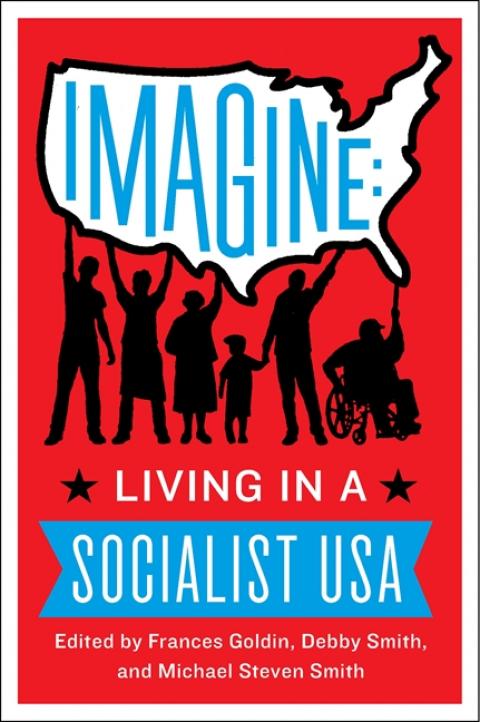 Frances Goldin, Debby Smith and Nichael Steven Smith, Co-Editors, Imagine: Living in A Socialist USA (New York: Harper Perennial, January 2014)
(Review; Video), especially Chapter 5, "Law in A Socialist USA," pp 53-57, citing that prior to the capitalism doctrine (heresy), "Trade and commerce were confined to [minimal level]. Charging of interest [usury] was forbidden, thereby inhibiting commerce and banking . . . in medieval Europe . . . early capitalists . . . established [laws] to lend and borrow money with interest. . . . 55[Initially] they were social outcasts whose profit-taking was thought to be dishonorable [sinful] a form of usury that put their souls in jeopardy. . . . But this disreputable lot . . . overthrew [Bible laws]," pp 54-55.)
John Gallagher, "100 years later, Henry Ford's $5 Day credited with changing U.S. culture, creating modern Detroit" (Detroit Free Press, 5 January 2014) ("it astonished and angered his peers. . . . It was those union contracts of the 1940s and afterward as much as the $5 Day that created a true middle class in America. High wages and benefits like retirement pay, paid vacation, health care, and other improvements that unions won in their contracts made cities like Detroit a haven for blue-collar workers for decades. But in recent years those gains have gradually slipped away as business owners gained the upper hand in their battle with unions. The rise of conservative political forces since President Ronald Reagan’s election in 1980 led to a judiciary less willing to rule in workers’ favor in labor disputes. The percentage of American workers who belong to unions has dropped steadily as industry moved from the Rust Belt to the U.S. South, to Mexico, and offshore.")
Harold Meyerson, "How to Raise Wages" (American Prospect, 30 March 2014) ("Eight proposals to jump-start the incomes of workers")
Noam Lupu and Nicholas Carnes, "The Rich Are Running Latin America – And Why That Matters" (8 April 2014) ("Government by the rich is not an irrelevant quirk of the political landscape.")
Eric Zuesse, "US Is an Oligarchy Not a Democracy, says Scientific Study" (14 April 2014) ("Who governs? Who really rules? . . . When the preferences of economic elites and the stands of organized interest groups are controlled for, the preferences of the average American appear to have only a minuscule, near-zero, statistically non-significant impact upon public policy.")
Christopher Robbins, "What Happens When Low Wage Workers Suddenly Get a Living Wage?" (Gothamist, 5 June 2014) ("Making a living wage isn't luxurious, it's living!")
Bryce Covert, "CEOs Earn Nearly 300 Times What Their Workers Make" (12 June 2014)
Jubilee USA, "Supreme Court Refuses Argentina Hedge Fund Debt Case" (16 June 2014)
Paul Buchheit, "Fomenting a Revolution: Extreme Acts of Greed Against the American People" (16 June 2014)
Sam Pizzigati, "A New Spin from the Inequality Denialist Set" (16 June 2014)
Susan Adams, "The Highest-Paid CEOs Are the Worst Performers" (20 June 2014) (study of "pay and company performance . . . over a relatively long time span, from 1994-2013, and compared . . . a company’s revenues and profits as compared with like companies in their fields. . . . the more CEOs got paid, the worse their companies did.")
Matt Bruenig, "Two Theories of Poverty" (Demos, 28 July 2014) (distinguishes between the individual vs structural versions)
"Chart of the Day: Look how many dollars minimum-wage workers have lost because of inflation" (20 August 2014) (more than $307 billion) Frances Goldin, Debby Smith and Nichael Steven Smith, Co-Editors, Imagine: Living in A Socialist USA (New York: Harper Perennial, January 2014)
(Review; Video), especially Chapter 5, "Law in A Socialist USA," pp 53-57, citing that prior to the capitalism doctrine (heresy), "Trade and commerce were confined to [minimal level]. Charging of interest [usury] was forbidden, thereby inhibiting commerce and banking . . . in medieval Europe . . . early capitalists . . . established [laws] to lend and borrow money with interest. . . . 55[Initially] they were social outcasts whose profit-taking was thought to be dishonorable [sinful] a form of usury that put their souls in jeopardy. . . . But this disreputable lot . . . overthrew [Bible laws]," pp 54-55.)
John Gallagher, "100 years later, Henry Ford's $5 Day credited with changing U.S. culture, creating modern Detroit" (Detroit Free Press, 5 January 2014) ("it astonished and angered his peers. . . . It was those union contracts of the 1940s and afterward as much as the $5 Day that created a true middle class in America. High wages and benefits like retirement pay, paid vacation, health care, and other improvements that unions won in their contracts made cities like Detroit a haven for blue-collar workers for decades. But in recent years those gains have gradually slipped away as business owners gained the upper hand in their battle with unions. The rise of conservative political forces since President Ronald Reagan’s election in 1980 led to a judiciary less willing to rule in workers’ favor in labor disputes. The percentage of American workers who belong to unions has dropped steadily as industry moved from the Rust Belt to the U.S. South, to Mexico, and offshore.")
Harold Meyerson, "How to Raise Wages" (American Prospect, 30 March 2014) ("Eight proposals to jump-start the incomes of workers")
Noam Lupu and Nicholas Carnes, "The Rich Are Running Latin America – And Why That Matters" (8 April 2014) ("Government by the rich is not an irrelevant quirk of the political landscape.")
Eric Zuesse, "US Is an Oligarchy Not a Democracy, says Scientific Study" (14 April 2014) ("Who governs? Who really rules? . . . When the preferences of economic elites and the stands of organized interest groups are controlled for, the preferences of the average American appear to have only a minuscule, near-zero, statistically non-significant impact upon public policy.")
Christopher Robbins, "What Happens When Low Wage Workers Suddenly Get a Living Wage?" (Gothamist, 5 June 2014) ("Making a living wage isn't luxurious, it's living!")
Bryce Covert, "CEOs Earn Nearly 300 Times What Their Workers Make" (12 June 2014)
Jubilee USA, "Supreme Court Refuses Argentina Hedge Fund Debt Case" (16 June 2014)
Paul Buchheit, "Fomenting a Revolution: Extreme Acts of Greed Against the American People" (16 June 2014)
Sam Pizzigati, "A New Spin from the Inequality Denialist Set" (16 June 2014)
Susan Adams, "The Highest-Paid CEOs Are the Worst Performers" (20 June 2014) (study of "pay and company performance . . . over a relatively long time span, from 1994-2013, and compared . . . a company’s revenues and profits as compared with like companies in their fields. . . . the more CEOs got paid, the worse their companies did.")
Matt Bruenig, "Two Theories of Poverty" (Demos, 28 July 2014) (distinguishes between the individual vs structural versions)
"Chart of the Day: Look how many dollars minimum-wage workers have lost because of inflation" (20 August 2014) (more than $307 billion)
Prof. Baptist, Edward E., Ph.D., The Half Has Never Been Told: Slavery and the Making of American Capitalism: The Migration That Made African America, the United States, and the World (New York: Basic Books, September 2014) (analysis: "provides meticulous, extensive and comprehensive evidence that capitalism and the wealth it created was absolutely dependent on the forced labor of Africans and African-Americans, downplaying culturalist arguments for Western prosperity, of the kind rehearsed by historians such as Niall Ferguson")
Sarah Varney, "Mississippi, Burned How the Poorest, Sickest State Got Left Behind By Obamacare" (Politico, 1 November 2014) ("the unyielding ideological imperative of conservative politics")
Other references
|
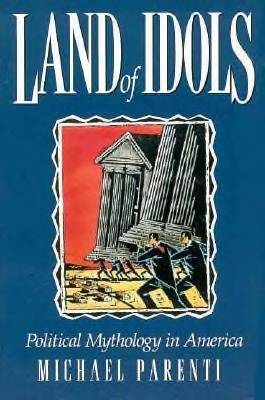 Land of Idols: Political Mythology in America (New York: St. Martin's Press, 1993) (Excerpt. Chapter 12, “Conspiracy and Intent,” § 2, “Theories of Innocence,” pp 160-164, refutes the stochastic / accidental version of history, under its varying deceptive names, e.g., “somnambulist theory,” “coincidence theory,” “incompetence theory,” “spontaneity theory,” “idiosyncrasy theory,” and “aberration theory”)