|
PREFACE TO THE THIRD EDITION.
Since the first edition of this little work appeared, almost forty years have passed away. It was when the anti-slavery conflict was at its intensest heat. The time had indeed come, as had been apostolically foretold, "when judgment should begin at the house of God." And many of the fiercest battles were almost literally "between the porch and the altar."
As the following pages will most abundantly prove, slavery had been driven from every other refuge, and, as its last, its forlorn hope, it, like the flying Hebrew escaping for his life, had "laid hold on the horns of the altar."
This is the third of the former anti-slavery tracts lately reproduced in the interest of true and reliable history, now endangered by the strange mendacity or ignorance of an unscrupulous clergy, who [falsely] insist that they or their predecessors were the main instruments in the abolition of slavery,—some of them [lying clergy] going so far as to declare that Garrison and his faithful and valiant discipleship actually did more harm than good to the sublime achievement.
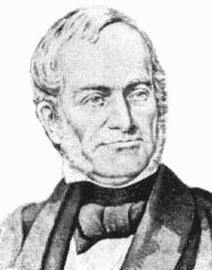 The first of the three works here named was published first in England,—its author, Hon. James G. Birney, about the year 1840,—entitled The American Churches the Bulwarks of American Slavery. This may be said to have been the first direct testimony ever borne in that form against the church and ministry on the subject of slavery: and this by one of the very pillars, a member of and ruling elder in the Presbyterian denomination, and who, so far as known, never forsook that form of faith and doctrine. The first of the three works here named was published first in England,—its author, Hon. James G. Birney, about the year 1840,—entitled The American Churches the Bulwarks of American Slavery. This may be said to have been the first direct testimony ever borne in that form against the church and ministry on the subject of slavery: and this by one of the very pillars, a member of and ruling elder in the Presbyterian denomination, and who, so far as known, never forsook that form of faith and doctrine.
The second came in similar form three years later [1843] in a pamphlet of seventy-five pages, entitled The Brotherhood of Thieves, or, A True Picture of the American Church and Clergy, by
-3-
Stephen S. Foster. Three or four years afterward was issued the first edition of the work now reproduced—a larger as well as later testimony, and whose authority was never questioned, however stunning its statements and revelations.
The third chapter seemed at the time to silence all denials, and to foreclose all defence of those charged with the guilt of slave breeding, slave hunting, and slave holding.
That there were honorable exceptions to the charges was not denied. But the mighty power, the ruling influence, of church and pulpit were proved to be on the side of the oppressor throughout the nation: nay, more, to be almost the oppressor himself, rather tban his forlorn hope. But let the terrible facts speak for themselves!
Whoever would pursue these perhaps not agreeable investigations farther are respectfully commended to a volume of more than five hundred pages, entitled Acts of tke Anti-Slavery Apostles, by Parker Pillsbury, and for sale by him at one dollar and fifty cents, and carefully sent by mail on receipt of price.
P. P.
Concord. N. H., Nov., 1885.
-4-
INTRODUCTION.
No apology is offered for the following work. It is a brief exhibition of the American Church as it is, in reference to the slave system of the United States.
That slavery finds its surest and sternest defense in the prevailing religion of the country, is no longer questionable. Let it be driven from the Church, with the burning zeal of its reprobation and execration stamped on its iron brow, and its fate is fixed forever. Only while its horrors are baptized and sanctified in the name of Christianity can it maintain an existence.
The Anti-Slavery movement has unmasked the character of the American Church. Our religion has been found at war with the interests of humanity and the laws of God. And it is more than time the worid was awakened to its unhallowed influence on the hopes and happiness of mankind, while it makes itself the
palladium of the foulest iniquity ever perpetrated in the sight of heaven.
Excellent works have already been written and published on the connection of the American Church with American Slavery. Among these,
"The American Church the Bulwark of American Slavery," by James G. Birney (1840);
"The Brotherhood of Thieves, or, A True Picture of the American Church and Clergy," by Stephen S. Foster (1843); and
"Slavery and the Slaveholder's Religion," by Samuel Brooke [Cincinnati: Brooke, 1846],
are the most valuable. They contain the important action of the Church on the subject, down to the time when they were written, and have had the singular good fortune never to be questioned in their statements of facts—and for the very good reason, that they are, beyond all question, singularly true.
A new work is now demanded, to present to the world the more recent action of the various ecclesiastical bodies of the country. The object of this [book] is, mainly, to meet that demand.
There is one consideration to which the public attention ought
-5-
to be specially called. Since, by the [1840's] introduction of steam navigation, the Atlantic has been narrowed to a ferry, and a voyage to Britain to a pleasant summer's jaunt, the clergy of this country have been unfortunately visited with great prostrations of health. A voyage to sea is a most effectual panacea, and is fast coming to be the Universal Restorative.
 But, unfortunately [for pro-slavery clergy], the public sentiment [viewpoint] of Britain (as of all Christendom) is mightily against our "peculiar institution." Hence, our clerical delegations are driven to the unwilling necessity of calling themselves abolitionists, in order to pass as honest men. But, unfortunately [for pro-slavery clergy], the public sentiment [viewpoint] of Britain (as of all Christendom) is mightily against our "peculiar institution." Hence, our clerical delegations are driven to the unwilling necessity of calling themselves abolitionists, in order to pass as honest men.
A man stealer, or his abettor, tbere (good Christian as he is here) being regarded as not greatly better than the stealer of other and less valuable goods.
The consequence is, the British Church has been deplorably deceived, both as to the [immoral] character of American Christianity and the American Clergy.
Every minister, as soon as he treads the soil of England, or Scotland, proclaims [pretends] himself an abolitionist. Whether it be so, it is the object of this work to show. It may not be improper, therefore, to announce that it [this book] is written particularly for circulation in Great Britain.
If the facts it [this book] unfolds do not startle the Churches of that Empire into the duty of immediately severing all the ties that bind them to the ecclesiastical bodies of these United States, then surely is the vitality of their vision deplorably to be doubted.
It will be the object of this publication to exhibit—
I. The Church—AS IT WAS [pp 7-12].
II. The Church—AS IT is [pp 13-71],
[III. Slavery—What Is It? (pp 71-76)], and
[IV.] The Church as, by its own admissions and assumptions, IT MIGHT BE [pp 77-96].
Truth only is sought. As a literary production, the work will undoubtedly be beneath criticism; but in the exhibition of facts, it is eminently above, and challenges all criticism.
-6-
I.THE CHURCH—AS IT WAS.
A peculiarity in this work throughout will be, that those whose character is under examination will speak for themselves—by their own words they will be justified or condemned, and not by the words of another, be that other friend or foe.
The church of this country is divided into many sects, but the important ones are the Prysbyterians and Congregationalists, the Baptists, Methodists and Episcopalians, the Unitarians, Universalists, and Quakers. Many of these have registered a testimony on the subject of Slavery in time past, and have varied it to meet such exigencies as they have been called to encounter.
[THE PRESBYTERIAN CHURCH]
The General Assembly of the Presbyterian Church has been the most powerful ecclesiastical body in the land. It may be so still.
About the time of the adoption of the Constitution of the United States, there was very much discussion on the subject of slavery; and it was generally believed, at least in half of the States, that the evil would not be of long duration. The discussion reached the church, and in 1787 the Synods of New York and Philadelphia came to the following judgment:
-7-
| "That we do highly approve the general principles in favor of universal liberty that prevail in America, and the interest which many of the States have taken in promoting the abolition of slavery.
"They earnestly recommend it to all the members in their communion, to give those persons who are at present held in servitude, such good education as to prepare them for the better enjoyment of freedom. * * * * *
"And finally, they recommend to all their people, to use the most prudent measures consistent with the interest and state of civil society in the countries where they live, to procure, eventually, the final abolition of slavery in America." |
This [1787] judgment was, in 1793, republished as the decision of the General Assembly of the Presbyterian Church.
The second annunciation of the sentiments of the General Assembly was made in 1794. Their sentiment at that time was appended to a note to the one hundred and forty-second question of the larger Catechism, on the eighth commandment, in these words:
| "1 Tim. 1:10. The [Bible] law is made for [to cover, i.e., to ban] man-stealers.
"This crime among the Jews exposed the perpetrators of it to capital punishment: Exodus 21:16 [and Deuteronomy 24:7]; and the apostle [Paul] here classes them with sinners of the first [worst] rank.
"The word he uses, in its original import [meaning], comprehends all who are concerned in bringing any of the human race into slavery, or in retaining them in it.
"Homiinum fures, qui servos vel liberes abducunt, retinent, vendunt, vel emunt. "Stealers of men are all those who bring off slaves or free-men, and keep, sell, or buy them.
"To steal a freeman, says [Hugo] Grotius [1583-1645], is the highest [worst] kind of theft.
"In other instances, we only steal human property, but when we steal or retain men in slavery, we seize those who, in common with ourselves, are constituted, by the original grant [by God], lords of the earth. Gen. 1:28.
"Vide poli synopsin in loc." |
Ed. Note: For more on the Genesis "original grant" concept as reaffirmed in Psalm 8:6-8 and Hebrews 2:6-8, see
Rev. James Rankin, Letters (1823), p 100
Rev. Theo. D. Weld, Bible Against Slavery (1837), pp 28-30
James Birney, Bulwarks (1840), p 29
Lysander Spooner, Slavery (1845), p 14
Rev. John Fee, Non-Fellowship (1849), p 6
Rev. John G. Fee, Sinfulness of Slavery (1851), p 10
Rev. John Fee, Anti-Slavery Manual (1851), p 116
Sen. Charles Sumner, Barbarism (1860), p 132
Rev. Parker Pillsbury, Acts (1883), p 365.
For reference to God's continued will that people must follow his original intent, original grant, marriage rules, etc., as per his original revelation, words and actions, at "the beginning," see Matthew 19:8 (divorce example, criticizing religious leaders NOT following original intent, thus misleading others).
|
Similar expressions were given from time to time, as the subject was urged upon the consideration of the body—but with what effect may be seen by the declaration of one of the most distinguished clergymen belonging to the Assembly. He affirms that under these very decisions | "the whole of the Presbyterian church have been sound asleep upon 'the highest [worst] kind of theft"—and while the 'sinners of the first rank' have multiplied and extended their man stealing on every side, Presbyteries, Synods, and General Assemblies have been 'silent as death, and still as midnight!' except when, to gratify the Christians! who wish to transport to their own country the feeble, diseased, aged, |
-8-
| or worn-out slaves,' they have adopted some two tongued [hypocritical] minute [resolution], respecting the Coloniza-tion Society." |
And yet, in 1818, the same body adopted another declaration of sentiment, more inexplicable than any which had preceded it. The character of the whole document may be clearly seen in the following lengthy extract:
|
"A FULL EXPRESSION 0F THE ASSEMBLY'S VIEWS OF SLAVERY IN 1818.
"The General Assembly of the Presbyterian church, having taken into consideration the subject of slavery, think proper to make known their sentiments upon it.
"We consider the voluntary enslaving of one part of the human race by another,
as a gross violation of the most precious and sacred rights of human nature [mankind];
as utterly inconsistent with the law of God, which requires us to love our neighbor as ourselves;
and as totally irreconcilable with the spirit and priciples of the gospel of Christ, which enjoins 'that all things whatsoever ye would that men should do to you, do ye even so to them.'
"Slavery creates a paradox in the moral system—
it exhibits rational, accountable, and immortal heings in such circumstances as scarcely to leave them the power of moral nctiou.
"It exhibits them as dependent on the will of others,
whether they shall receive religous instruction;
whether they shall know and worship the true God;
whether they shall enjoy the ordinances of the gospel;
whether they shall perform the duties and cherish the endearments of husbands and wives, parents and children, neighbors and friends;
whether they shall preserve their chastity and purity, or regard the dictates of justice and humanity.
"Such are some of the consequences of slavery; consequences not imaginary, but which connect themselves with its very existence.
"The evils to which the slave is always exposed often take place in their very worst degree and form; and where all of them do not takc place, still the slave is
deprived of his natural rights,
degraded as a human being,
and exposed to the danger of passing into the hands of a master who may inflict upon them all the hardships and injuries which inhumanity and avarice may suggest.
"From this view of the consequences resulting from the practice [tradition] into which [demonized, and excommunicated] Christian people [actually, pagans, emperor worshippers] have most inconsistently fallen, of
enslaving a portion of their brethren of mankind, it is manifestly the duty of all Christians, when the inconsistency of slavery with the dictates of humanity and religion has been demonstrated, and is generally seen and acknowledged, to use their honest, earnest, and unwearied endeavors, as speedily as possible to efface this blot on our holy religion, and to obtain the complete abolition of slavery throughout the world.
"We earnestly exhort |
-9-
| them" (the slave-holders) "to continue and to increase their exertions te effect a total abolition ofslavery." |
| Congregational Doctors of Divinity:—"Slaveholding is, in every instance, wrong, unrighteous, and oppressive; a very great and crying sin, there being nothing equal to it on the face of the earth."—Rev. Samuel Hopkins, D.D. [1721-1803], of the United States, 1776.] |
| "To hold any man in slavery, is to be every day guilty of robbing him of his liberty, or of man-stealing. Fifty years from this time, 1791, it will be as shameful for a man to hold a slave, as to be guilty of common theft or robbery."—[Rev. Jonathan Edwards, D.D. (1703-1758)] Drs. Hopkins and Edwards were the directing and controlling spirits in the church of their time. |
Such was the position of this great body and their Congregational allies, on the subject of slavery, as expressed from time to time, before the Anti-Slavery enterprise had come into being.
Two things are worthy of notice. First, the fact that all this discussion and action took place in connection with similar discussion out of the church; being little more than an écho of-the popular voice. And secondiy, it was, after ail, but expression in words; not the least action ever accompanying the expression during that whole quarter of a century.
THE METHODIST EPISCOPAL CHURCH.
More than half a century ago John Wesley [1703-1791], the Father and Founder of Methodism, bore the following testimony against the slave system:
 "What I have said to slave-traders equally concerns all slave-holders of whatever rank and degree; seeing men-buyers are exactly on a level with men-stealers!
"Indeed, you say, 'I pay honestly for my goods; and I am not concerned to know how they are come by.'
"Nay, but you are: you are deeply concerned to know they are honestly come by, otherwise you are partaker [accessory] with a thief [thus, in receipt and possession of stolen material, a crime in itself], and are [thus] not a jot honester than he.
"But you know they are not honestly come by: you know they are procured hy means nothing near so innocent as picking pockets, house-breaking, or robbery upon the highway.
"You know they are procured by a deliberate species of more complicated villainy, of fraud, robbery, and murder, than was ever practiced by Mohammedans or Pagans; in particular, by murders of all kinds, by the blood of the innocent poured upon the ground like water. "Now it is your money |
-10-
| that pays the African butcher.
"You, therefore, are principally guilty of all these frauds, robberies, and murders. You are the spring that puts all the rest in motion. They would not stir a step without you: therefore the blood of all these wretches who die before their time lies upon your head.
"'The blood of thy brother crieth against
thee from the earth' [Gen. 4:10].
"O, whatever it costs, put a stop to its cry before it be too late; instantly, at any price, were it the half of your goods, deliver thyself from blood-guiltiness! Thy hands, thy bed, thy furniture, thy house, and thy lands, at present are stained with blood.
"Surely it is enough; accuumulate no more guilt; spill no more the blood of the innocent.
"Do not hire another to shed blood; do not pay him for doing it.
"Whether you are a Christian or not, show yourself a man! Be not more savage than a lion or a bear." |
Expressions of equal abhorrence from distinguished Methodists of that period, might be added to almost any extent.
The following, from the Methodist Book of Doctrines and Discipline, will be sufficient, as it was the sentiment of the whole denomination. The Preface to the work, signed by the six Bishops of the church in the United States, gives this injnnction:
| "We wish to see this little work in the house of every Methodist. Far from wishing you to be ignorant of any of our doctrines, or any part of our discipline, we desire you to read, mark, learn, and inwardly digest the whole. You ought, next to the Word of God, to procure the articles and canons of the church to which you belong." |
The directions relative to slavery, in part, are these; and they have remained nearly the same for the last half century [1797-1847]:
| "There is only one condition previously required of those who desire admission into these [Methodist] societies—a desire to flee from the wrath to come, and to be saved from their sins. [Matt. 3:7; Luke 3:7; I Thess. 1:10].
"But wherever this is really fixed in the soul, it will be shown by its fruits. [Matt. 7:16-18, 20-21; Matt. 12:33-34; Luke 3:8-9; Luke 6:43-45; John 15:8; Gal. 5:22-23].
"It is, therefore, expected of all who continue therein, that they should continue to evidence their desire of salvation, by doing no harm, by avoiding evil of every kind, especially that which is most generally practised, such as the buying and selling of men, women, and children with an intention to enslave them," etc.
"OF SLAVERY,—Question.—What shall be done for the extirpation of the evil of slavery?
"Answer 1.—We declare that we are as much as ever convinced |
-11-
| of the great evil of slavery; therefore no slaveholder shall be eligible to any official station in our Church, hereafter, where the laws of the State in which he lives will admit of emancipation, and permit the liberated slave to enjoy freedom.
"Answer 2.—When any traveling preacher becomes an owner of a slave or slaves, by any means, he shall forfeit his ministerial character in our church, unless he execute, if it be practicable, a legal emancipation of such slaves, conformably to the laws of the State in which he lives." |
The course of the church with those who "buy, sell, or hold slaves," is explicitly given on the eighty-third page of the Discipline, New York edition, 1840.
| "If there be any among us who observe not these rules, who habitually break any of them, let it be known unto them who watch over that soul, as they who must give an account [Hebrews 13:17].
"We will admonish him of the error of his ways. We will bear with him for a season.
"But if then he repent not, he hath no more place among us." [Matt. 18:15-17]. |
Of the Friends or Quakers it may be said, too, that they once bore a solemn witness against the enslavemeent of human beings. In 1763 they renewed their testimony in these words:
"We renew our exhortation, that Friends every where be especially careful to keep their hands clear of giving encouragement in any shape to the slave trade; it being evidently destructive of the natural rights of mankind, who are all ransomed by one Saviour, and visited by one divine ligbt, in order to salvation; a traffic calculated to enrich and aggrandize some upon the miseries of others; in its nature abhorrent to every just and tender sentiment, and contrary to the whole tenor of the gospel."
—Thomas Clarkson's Portraiture of Quakerism. |
Such are but specimens of the action of the American church on the subject of slavery within the last half century. None of the sects were indifferent. These quotations are sufficient to determine the plea so often set up, that she needs light on the subject, to be utterly groundless. These were the testimonies of the church.
Her action was of a different character. It was the extremest inaction; proving that all ber loud protestations and solemn threatenings were most profoundly insincere.
-12-
II.THE CHURCH—AS IT IS.
 WERE this book intended only for American circulation, it might not be necessary to allude to the religion of the South, in distinction from that of the churches of the Northern or free States. WERE this book intended only for American circulation, it might not be necessary to allude to the religion of the South, in distinction from that of the churches of the Northern or free States.
It may not be inproper, however, to exhibit some of the declarations of the Southern ecclesiastical bodies, and also of distinguished Clergymen, Doctors of Divinity, and others, on the subject of American slavery.
It should be borne in mind that all the witnesses whose testimony is produced in this work are of the most competent character, being the largest ecclesiastical associations, and most eminent Divines to be found in this or any other country.
The following are expressions of the church in some of the slave-holding states:
HARMONY PRESBYTERY, OF SOUTH CAROLINA.
| "Whereas, sundry persons in Scotland and England, and others in the north, east, and west of our country, have denounced slavery as obnoxious to the laws of God, some of whom have presented before the general assembly of our church, and the Congress of the nation, memorials and petitions, with the avowed object of bringing into disgrace slave-holders, and abolishing the relation of master and slave:—
And whereas, from the said proceedings, and the statements, reasonings, and circumstances connected therewith, it is most manifest that those persons 'know not what they say, nor whereof they affirm;' and with this ignorance discover a spirit of self-righteousness and exclusive sanctity," &c.
Therefore, 1. Resolved, "That as the kingdom of our Lord is not of this world, His church as such has no right to abolish, alter, or effect any institution or ordinance of men, political or civil, &c."
2. Resolved, "That slavery has existed from the days of those good old slave-holders and patriarchs, Abraham, Isaac, and Jacob, (who are now in the kingdom of heaven,) to the time when |
-13-
| the apostle Paul sent a run-away home to his master, Philemon, and wrote a Christian and fraternal letter to this slave-holder, which we find still stands in the canon of the Scriptures—and that slavery has existed ever since the days of the Apostle, and does now exist." |
The REV. WILLIAM S. PLUMMER, D.D., of Richmond, Va., high in the Presbyterian church:
| "I have carefully watched this matter from its earliest existence, and everything I have seen or heard of its character, both from its patrons and its enemies, has confirmed me beyond repentance in the belief that, let the character of Abolitionists be what it may in the sight of the Judge of all the earth, this is the most meddlesome, impudent, reckless, fierce, and wicked excitement I ever saw.
"If Abolitionists will set the country in a blaze, it is but fair that they should receive the first warming at the fire.
"Abolitionists are like infidels, wholly unaddicted to martyrdom for opinion's sake. Let them understand that they will be caught [Lynched] if they come among us, and they will take good heed to keep out of our way.
"There is not one man among them who has any more idea of shedding his blood in this cause, than he has of making war on the Grand Turk." |
REV. ROBERT N. ANDERSON, of Virginia:
| "To the Sessions of the Presbyterian Congregations within the bounds of the West Hanover Presbytery:"—
"At the approaching stated meeting of our Presbytery, I design to offer a preamble and string of resolutions on the subject of the treasonable and abominably wicked interference of the Northern and Eastern fanatics, with our political and civil rights, our property and our domestic concerns.
"You are aware that our clergy, whether with or without reason, are more suspected by the public than the clergy of other denominations. Now, dear Christian brethren, I humbly express it as my earnest wish, that you quit yourselves like men.
"If there be any stray goat of a minister among you, tainted with the blood-bound principles of abolitionism, let him be ferreted out, silenced, excommunicated, and left to the [demonized] public to dispose of [murder] him in other respects.
"Your affectionate brother in the Lord,
"ROBERT N. ANDERSON." |
Some years ago, the Reverend Bishop [William] Meade [1789-1862], an Episcopal
-14-
clergyman of Virginia [Assistant Bishop, Diocese of Virginia], published a book of sermons and tracts for masters and slaves. It was printed at Winchester, Va., by John Hieskell.
| Ed. Note: Full Citation: Sermons Addressed to Masters and Servants, And Published in the Year 1743 by the Rev. Thomas Bacon ... Now Republished with other Tracts and Dialogues on the Same Subject, and Recommemded to All Masters and Mistresses to be Used in their Families, by Thomas Bacon (ca. 1700-1768), edited by Bishop William Meade, D.D. (Winchester, Va.: John Heiskell, 1813) |
In the preface to the work the Bishop remarks:
| "The editor of this volume offers it to all masters and mistresses in our Southern states, with the anxious wish and devout prayer that it may prove a blessing to themselves and their households." |
Tn this book are two sermons from this text, to be read by masters to their slaves;
| "Knowing that whatsoever good thing any man doeth, the same shall he receive of the Lord, whether he be bond or free." |
As these sermons are so perfect a delineation of slaveholding godliness, some extracts will not here be out of place. They are addressed to a congregation of slaves.
After showing the slaves that they are all in the condition where God would have them, and that they were made for the use and service of their masters, he [Bishop Meade] proceeds:
| "When people die, we know of but two places they have to go to, and one is heaven, the other hell. Now heaven is a place of great happiness, which God has prepared for all that are good, where they shall enjoy rest from their labors.
"And hell is a place of great torment and misery, where all wicked people will be shut up with the devil and other evil spirits, and be punished forever, because they will not serve God.
"If, therefore we would have our souls saved hy Christ, if we would escape hell and obtain heaven, we must set about doing what he requires of us, that is, to serve God.
"Your own poor circumstances in this life ought to put you particularly upon this, and taking care of your souls. * * *
"Almighty God hath been pleased to make you slaves here, and to give you nothing but labor and pverty in this world, which you are obliged to submit to, as it is his will that it should be so.
"And think within yourselves what a terrible thing it would be, after all your labors and sufferings in this life, to be turned into hell in the next life: and after wearing out your bodies in service here, to go into a far worse slavery when this is over, and your poor souls be delivered over into the possession of the devil, to become his slaves forever in hell, without any hope of ever getting free from it.
"If, therefore, you would be God's freemen in heaven, you must strive to be good and serve him here on earth.
"Your bodies, you know, are not your own: they are at the disposal of those you belong to; but your precious souls are still your own, which nothing can take from you, if it |
-15-
| be not your own fault.
"Consider well, then, that if you lose your souls by leading idle, wicked lives here, you have got nothing by it in this world, and you have lost your all in the next. For your idleness and wickedness are generally found out, and your bodies suffer for it here; and, what is far worse, if you do not repent and amend, your unhappy souls will suffer for it hereafter.
"Having thus shown you the chief duties you owe to your great Master in heaven, I now come to lay before you the duties you owe to your masters and mistresses here upon earth.
"And for this you have one general rule that you ought always to carry in your minds, and that is, to do all service for them, as if you did it for God himself.
"Poor creatures! you little consider when you are idle and neglectful of your master's business, when you steal and waste, and hurt any of their substance, when you are saucy and impudent, when you are telling them lies and deceiving them, or when you prove stubborn and sullen, and will not do the work you are set about without stripes and vexation; you do not consider, I say, that what faults you are guilty of towards your masters and mistresses, are faults done against God himself who hath set your masters and mistresses over you in his own stead, and expects that you will do for them just as you would do for him.
"And pray do not think that I want to deceive you, when I tell you that your masters and mistresses are God's overseers; and that if you are faulty towards them, God himself will punish you severely for it in the next world, unless you repent of it, and strive to make amends [reparations] by your faithfulness and diligence for the time to corne, for God himself hath declared the same.
| Ed. Note: This vile or demonized "clergyman" sees their suspicion! a correct suspicion that he is a deceiver, himself of the devil. 2 Cor. 11:13-15. |
"And in the first place, you are to be obedient and subject to your masters in all things. * *
And Christian ministers are commanded to 'exhort servants to be obedient unto their own masters [not to kidnappers, but employers], and to please them well in all things, not answering them again, or gainsaying.' * * *
"You are to be faithful and honest to your masters and mistresses, not purloining or wasting their goods or substance, but showing all good fidelity in all things. * *
"Do not your masters, under God, provide for you?
"And how shall they be able to do this, to feed and to clothe you, unless you take honest care of every thing that belongs to them?
"Remember that God requires this of you, and if you are not afraid of suffering for it here, you cannot escape the vengeance of Almighty God, who will judge between you and your masters, and make you pay severely, in the next world, for all the injustice you do them here.
"And though you could manage so cunningly as to escape the eyes and hands of man, yet think what a dreadful thing it is to fall into the hands of the living God, who is able to cast both soul and body into hell!" * * *
|
Ed. Note: Also by Vile Bishop Meade:
Pastoral Letter of the Rt. Rev. William Meade, Asst. Bishop of Va., to the Ministers, Members, and Friends, of the Protestant Episcopal Church in the Diocese of Virginia, on the Duty of Affording [Pretended] Religious Instruction to Those in Bondage. Delivered in the Year 1834 - Reprinted by the Convocation of Central Virginia in 1853 (Richmond: H. K. Ellyson, 1853)
Address on the Day of Fasting and Prayer Appointed by [Jefferson Davis] the President of the Confederate States, June 13, 1861, Delivered at Christ Church, Millwood, Va (Richmond: Enquirer and Job Press, 1861) |
-16-
And again, on page 116:
| "All things whatsoever ye would that men should do unto you, do ye even so unto them;' that is, do by all mankind just as you would desire they should do by you, if you were in their place and they in yours.
"Now, to suit this rule to your particular circumstances; suppose you were masters and mistresses [kidnappers, murderers, rapists, thugs, etc.] and had servants under you, would you not desire that your servants should do their business faithfully and honestly, as well when your back was turned as while you were looking over them?
| Ed. Note: A proper analogy would be, would you not desire to call the police? or to commit standard self-defense acts? up to and including killing the perpetrator(s)? |
"Would you not expect that they should take notice of what you said to them? That they should behave themselves with respect towards you and yours, and be as careful of everything belonging to you as you would be yourselves?
"You are servants; do, therefore, as you would wish to be done by, and you will be both good servants to your master, and good servants to God, who requires this of you, and will reward you well for it, if you do it for the sake of conscience, in obedience to his commands. * * *
"Take care that you do not fret, or murmur, or grumble at your condition; for this will not only make your life uneasy, but will greatly offend Almighty God.
"Consider that it is not yourselves, it is not the people you belong to, it is not the men that have brought you to it, but it is the will of God who hath by his providence made you servants, because, no doubt he knew that condition would be best for you in this world, and help you the better towards heaven, if you would but do your duty in it.
"So that any discontent at your not being free, or rich, or great as you see some others, is quarreling with your heavenly Master, and finding fault with God himself. * * *
"There is only one circumstance which may appear grievous, that I shall now take notice of, and that is CORRECTION.
| Ed. Note: This sicko pervert Meade means torture. |
"Now, when correction is given you, you either deserve it, or you do not deserve it. But whether you really deserve it or not, it is your duty, and Almighty God requires that you bear it patiently.
"You may, perhaps, think that this is hard doctrine, but if you consider it right, you must needs think otherwise of it.
"Suppose, then, that you deserve correction, you cannot but say that it is just and right you should meet with it.
"Suppose you do not, or at least you do not deserve so much or so severe a correction for the fault you have committed, you perhaps have escaped a great many more, and are at least paid for all.
"Or suppose you are quite innocent of what is laid to your charge, and suffer wrongfully in that particular thing, is it not possible you may have done some other bad thing which was never discovered, and that Almighty God, who saw you doing it, would not let you escape without punishment one time or another? And ought you |
-17-
| not in such a case to give glory to Him, and be thankful that he would rather punish you, in this life for your wickedness, than destroy your souls for it in the next life?
"But suppose that even this was not the case (a case hardly to be imagined), and that you have by no means, known or unknown, deserved the correction you suffered, there is this great comfort in it, that if you bear it patiently, and leave your cause in the hands of God, he will reward you for it in heaven, and the punishment you suffer unjustly here shall turn to your exceeding great glory hereafter."
| Ed. Note: Pillsbury re-reprinted this excerpt in 1883, in Acts, pp 429-434. |
|
If any doubt the genuineness of these extracts [from Bishop Meade's book], let them be compared with the following from another advocate of slavery, whose praise is in the churches of South and North.
The Rev. J. C. Postell, in July, 1836, delivered a public address at Orangeburg, South Carolina, in which he maintains,
"1. That slavery is a judicial visitation.
2. That it is not a moral evil.
3. That it is supported by the Bible."
He thus argues his second point:
| "It is not a moral evil. The fact that slavery is of Divine appointment, would be proof enough with the Christian that it could not be a moral evil.
"But when we view the hurdes of savage marauders and human cannibals enslaved to lust and passion and abandoned to idolatry and ignorance, to revolutionize them from such a state, and enslave them where they may have the gospel and the privileges of Christians, so far from being a moral evil, it is a merciful visitation.
"If slavery was either the invention of man or a moral evil, it is logical to conclude, the power to create has the power to destroy.
"Why, then, has it existed? And why does it now exist amidst all the power of legislation in State and church, and the clamor of abolitionists?
"'It is the Lord's DOINGS, AND MARVELLOUS IN OUR EYES:' and had it not been dune for the best, God alone, who is able, long since would have overruled it. IT is BY DIVINE APPOINTMENT."
| As Postell is an unrepentant individual, and is steeped in sin, he is unable to comprehend that slavery exists due to sin, rebellion against God! for which God punished Ancient Egypt in the Exodus, and then Judah for committing the same sin. |
|
GENERAL ASSEMBLY OF THE
PRESBYTERIAN CHURCH.
Such is slaveholding Christianity. Let us now see whether a better can be found at the North; or whether the religion of the South and North be not one and the same.
The General Assembly of the Presbyterian ehurch, until quite recently, extended over the entire Union—a mighty ecclesiastical giant, whose terrible tread shook the land. A division has now taken place, and the body is known in two separate organizations, by the terms Old and New School General Assembly.
Slavery, however [contrary to myth], had nothing to do with the separation.
-18-
Both churches embrace members and ministers in both the free and slave states: and the subject of slavery has been often forced upon the consideration of both.
The first direct action in favor of slavery ever taken by the [Presbyterian] General Assembly, was in the year 1816. The note to which allusion is made in Chapter I, appended to the Catechism defining the crime [sin] of man-stealing, reflected most insufferably upon the man-stealers (whose name was Legion) at this time in the church. Accordingly they set about ridding themselves of the evil by procuring its erasure from the statutes [doctrine book] of the [Presbyterian] church; and in 1816 they procured the passage of the following Resolution in the General Assembly:
| "Resolved, That as it belongs to the General Assembly to give directions in regard to the notes which accompany the constitution, this Assembly express it as their opinion, that in printing future editions of the Confession [doctrine] of the [Presbyterian] church, the note connected with the scripture proofs in answer to the quostion in the larger catechism,
'What is forbidden in the eighth commandment?'
in which the nature of the crime [sin] of man-stealing and slavery is dilated [commented] upon, be omitted.
"In regard to this [directed] omission, the Assembly think proper to declare, that in directing it, they are influenced by far other motives than any desire to favor slavery, or to retard the extinction of that mournful evil, as speedily as may consist with the happiness of all concerned." |
Whether the Assembly spoke truly, when they said they had no "desire to favor slavery" in this act, will not be decided here. Such an assertion was most necessary surely; for without it, the suspicions of the world in regard to the resolution must inevitably have been of a most unfavorable character.
The same year the General Assembly considered and acted upon this question:
| "Ought baptism, on the profession and promise of the Master, to be administered to the children of slaves?" |
This was the strange and monstrous answer to the question:
| "It is the duty of masters who are members of the [Presbyterian] church, to present the children of parents in servitude to the ordinance of Baptism.
"It is the duty of Christ's ministers to baptise all children of this description when presented to them by their masters." |
-19-
Whatever might have been the wish of the Assembly relative to the Resolution just quoted, it is difficult to believe the tendency of its passage, in connection with this action on the [involuntary] baptism of infant slaves, would not be to "retard the extinction of that mournful evil" they profess so much to deplore.
The later proceedings of the General Assemblies, Old School or New, on the subject of Slavery, are, in general, too barren of interest to merit much attention. The Old School have done nothing, and the New, much worse.
The former—with fifty thousand slaves in its communion, not one of whom ever was married, or ever will be, but who are all living in the grossest prostitution, herded at night in their one-roomed cabins, as the beasts of the field—in its [pretended] zeal for the sacredness of marriage, have acted on the case of one of their number, a clergyman of the first standing, who married a sister of his deceased wife, and actually deposed him from the ministry and expelled him from the church, as guilty of incest.
| Ed. Note: Vile Presbyterians dealt with a mote, [one incident] not the beam [50,000]! Matt. 7:3-5. |
NEW SCHOOL GENERAL ASSEMBLY.
The New School General Assembly, driven by the advancing state of public sentiment to do something, did vote [in 1840] solemnly to refer the subject to the subordinate judicatories, and then, probably, wholly to avoid another early collision with the subject, they voted not to meet again for three years.
The three years passed away. At the next convocation they despatched the question of Slavery in the most summary manner: with some debate, they adopted the following Resolution, in 1843:
| "Resolved, That the Assembly do not think it for the edification of the church, for this body to take any action on the subject of slavery." |
The editors of the New York Evangelist, a large and popular religious paper, reported and published the proceedings, and claimed that the Assembly was "fast advandng in its opposition to slavery." And it professcd to be greatly charmed with the spirit and manner of the debate [on slavery].
Here is a specimen [of the debate], as reported by and for that paper.
Rev. Dr. Hill, of Virginia, said—
| "The Abolitionists have made the servitude of the slaves harder.
"If I could tell you of some of the dirty tricks [e.g., rescues] which these abolitionists have played, you would not wonder.
"Some of them [abolitionists, e.g., Rev. Elijah Lovejoy] have been LYNCHED [murdered], and they were served RIGHT. |
Here was "advance" with which to be "charmed."
-20-
The following are further extracts from the [1843] proceedings of the [NSGA religious] body, [during the debate on abolitionists' proposed resolutions] pending the [later] passage of the [pro-slavery] resolution:
|
"Rev. Mr. Groff, of Maryland, was opposed to the [abolitionists'] resolutions. They will do no good.
"Hitherto we have gone on in great harmony [condoning sin], but cannot any longer if these resolutions prevail.
"God does not require us to declare slavery a sin; he has not so declared it himself.
"We know at the South that it [slavery] is an evil—a great evil; the South groans under it, but at present they do not see the remedy.
"And where does God justify us in taking his place and declaring that slavery [evil, you just said!] is a sin?
"In taking these positions, we are making war on the law of the land; which neither Christ nor his apostles did, in their contest with evil.
| Ed. Note: See rebuttal by Harriet Beecher Stowe, Key (1853), pp 234-240. |
"And the Christian population is so very small a part of the South, that our [NSGA] opinions will have no weight for good.
Ed. Note: Christianity had not even been preached in the Deep South until after 1695, says Edward C. Rogers, Slavery Illegality (Boston, 1855), p 78.
And, "verily, three fourths of all the Episcopalians, Methodists, Baptists, and Presbyterians, in eleven states of the Union, are of the devil."—Rev. James H. Smylie (1836), quoted by Rev. Stephen S. Foster, Brotherhood of Thieves (1843), pp 14-15.
As such pretended Christians were showing themselves as heathens, they were excommunicated in 1841.—Rev. Parker Pillsbury, Acts of the Anti-Slavery Apostles (Concord, N.H., 1883), p 374.
Real Christians fled the South.
|
"And finally, if these resolutions are adopted, the Southern churches will separate from the Assembly.
"We will hold on as long as we can; we shall part in pain; but take the ground proposed [by abolitionists' resolutions], and our beloved Union is no longer ONE.
Rev. Dr. Wisner, of Ithaca, N. Y., spoke on the general subject. It was often his painful duty to differ from brethren whom he loved. He never had been able to go with whigs or tories; he could seldom go with the thorough-going men of either party.
| Ed. Note: Wisner is Laodicean, Rev. 3:14-16, the pretended religious-types God rebukes as "lukewarm," neither "cold nor hot," whom God therefore "spews out of his mouth." |
"He used to think he was an abolitionist, but he finds he is not; he is even called a pro-slavery man; by some, denounced as selfish and man-fearing; but it was very likely that others would call him an aboilitionist, when they knew how little sympathy he had for the system of slavery.
"Many of the most beloved of his congregation are abolitionists; one of the memorials [proposed resolutions] now before this Assembly is signed by all but one of his session [congregation], and it would be greatly for his peace of mind, if he could see his way clear to go with them.
"But when he remembered his ordination vows, and that he must please God rather than man, he must pursue that course to which he is shut up by the word of God.
"What would be the duty of a Christian minister, if he were living undor the despotism of Prussia or Turkey? Must he denounce every act of tyranny as an outrage on the rights of man, and a sin against the law of God?
"But it may be said, that we must purify the church. And how? By sending down an opinion that Slavery is an unlawful sin?
"Even this will not satisfy the abolitionists. They must have the knife of discipline applied to all who hold slaves.
"They [abolitionists] would even go so far as to adopt the 1887 plan of EXCISION, and cut off from the pulpit, and the communion of the church, all slaveholders.
"This has been done by one Synod, and others want the assent to do the same. |
-21-
| same. But before we exclude our Southern brethren from our pulpits, we might at least wait till they ask us to let them in.
"I should feel strange to write to my brotber Hill, of Virginia, that he must not come to Ithaca and preacb, and he should write back that I had better wait till he wanted to come.
"Now, have we not had enough of EXCISION, without this going over the beads of Synods, and Presbyteries, and Sessions, to excommunicate our Southern brethren?" |
Dr. W. then established, with masterly power and great effect, the following positions:
| "1. Slavery is a civil institution, as much so as the despotism of Prussia, and regulated by the [unconstitutional] laws of the state and of the United States.
"2. The political world is now in an excited state of mind on this subject, in consequence of the radical and treasonable designs of abolitionists.
| Ed. Note: On the contrary, they were seeking to obtain adherence to the rule of law. |
"3. The memorials [petitions] asking action on this subject have not come from those who are suffering under the evils of slavery, but from men in the free States.
"4. We are not authorized by the word of God to say that every man who holds slaves is guilty of sin. Father Richards, of Auburn, owns an old woman in New Jersey, and pays for her board because she will not 'use her liberty.' Is he a great sinner going down to perdition?
"6. A worse kind of slavery tban Southern slavery prevailed in the days of our Saviour and the apostles. If any man [Wesley, Fee] denies this, he has not studied the history of tbose times. Read Gibbon, and McKnight's Exposition, and Jahn, and you will find it so.
"Now, the mode in which our Saviour and the apostles treated the subject, is to be our guide.
There is the most overwhelming testimony that the state of slavery was far worse then than at the South now; masters had the power of life and death over their slaves, and often used it; the slave was not considered as a man, but as a beast—as a chattel personal.
And the apostle felt called on to go into a special exposition of the relative duties of masters and slaves; and it had always been a matter of grief to bim (Dr. W.) that his abolition brethren are so unwilling to go to the Bible, and learn the specific directions which it contains on this subject.
| Ed. Note: Dr. Wisner is not honestly acknowledging the Bible distinction between employees and kidnap victims, nor his own church history, Catholic history, e.g., Pope Gregory XVI, nor abolition writers, e.g., Rev. Rankin, Rev. Fee, Rev. Green, Rev. Weld, Rev. Cheever, and H. B. Stowe. |
"Brother Beecher said that we must look at the 'great principles' of God's government, and not confine our view to specific cases.
But when I was a young man, I was a lawyer; and when we were seeking to establish some great principle of law we were always glad to find its application to a specific case; and if there was an authorized exposition of the law in such cases, that settled the question.
Now, the apostles give us God's own exposition of his law, and if we consult their writings, we shall learn the 'great principles of this government.'
Then if the apostles did give directions on this subject, what were they? In
|
-22-
| his first letter to Timothy, 6:1—3, he [Paul] writes: [Let the reader turn to these passages, and these that follow, and read them.]
"If brother Beecher [p 24, infra] had been in the place of good old Abraham, and God had told him to take his only son Isaac, and put him to death, Mr. Beecher would look up and say,
'Why, Lord, it is contrary to the "great
principles" of your government for me to
take the life of my son; I can't do it;'
and so Mr. Beecher would refuse to obey a positive precept, because it conflicts with what he tbinks is a great principle. But if God tells me to lay my wife on the altar, it shall be done.
Ed. Note: The South, filled with tobacco farmers, became psychotic. Sane minds reason in a linear manner, not wander off-topic. God gives gift of sound mind, I Tim 1:7. Wisner, pro-slavery, does not have that gift.
Wisner cannot comprehend that slavery does not involve a command direct from God to go hunt down, capture, kidnap, oppress, a single discrete named individual! |
"And I have been shocked when my abolition brethren have told me that if they thought the Bible tolerated slavery, they would reject the Bible.
"But I dare not take this liberty with the Bible. I will believe it, and obey it, the whole of it, or none.
"And when we thus yield to its [pretended] teachings, we are denounced as pro-slavery men, and called by every hard name that abolition lecturers can turn their tongues to.
"Dr. W. then cited and commented on Eph. 6:6-9. Col. 3:22-25. 4:1.
"Titus 2:9, 10, 'not purloining,' is the advice given here to servants [employees]. The apostle, said Dr. W., does not advise slaves [kidnap, rape, torture victims] to steal horses and boats, and any thing necessary for their escape.
Ed. Note: This vile Dr. Wisner would not dare preach this drivel to whites captured by Indians!
This vile depraved clergyman refuses to acknowledge the difference between advice to employees, versus advice to kidnap, rape, torture victims.
No moral person denies the morality of kidnap and rape victims escaping, or being rescued, including by violence. |
"Col. 3:18-20. 1 Cor. 7:21, 22.
"Nor does all this prove that the Bible approves of slavery. Not at all.
"But it does prove that political institutions are not to be assailed by the church.
Ed. Note: This depraved person evidently would oppose Bible-smuggling into nations that by law, ban Bibles!
He does not agree with the Bible law, obey God rather than men's traditions and laws.
Matt. 15:1-9; Mark 7:6-13; Acts 5:29.
|
"Here is the specific direction as to the way in which the ministers of Christ are to treat the evil of slavery, and when the Bible tells me what to do, I will do it, though hell and earth stand in the way.
"And I will spend my few remaining days in solitude, and go down to my grave friendless and alone, rather than violate my ordination vows, and go with my abolition brethren in defiance of the plain precepts of our Saviour and his apostles.
"My business is to labor for the salvation of souls, and I would rather go to the South and fight slavery 'tooth and nail,' than to be assailing it here, as an ecelesiastical bcdy.
"And now let me ask my brethren what good they will do by driving their measures through. The churches have just settled down after the great schism, revivals have been numeruous and powerful, our numbers are almost doubled, and now we are called on to draw another line, and that to be Mason and Dixon's line.
"Nor is this to be the end.
"When these brethren have cut off the South, they will next want to get rid of all who will not go with them in abolition measures. We are marked on the catalogue to go next.
"And if the ploughshare is to be driven again, I almost wish that I lived on the other side [the south side] of Mason and Dixo's line, for I cannot live where I am [New York] to be forever goaded with this thing. I cannot, and I will not." |
-23-
| "3½ o'clock, P. M.
"Assembly was constituted with prayer by the Moderator, and after the adoption of the minutes of the morning session, the unfinished business, viz , Dr. Dickerson's resolution, was resumed.
"The Rev. Mr. Cook, from Illinois, having the floor, went into a lengthened defence of anti-slavery views, in opposition to the resolutions.
"The Rev. Dr. Bly spoke on the other side, and was followed by the Rev. Dr. Edward Beecher and the Rev. Mr. Myers.
"After the last speaker had concluded, the Rev. Mr. Ely, the Moderator, suggested that the members had had a full opportunity to express their sentiments on the subject, and submitted to the good sense of the House, whether this discussion had not better terminate; after which, however, Rev. Mr. Linsley proceeded to make some further remarks, and was followed by the Rev. Mr. Gridley, who gave in a brief manner his views in opposition to the resolution.
"The question recurring on Dr. Dickerson's resolution, the yeas and nays being called for and sustained, were ordered, and resulted as follows:
"For the resolution, 66; against it, 33.
"The Assembly then engaged in a prayer of thanksgiving to Almighty God, for the spirit of tenderness and forbearance exercised during the discussion of this very important subject." |
In May, 1846, the Assembly again convened, and again the subject of slavery, the dreaded question, like some unearthly, unwelcome ghost, stalked into this sacerdotal Congress.
The following was the disposal of it, by a vote of 97 to 27.
The declarations were introduced by Rev. Dr. Duffield:
| "1. The system of slavery as it exists in these United States, viewed either in the
[unconstitutional] law of the several States which [by practice, tradition, but not by law] sanction it, or in its actual operation and results in society, is
intrinsically unrighteous and oppressive, and
is opposed to the prescriptions of the law of God,
to the spirit and precepts of the gospel, and
to the best interests of humanity.
"2. The testimony of the General Assembly, from the A.D. 1787, to A. D. 1818, inclusive, has condemned it, and it remains still the recorded testimony of the Presbytenan church of these United States against it, from which we do not recede.
"3. We cannot, therefore, withhold the expression of our deep regret that slavery should be continued and countenanced by any of the members of our churches; and we do earnestly exhort both them and the churches, among whom it exists, to use all means in their power to put it away from them. Its [slavery's] perpetuation among them cannot fail to be regarded by multitudes influenced by their [heathen-making] example, as sanctioning the system portrayed |
-24-
| in it, and maintained by the [non-existent, bluffed] statutes of the several slaveholding States wherein they dwell. Nor can any mere mitigation of its severity, prompted by the humanity and Christian feeling of any who continue to hold their fellow-men in bondage, be regarded either as a testimony against the system, or as in the least degree changing its essential [un-Biblical] character.
"4. But while we believe that many evils incident to the system render it important and obligatory to bear testimony against it, yet would we not undertake to determine the degree of moral turpitude on the part of individuals involved hy it. This will doubtless be found to vary in the sight of God, according to the degree of light and other circumstances pertaining to each. In view of all the embarrassments and obstacles in the way of emancipation interposed by the [drunkard politicans of demonized southern] statutes of the slaveholding states, and by the social influence [racial prejudice] affecting the views of those involved in it, we cannot pronounce a judgment of general and promiscuous condemnation, implying that destituiion of Christian principle and feeling which should exclude from the table of the Lord all who should stand in the legal relation of masters to slaves, or justify us in withholding our ecclesiastical and Christian fellowship from them. We rather sympathize with, and would seek to succor them in their embarrassments, believing that separation and secession among the churches and their members are not the methods God approves and sanctions for the reformation of his church.
"5. While, therefore, we feel bound to bear our testimony against slavery, and to exhort our belovce brethren to remove it from them as speeedily as possible, by all appropriate and available means, we do at the same time condemn all divisive and schismatical measures, tending to destroy the unity and disturb the peace of our church, and deprecate the spirit of denunciation and inflicting severities, which would cast from the fold those whom we are rather bound, by the spirit of the gospel, and the obligations of our covenant, to instruct, to counsel, to exhort, and thus to lead in the ways of God; and towards whom, even though they may err, to exercise forbearance and brotherly love.
Ed. Note: Duffield means for them to ignore Christ's guidance on dealing with the unrepentant (Matt. 18:15-17); and Paul's example of excommunicating blatant sinners (I Cor. 5:1-5).
Duffield is an example of a minister of Satan faking being a minister of light (2 Cor. 11:13-15). |
"6. As a court of our Lord Jesus Christ, we possess no legislative authority; and as the General Assembly of the Presbyterian church, we possess no judiciary authority. We have no right to institute and prescribe a test of Christian character and church membership, not recognized and sanctioned in the sacred Scriptures, and in our standards, by which we have agreed to walk.
[Conclusion]
"We must leave, therefore, this matter with the Sessions, Presbyteries and Synods—the Judicatories to whom pertains the right of judgment to act in the adininistration of discipline, as they may judge it to be their duty, constitutionally, subject to the General Assembly, only in the way of general review and control." |
-25-
No apology need be offered for giving these declarations at full length. They are among the most important evidence that can be adduced as to the [vile, non-Christian] character of American Religion. They are the very last action [the most recent action before this 1847 book] of one of the most important ecclesiastical parliaments in Christendom.
The first delaration is a very fearful condemnation of slavery. It declares it "intrinsically unrighteous, opposed to both the law and the gospel, and the best interests of humanity." No more can be said of the most horrible piracy or murder, as those crimes are understood and punished among men.
The third declaration admits that it [slavery] is "still countenanced and practised by members of the churches."
The fourth and fifth declarations declare, that monstrous and diabolical as slavery is, and black as, by the Assembly's own showing, the depravity is that practises it, still it deprecates any "divisive measures, that would destroy the unity and disturb the peace of the church." It even "deprecates denunciation and severity" in regard to those "beloved brethren" who are thus sinning against "the law of God, the precepts of the gospel, and the best interests of humanity."
If proclamation for a "thanksgiving day" was not immediately issued from the Council Chamber of Perdition [Hell] when news of these [demonized] Resolutions arrived, the inhabitants there [the demons] must be as devoid of gratitude as is the General Assembly of some other equally important graces and gifts.
[Parody]
A Parody on two or three or these resolutions will exhibit them in their true cbaracter. One word only need be changed.
| "I. The system of sheep-stealing, as it exists in the United States," etc., etc. |
The second Resolution is omitted in the Parody.
| "III. We cannot, therefore, withhold the expression of deep regret, that sheep-stealing should be countenanced and continued by any of the members of^our churches. And we do earnestly exhort both them and the churches among whom sheep-stealing exists, to use all means in their power to put it away.
"IV. But while we believe that many evils incident to sheep-stealing render it important and obligatory to bear testimony against it, yet we would not undertake to determine the degree of moral turpitude on the part of individual sheep-stealers. This will doubtless be found to vary in the sight of God, according to the degree of light and other circumstances pertaining to each individual stealer.
"V. While, therefore, we feel bound to bear our testimony against sheep-stealing, and to exhort our beloved sheep-stealing brethren to remove it from them as speedily as possible, by all |
-26-
| available and appropriate means, we do at the same time condemn all divisive and schismatical measures, tending to destroy the unity and disturb the peace of our church, and deprecate the spirit of denunciation, and inflicting severities which would cast from the fold those sheep-stealers whom we are rather bound by the spirit of the gospel, and the obligations of our covenant, to instruct, to counsel, to exhort, and thus to lead in the way of God; and towards whom, even though they may err [in living by constantly stealing sheep], to exercise forbearance and brotherly love. |
Let the resolutions, as thus rendered, be compared with the original
[p 24, supra], and see if they are not in perfect harmony, with the exception of the word naming the offence under consideration.
And let this variation be contemplated in connection with the question once propounded by the son of God.
and which (with due reverence be it spoken) the Asker himself could scarcely answer.
If the stealers of sheep go not into the kingdom of heaven, where will those stand who steal habitually the sons of God?
The position assumed by the New School General Assembly, in relation to the famous "Evangelical Alliance," is deserving of a passing notice.
Some months before the meeting of the Alliance, a Resolution was passed in England, by a body of the directors of the movement, to the effect that no slaveholders should be invited; but not declaring that they should be excluded from the gathering, if they presented themselves at its doors and claimed admission.
When news of this proceeding reached the United States, the General Assembly, New School, was in session in Philadelphia.
That body immediately declared it would send no delegates to the Alliance. Rev. Dr. Cox was moderator, and in his zeal to be a delegate, he opposed the action of the Assembly. He even solicited the suffrages of the members of the body, and assured the slave-holding brethren, that if they would only send him, their honor should be safe in his hands. That if the Alliance dared to unchristianize them, only for their man-stealing, he would shake off the dust of his feet against it.
But appeals and promises were vain. The Assembly felt itself outraged, and no delegation was appointed.
Sixty or seventy clergymen however, Northern and Southern, attended from this country. These were the Beechers, the Pattons, the Smiths, the Coxes, the Kirks, and some others, Doctors of Divinity, besides many whose Divinity had not been Doctored, much as it needed it.
For many days the Alliance sat and
-27-
glorified itself. But in an evil hour the dreaded question of Slavery forced itself upon the considération of the august Presence.
The scenes which followed were worthy only of those who enacted them. Compromise was the resort and the agreement.
But the agreement lasted only for a night. Sorrow came in the morning.
For, so soon as the convention could hurry off its devotions, the American delegates clamorously insisted that all allusion to slavery should be erased from and ever after kept from the proceedings, or they would no longer remain in the body. The whole morning session was occupied with the fearful discussion. The hour of adjournment came, but brought no reconciliation.
But what the American delegates lacked in the arguments, they more than achieved by a stroke of matchless [psychological warfare] policy, that will doubtless form an epoch [of disgrace] in the history of Ecclesiastical warfare. The hour of dinner being announced, they gravely and sorrowfully told the Convention they should forego dining, and spend the hour in solemn prayer.
Never before, probably, were "prayer and fasting" more efficacious. Evidently the spirit of freedom and Christianity could in no other way have been cast out of the Alliance.
When the hour of assembling arrived, the question again came on, and very soon was adjusted to the entire satisfaction of the [vile] American delegation. Thus slavery triumphed, and ruled in the World's Alliance, as it still rules in the church in the United States.
No matter how black and bloody the man-stealer may be, if he confess but an Orthodox Faith. The Evangelical Alliance welcomes him to its embrace, while it excludes the holiest Fenelons, Woolmans, and Channings, that ever became inhabitants of Paradise.
AMERICAN BOARD OF COMMISSIONERS
FOR FOREIGN MISSIONS.
SLAVERY AND POLYGAMY.
Next in importance to the General Assembly of the Presbyterian church, is the American Board of Commissioners for Foreign Missions. Indeed, in many respects it undoubtedly should take precedence, not only to the General Assembly, but to any other ecclesiastical association in this or any other country.
The following chancery notice in its favor, shows that it had not, during the quarter of a century it had then existed, shown itself particularly hostile to the slave system in the midst of which it was carrying on its operations. The notice is from a newspaper in Savannah, Georgia:—
-28-
| Bryan Superior Court.
Between John J. Maxwell
and others,
executors of Ann Pray,
complainant,
and
Mary Sleigh and others,
Devisees and Legatees,
under the will of Ann Pray,
defendants.
"A bill having been filed for the distribution of the estate of the Testatrix, Ann Pray, and it appearing that among other legacies in her will, is the following, viz.: a legacy of one fourth of certain negro slaves, to the American Board of Commissioners for Domestic [Foreign it probably should have been] Missions, for the purpose of sending the gospel to the Heathen, and particularly to the Indians of this continent,
it is, on motion of the solicitors of the complainant,
ordered that all persons claiming the said legacy, do appear and answer the bill of the complainants, within four months from this day.
"And it is ordered, that this order be published in a public Gazette of the city of Savannah, and in one of the Gazettes of Philadelphia, once a month, for four months.
"Extract from the minutes, December 2d, 1832.
"JOHN SMITH, C. S. C. B. C." |
The bequest is said not to have been accepted by the Board. Its refusal could not have been on the ground of hostility to the slave system, for it is well understood that the Board and that system are, and ever have been, on terms of the profoundest intimacy and communion.
Why the bequest could not have been accepted, it is difficult to see, since living men are continually bringing to this treasury the price of slaves. Agents are always prowling about our human shambles, under the direction of the Board, seeking aid to carry the [pretended] gospel to the heathen.
The Board has often been earnestly solicited to refuse the cooperation and the donations of slave-holders, and has as often refused. The contribution boxes are all spattered with blood.
This same Ann Pray had, unquestionably, in her lifetime, put many a body and soul into them. Why not, then, at her death have tossed in what remained? Let the Board answer. True, it would have been a refinement on the depravity of those who murdered the immaculate Jesus.
But then the almost universal testimony is (whether right or wrong), that the world is getting worse and worse. And it is difficult to see, if it is so, why the American Board should be considered an exception.
Men have looked in vain, as they supposed, for desperation of depravity like that of those who enacted the tragic scenes of Calvary. It was indeed a fearful sublimation of iniquity, as the
-29-
church teaches, that could perpetrate the fell deed, amid the convulsions of nature all around—the quaking earth groaning its horror, the rocks bursting with dire astonishment, the swarded graves rending, their pale inhabitants shocked forth again to very life, the heavens hung in mourning for the funereal hour, the sun putting on midnight, and universal being, bending beneath its unutterable woe; it was deep and dark depravity that could do such a deed amid such demonstrations, and even mock the dying agonies of him who died with a prayer for his tormentors; but even they dared not bring the price of their victim to the Missionary Box, "because," they said, "it is the price of blood." [Matthew 27:6].
The Board, too, has employed Missionaries, and sent them to Africa, who are the owners of slaves. John Leighton Wilson has gone there to teach, perhaps, the grand-parents of some of his own slaves, and make converts of them to a religion that in this land would enslave every African from Morocco to Madagascar, and from the Mediterranean to the Cape of Good Hope.
The Board, too, is building up churches among the heathen Indians, filled with slave-holders and slaves. Indeed, it is from our civilization and religion that the aborigines of this country have learned slavery, and that to make goods and chattels of their brethren is a gospel institution. Never was it known until the Mayflower discharged her "freight of great principles" on Plymouth Rock that an untutored Indian held a slave in all the wilds of America
On this subject the Board has been often memorialized. In 1845 it endeavored to settle the question, as one of its members most significantly and prophetically said, "once for all."
A long and labored Report was made by the committee to whom the subject was referred, Rev. Dr. Woods, of Andover Theological Seminary, Chairman, defending the course of the Board in admitting slave-holders to the mission churches. The essence of the report is contained in this single declaration, as given by a member and friend of the Board itself—that
"It is the duty of the Board to prosecute the work of saving souls, without attempting to interfere with the civil condition of society any faster than the consciences of the people become enlightened."
Ed. Note: The term "civil condition" means society-wide sin, widespread sin.
Rev. George Cheever, God Against Slavery (1856), pp. 72-81, shows God punishing Ancient Judah for not repenting of the civil condition of society!
Remember Sodom and Gomorrah! Their "civil condition" was sinful, so were destroyed. Genesis 19:24-25.
It is the duty of clergy to enlighten, teach, attempt to interfere, with sins, both widespread (civil) ones and individual ones! See Rev. Stephen Foster, Brotherhood (1843), p 27, citing Ezekiel 33:8. |
|
The report underwent much discussion before its unanimous adoption.
The Rev. Dr. Tyler, President of a Theological Seminary in Connecticut, said,
"The Apostles admitted slave-holders to the church, and for this Board to decide against it, would be to impeach the Apostles."
| Ed. Note: Not true. See rebuttal data by
Rev. Fee, Anti-Slavery Manual (1851), pp 79-86
Edward C. Rogers, Slavery Illegality (1855), pp 27-33
Harriet Beecher Stowe, Key (1853), pp 237-240. |
|
Dr. Bacon said,
| "The Board ought to make a distinction between slavery and slave-holding, a distinction that I deem ex- |
-30-
| tremely obvious.
"The master does not make the man a slave, but the laws and constitution of society." |
Dr. Stowe, of another Theological Seminary, said,
| "I would sooner die, than say our missionaries ought to enter their open protest against all the evils with which they may come in contact. * * *
"Jacob lived with four women at once. Had there been an organized church then, must Jacob have been excluded!" * * *
"These examples are for our instruction; and give us just the light we need in this matter." |
And Dr. Beecher, of Boston, said,
"Masters and slaves existed in the primitive churches, and it [slavery] was allowed by Christ and his Apostles.
| Ed. Note: Not true. See rebuttal data by
Rev. Fee, Anti-Slavery Manual (1851), pp 79-86
Edward C. Rogers, Slavery Illegality (1855), pp 27-33
Harriet Beecher Stowe, Key (1853), pp 237-240. |
"Slavery is an ORGANIC SIN [meaning, society-caused], made by law, and therefore not dealt with as other sins."
| Ed. Note: Not true. See Rev. George Cheever, God Against Slavery (1856), pp. 72-81, showing that God punished Ancient Judah for its organic sins! |
|
These are but brief extracts of the discussion.
With these arguments, and others of similar tonnage, the Board convinced at least itself; and the Report was unanimously adopted.
The Board has now, and intends to have, slave-holders as officers, corporate members, agents, missionaries, and members of mission churches. Comment on these strange proceedings is hardly necessary.
It would be sufficient, probably, should the words slavery and slave-holder be stricken out, and those of horse-stealing and horse-stealer substituted in their places. This can be most readily done by any reader who has the inclination.
POLYGAMY.
At the next anniversary of the American Board, another subject, equally affecting its character, came up for consideration. The New York Observer gives us the following particulars respecting the meeting itself:
| "Prayer was offered by Rev. Dr. Yale, of Kingsboro.
"At the suggestion of Rev. Dr. Anderson, the Board at the outset of its deliberations spent an hour in devotional exercises. Father Sewell led the assembly in prayer. It was good to go with him to the throne of grace, and see the old Patriarch struggling with the Angel of the Covenant. He seemed to take hold of the horns of the altar, and to plead for a blessing as if he would take no denial.
"Dr. Anderson gave expression to the belief that the Holy Spirit would be present in this meeting. He referred to the glorious displaying of the power of God among the Missions of the Board during the year, and he trusted that we had come together to rejoice with gratitude and praise.
"Dr. Edwards led the Board in prayer.
"The effect of these exercises was very happy. The great number of clergyman and others who had assembled, entered with |
-31-
| delight into the services, and the spirit of devotion was delightful.
"After this prayer meeting, the organisation of the meet-ing was completed." |
The missionaries, fmding slave-holding no barrier to church fellowship in Christian countries, very naturally concluded the same liberality should be extended to those guilty of lesser obliquities, and in the darkness of paganism too, and before the worid was aware, the mission churches were becoming the veriest harems in all the East, polygamy being no obstacle whatever to admission.
The Board was again memorialized. The question whether polygamists should be admitted to the mission churches had now to be met. Expectation was everywhere alive. The subject was referred to an august committee, Chancellor Walworth, of New York, Chairman.
To the astonishment of some, the grief of many, and the horror of all, but the Board, the committee reported in favor of polygamy, or at least, against instructing the missionaries to exclude polygamists, and the report, after long discussion, was adopted without a dissenting voice, those opposing, if such there were, not choosing to register their testimony against it.
As the action of the Board on this subject is of such vast importance as a development of its true character, and as it confirms all that has been presented relative to its action on slavery, the subjects and the action bearing such resemblancc, it may be proper, as well as useful, to introduce here some extracts from the discussions which were had on the adoption of Chancellor Walworth's Report.
| "Rev Mr. Trask said—I am not satisfied, Mr. President, with this report, and I ought to say so. I am glad, sir, the subject is brought before us. My mind is relieved a little. These Secretaries appear a Iittle better than before.
"And I must say, if no one else thanks the good men and women who have sent in these memorials and inquiries, I for one do. They have done their duty; for, instead of standing afar off, complaining and murmuring, they have come up to this Board, the proper place, and made known their feelings.
"How does the matter before us stand? This is certain:—a polygamist bas entered a mission church, and these Secretaries have known and winked at it. How many more have been admitted we do not know. I have the charity to think, and the candor to say, probably very few.
"But this is not enough. The bars have been down, are now down, and the field is open, and multitudes may, hereafter, be admitted. |
-32-
| "Mr. PERKINS spoke as follows: There are some very singular facts connected with the subject which has thus come before us. One of the most singular is, that the Secretaries seem to know nothing about it. They appear to consider the existence of polygamy in their churches as so frivolous a matter that even after it was brought to their notice, they forebore to make inquiries, and remain, voluntarily, in profound ignorance.
"I am surprised, also, at the manner in which the inquiries into this subject are met. We came here in all honesty, to obtain information respecting the manner in which the missions are conducted, and are told that we are 'troublesome,' 'meddlesome,' 'snarlish,' 'enemies of the Board.' * * *
"Sir, we do not know how many polygamists are in the mission churches.
"According to the statements of the Secretary, evening before last, four cases have come before the Prudential Committee. In two cases, polygamists were actually admitted into the mission churches. Not a hint of disapprobation was dropped by the Prudential Committee.
In two other cases the missionaries asked advice, and such advice was refused.
The venerable body were utterly unable to decide the question, whether a sin, which in all Christian nations consigns a man to a felon's infamy and prison, should, by our missionaries, be admitted into the church among heathen nations!
So little interest did they take in the case, that the Secretary assures us he is profoundly ignorant of the subsequent disposal of the matter!
For aught he knows these two cases came into the church.
He also tells us that at a meeting of missionaries in India, the question was discussed whether converted heathen polygamists should be admitted into the church, and the majority were in favor of so doing. * * * *
"Rev. Mr. PATTON, of Hartford, remarked as follows:—Mr. President—My comparative youth [1821-1889] would have deterred me from addressing the Board on the present occasion, were it not that one of the memorials now under discussion was signed by myself, my seven deacons, and forty-one other male members of my church.
"The connection of the mission churches with polygamy is a subject of vital importance, embracing fundamental principles, and requiring a thorough discussion. It is difficult to convince a large part of the community that evangelical missionaries will tolerate practices such as are referred to in the memorial.
"It is therefore with some interest that I draw attention to the fact, that all the charges contained in the memorial, of which I was a signer, have been fully admitted, either by the Secretaries, or by the Committee which has just reported.
They admit that the missionaries, after discussion, did conclude that the Bible furnished no warrant for the exclusion of polygamists from the church of Christ.
They admit that the missionaries requested the Prudential |
-33-
| Committee, at Boston, to express their opinion, or to send their direction on this question, and that the said Committee actually declined to express an opinion, or to give direction with regard to this plain point of morals!
"Furthermore, it is avowed that a Choctaw Indian was admitted some years ago, with two wives.
"Professor Stowe tells us of a case among the Dacottah Indians, about two years since [ago], and as such cases have occurred, without the disapprobation or interference of the Committee, they may occur again.
"Mr. Perkins bas told us that concubinage is allowed in the West India Moravian missions, and I wish to read an extract from a letter, which will show how the same general sin has been tolerated among mission churches in Oregon.
"Mr. Patton here read extracts from a letter of Rev. Mr. Griffin, who went out as an independent missionary, sustained by certain churches in Litchfield county, Conn. Mr. Griffin declared that he found church members living in open fornication, that is, without marriage; that he at first hoped privately to persuade them to be married, but not succeeding, was forced to preach openly upon adultery. This 'raised a storm,' and the people were sustained in their opposition by every Protestant missionary whom they consulted. These missionaries declared that the time had not come to make a stand against adultery." |
On the other side:
| "Dr. TYLER said—The question is, shall we legislate for extreme cases. Discuss this question in any ecclesiastical body, and they wouldn't agree.
"I wouldn't say that in all cases it is wrong. Let the missionaries decide such cases. We too have weak consciences, as has been said on the other side. We have as good a right to ask the Board to say that polygamy, in extreme cases, is right, as they have to ask the Board to say it is wrong.
Chancellor WALWORTH referred to the opening of Turkey to the gospel, where polygamy is common, and said the case might arise there. In his State, polygamy was felony—there it was lawful. We couldn't decide it—the circumstances of the case must decide it. The Board, should they undertake to decide it, might differ.
"Mr. PERKINS objected to the adoption of the report. It seemed to him that in a question of this character, involving the principles of the constitution of human nature, the authority of the fundamental laws of the social relation established by God, both in the Old Testament and in the New, and striking at the foundations of human virtue and human happiness, the Board ought to take decided and unequivocal ground.
"But, instead of doing this, the report scarcely hints at disapprobation of polygamy. Tbere is no pledge given that polygamists may not be |
-34-
| admitted to the mission churches. It is left to the discretion of missionaries, some of whom have decided that, in certain cases, polygamy is not such a sin as to constitute a bar to Christian fellowship." |
Such were some of the addresses on the Report. Similar arguments were made in its favor, and by some of the same Doctors, too, to those urged in favor of the Report the previous year, on slavery.
The policy of the Board is now understood. It is to consult
the existing state of things [culture],
the customs and laws of the people [traditions of men],
and shape religion accordingly. All 'organic sins' [society-wide, widespread sins] are to be considered innocent.
Ed. Note: Widespread, ongoing sins result from doctrines of
'saved by grace,'
'grace alone,'
salvation as ONLY issue that matters,
'just believe in Jesus,'
'come as you are,'
no repentance, no fruits
no behavior change needed,
you can stay as you are
repentance and fruits thereof are mere 'works of the law,' unnecessary,
you are under 'liberty,' free to sin unrestrained.
Naturally, such doctrines lead to rampant sins, society-wide sins, "organic" sins. For example, they aid and abet U.S. Wars of Aggression, e.g., against Mexico.
Next, the pro-sin clergy reject
Peter's citing the first step as 'repentance' (Acts 2:38);
John's admonition to 'bring fruits worthy of repentance' (Matthew 3:8)
Christ's instruction to deal with the unrepentant as heathen (Matthew 18:17);
Paul's 1 Cor. 5:1, 5 example of disfellowshipping an habitual sinner.
Such doctrines free you to live a life of habitual sin.
Clergy even re-define terms and words, deny their meaning, deleting from the definition of sin, whatever acts they and members commit!
Naturally, such actions lead to even more wide-spread sins.
Rev. John Fee wrote a book in 1849 recommending following Paul's 1 Cor. 5:1, 5 guidance. Charles Sumner had said similarly in 1845, in True Grandeur of Nations, pp 64-65, etc.
Since most Christian churches in America were in reality heathen, there was general non-compliance.
Rev. Pillsbury excommunicated most U.S. clergy, and said, sarcastically: |
It might save expense, to just vote all sins "organic" [widespread], and thus, by the mere passage of a resolution, the Board can vote in the millenium.
In some countries, it is said a law has existed that all the females should, once in their lives, visit the temple of lust, and make a voluntary offering of their chastity to its unclean deity—and priests were quartered in the temples for this infernal sacrament. Let the Board discover such an ordinance in some island of the sea, and Chancellor Walworth, with a whole Senate of Doctors of Divinity, have decided, and decreed, that it would be proper for church members to submit to its terrible authority. Not even the wives and daughters of the missionaries themselves might be excepted.
The question of admitting polygamists to the mission churches was left, as has already been shown, to the missionaries themselves. They have already decided that there is no warrant in Scripture against it, and have proceeded accordingly.
One of them, wbo has filled a very responsible station for some years in the Ahmednugger mission, and whose literary attainments are of the most commanding order, recently visited this country. Just as he was embarking to return to the field of his labors, he published the following, as his views of the subject, in the Boston Recorder.
It is due to the Editors to say that they disclaim the implied doctrine of their correspondent, in the most becoming manner. Only extracts of the letter are given, but in no instance are the views of the writer in the least perverted.
| "MESSRS. EDITORS:—The subject of polygamy in connection with mission churches was made a prominent subject of discussion at the late [recent] meeting of the American Board of Commissioners for Foreign Missions at New Haven.
"The subject was not finally and satisfactorily disposed of. At least, it was not disposed of to the satisfaction of some present at the meeting, and the appearance is, that farther discussion, either in the newspapers or at public |
-35-
| meetings, will take place during the present year. It has occurred to me, that as I have been for a number of years laboring in a field where polygamy exists among the people, and expect in a few days to embark on my return to that field, it may not be improper for me to make a few remarks on the subject.
"1. Polygamy is sanctioned by both Hindoo and Mahommedan laws, which two classes of people constitute the great mass of the population of British India.
"2. I am not aware that our mission has been called upon to act upon more than a single case of polygamy, though the discussion of the general question has considerably occupied the attention of the missionary body in that part of India.
| "The case was that of a man who presented himself for admission to the church, having two wives. The first, besides being childless, was almost or quite an idiot.
"According to custom and law he had contracted a relation with another woman, by whom he had children, and for whom he appeared to have true affection.
"In his examination in regard to qualifications for church membership, he appeared well—but he had two wives, and the mission refused him baptism, unless he would put away the woman last married. After lingering around for some months, he went away, I know not where. "Perhaps it should be stated, that the second marriage in this case was of a kind regarded, I believe, as of a lower order: still it was a legal and acknowledged relation, constituting the parties husband and wife. |
"3. I wish to ask those who take a deep interest in our labors and sympathize with us in our difficulties, on what scriptural authority the mission can be justified for the course taken in regard to the individual above alluded to. It is our design to make the Bible the rule of faith, and we have been so particular and guarded in our instructions on this point, that we are liable to be puzzled and embarrassed whenever we deviate from the [Bible] rule.
"4. Is it not evident from Paul's instructions respecting the qualifications of a bishop, viz., that he 'should be the husband of one wife,' that polygamy was permitted in the primitive church, under the apostles, and that too in circumstances precisely similar to those in which churches are gathered among the heathen at the present day? If so, why should a different standard be set up than that set up by the apostles? We want light.
"Yours, &c.
"E. BURGESS." |
A few years ago, some of the Sandwich Island Missionaries, growing sick of the hypocrisy of sending a slave-holding, and, in other respects, corrupt religion to the heathen, formed an anti-slavery society, and published a tract containing a most searching and powerful appeal to the Board, and the people of the United States, on the subject. For some reason, it was never circulated
-36-
in this country, and in 1837 the Board adopted the following rule, virtually prohibiting any repetition of an act so dangerous to its reputation.
| "No Mission, or member of a Mission, may print any letter, tract, or appeal, at the printing establishments, at the expense of the Board, with a view to its being sent to individuals or communities in the United States." |
One of the Board's Missionaries writes thus to his friends:
| "The missionaries are prohibited writing any thing home on the subject of slavery.
"It is very true it does not appear to be so much our business as if we were at home; but when we have the scandal, sin, and shame of our country's inconsistent practice [tradition] in this matter cast in our teeth upon all public occasions by the European residents in India, we cannot forget that slavery exists in the home of freemen.
"And so long as the cry of the 'mournful prisoners' from Africa ascends to the Lord of Sabaoth, it will not be forgotten in heaven.
"A weekly paper, published at Serampore, comes to our bungalow, which contains every week something on the subject of American slavery. Why! they laugh at the idea of calling our government a free one.
"I have indeed left my own land, perhaps for ever, but does it therefore follow thut I must take no more interest in her? What! forget the land of my birth! the home of my childhood! No.
"As soon might my right hand forget her cunning. With all her faults, she is my country still, and still is dear to my heart.
"I wish, I pray, on this very account, that the 'foul stain of slavey' may be effaced from her otherwise fair escutcheon." |
Another, a missionary of the Baptist Board:
|
"Mergui, Oct. 27, 1846.
"Messrs. editors:—
"Will you, or some of your valuable correspondents, tell me how to meet [answer] the following objection, which I have to meet [answer] wherever I go among the wild Karens [to try to convert them]?
| "If we become disciples, when you get a large number of us, you intend to entice us away and make slaves of us in your own country." |
"This objection is often urged with as much seriousness and confidence as though they were actually acquainted with the system of American slavery.
"Did these ignorant but slave-hating heathens but know the slaveholding character of the American churches, would they not say to our faces,
| "'Go back, thou hypocrite—go back, and teach the heathen of your own country [most Southerners], and give them the Bible, before you come here to impose upon us.' |
"I am fully pursuaded, that did they know it [about U.S. slavery], this would in substance be the language of many a wild Karen. |
-37-
| "Will not the Karens become acquainted with the history of American slavery? I see not how it can possibly be avoided.
"Some of their young men are learning our language; becoming acquainted with our books, papers, &c. And when they once begin to get the idea, they will not cease their importunities until they know its history.
"And when it is once known, it will spread like the wild-fire among the people.
"Some time since [ago], I noticed in a public paper the following remark, as coming from Bro. Kincaid:
| 'If the heathen were aware of the slaveholding character of our churches by whom the missionaries are sent out, the usefulness of the missionaries would be at an end.' |
"Now I should not be willing to go quite so far as this, and say that their usefulness would be at an end. But I most sincerely believe that the strength of the missionary's arm would be sadly paralyzed.
"D. S. BRAYTON." |
The anniversary of the American Board for 1847 was held at Buffalo, in New York, in September. The surface of its proceedings was scarcely agitated by action or discussion on the subject of slavery. The following extracts from the Proceedings, as reported for the New England Puritan, and published under the head of "editorial correspondence," unfold the present tone of feeling in that body:
| "Chancellor WALWORTH, of the Committee on the Connexion of the Indian missions with slavery, recommended, in consideration of the absence of Mr. Greene, who had the chief oversight of those missions, that no action be taken upon this subject at this meeting. It was proposed that Mr. Greene should visit these missions during the coming year, and thus the way would be prepared for more intelligent action at the next annual meeting.
"Dr. BLANCHARD liked this report in the main, but preferred that instead of Mr. Greene's visit being left any wise uncertain, the community should be assured that it would take place; and thus the subject, so to speak, would be 'in process of liquidation.' Thus, as it should be brought before the community in the interval, it would give more general satisfaction. He therefore recommended that the Prudential Gommittee should be instructed, if Mr. Greene could not go, to send some one else.
"Dr. ANDERSON thought Mr. Greene would go, and that the Prudential Uommittee would take thorough measures; that any committee sent to that or any other mission, without the presence of one intimately concerned with the management of missionary affairs, would accomplish but very little.
"While up, in behalf of himself and the other Secretaries, he wished to read the following paper: |
-38-
"'The Secretaries have every possible disposition to exert themselves to the extent of their ability to eradicate slavery, as well as every other evil and sin, from the mission churches; but they ask for the confidence of their patrons in this matter, as well as in every other, until there is reason to think the confidence has been abused; and not to be expected or required to secure results as the effect of purely moral means, without allowing a reasonable time for the securing of those results.'
"The report was adopted, that no action be taken on the subject at the present meeting." |
It should be borne in mind, that the most conspicuous members and supporters of the American Board are the Congregational Ministers and Churches of New England, and the other free States.
It should also be remembered, that this denomination is really one and the same with the General Assembly of the Presbyterian Church. Their ministers are educated at each other's Seminaries, and are settled over each other's churches, and their members are dismissed and recommended interchangeably, and they all unite in Councils, Associations, Ordinations, Installations, and Dedications, as though there was but one denomination. So that all which has been exhibited relative to the character of the General Assembly, and the American Board of Commissioners, applies equally to the denomination of Orthodox Congregationalists.
There is one consideration, however, that should here receive a passing notice. Some local Associations of Congregationalists have formerly, in accordance with the advance of public opinion, contemplated some action that should be a rebuke of the General Assembly, many of whose Missionaries and members are owners of slaves.
Two incidents will be sufficient to show with what sincerity and earnestness this action was to be pursued. A few years ago, the Essex Co. North Association, in Massachusetts, sent a letter of remonstrance and friendly counsel to a large Presbytery in North Carolina. It was signed by the Rev. Mr. Dimick of Newburyport, one of the officers of the Association, and forwarded in behalf of the body.
It was opened in the [N.C.] Presbytery, and as soon as its contents were known, "on motion of Rev. Dr. Post, it was voted unanimously NOT TO RECEIVE IT!!"
It was immediately sent back to the body from whence it emanated, with a letter of a most unbecoming character, in which the body was informed that the churches were not to be dictated to in any way on the subject of holding slaves. The result was, the Northern church was silenced, the South held on to its slaves, and Christian fellowship goes on as before.
-39-
A letter from the Rev. Jonathan Curtis, an influential clergyman of New Hampshire, that appeared in the Congregational Journal in July, 1843, unfolds the kind of [pretended] separation contemplated by these local Congregational associations, when they propose [pretend] to sever their connection with the General Assembly. The following is an extract:
| "My advice was, to dissolve all connection with the General Assembly, as a body, while they, as a body, sanction slavery.
"I do not perceive that such a measure need at all decide the question, or make it doubtful, whether individual Congregational and Presbyterian Churches should continue in the kindest fellowship towards one another, when neither professes any sympathy for slavery.
"Let the individual fellowship of the churches be left to their own regulation, as it must be left." |
This is the kind of excision. Cut off the General Assembly, "as such," but retain fellowship with the churches composing it. A singular operation in spiritual surgery.
But even this action has never been taken. The fellowship of both denominations remains as it has been for more than a century.
And at the meeting of the New Hampshire Association, in 1846, two of its most anti-slavery clergymen (if there is any difference) were appointed charge de affaires to the courts of the General Assembly, both Old School and New.
THE BAPTIST CHURCH.
The position of the Baptist Church of the country, relative to slavery, is precisely like that of those sects already considered. Its Missionary and other associate operations reveal its [vile] character.
In 1841, its national foreign Missionary organization met, and by appointment a slave-owner presided, another performed the dévotions, and a third preached the sermon.
One of the [Baptist] Board of Managers, Rev. Elon Galusha, of New York, was removed from the Board for being [anti-slavery, i.e.,] a friend of the enslaved, and for no other reason, so it was avowed, and a slaveholder filled his place.
All the [Baptist] proceedings were similar [vile] in character.
The session closed with the administration of the sacrament, and singing the Psalm,
"Lo! what an entertaining sight
Are brethren who agree." |
A writer in the Biblical Recorder and Southern Watchman thus speaks of the Convention:
-40-
| "Our meeting was truly delightful. The spirit of the gospel prevailed, and gave a tremendous shock to the abolitionists. Let us be thankful to God, and give him the glory.
"And now, if we of the South, and they of the North, whose sympathies are with us, shall be mild, I am satisfied that abolitionism will go down among Baptists. All our 'principal men' are sound to the core on this vexed question.
"The Triennial Convention exhibited a noble spectacle of moral grandeur. About 250 men from the various parts of our extended country were engaged in a long and arduous session, under circumstances that tried the temper and put into requisition all the intellectual energy which they possessed. And all this in connection with a most exciting subject.
"And yet, self-possession, calmness, the Christian spirit, predominated throughout the whole scene. No tumult, no angry feeling, no harsh expression, had place in our deliberations and conclusions.
"At the Communion Board on Lord's Day, the scene was overwhelming. In view of the cross, the hundreds that participated were all one.
"No test, other than that of our dear Lord's requirements, was thought of. To God be all the glory, Amen and Amen."
|
Some dissatisfaction arose among the non "principal men" of the Convention, that resulted in the subsequent formation of a separate, though very limited, association, slavery being the pretended cause of the difficulty.
It was contended that the gifts of slaveholders ought not to be mingled with the Northern contributions in the Missionary treasury. Moneys were raised by the new Board, and, as they affirmed, the gifts were not to be stained by contact with the avails of slavery.
But the extent of principle and height of integrity of this new and sublimated movement was seen in the fact that when, just afterwards, the old Board sustained a loss by a failure in India, there was an immediate appropriation of five hundred dollars voted to it, with all its slavery, out of this purified treasury. The following is the official record of the proceedings:
| "Whereas, the Foreign Mission Board have recently sustained a heavy loss by the failure of their banker at Calcutta, and thus appropriated supplies are cut off from the missionaries in Asia: therefore,
"Resolved, That the Treasurer of this Committee be instructed to forward, as soon as possible, five hundred dollars from funds now in the Treasury, to the relief of the missionaries, 'to be expended under the direction of Dr. Judson and Mr. Vinton.'
"Signed—S. G. SHIPLEY, Chairman.
"C. W. DENNISON, Secretary." |
-41-
This new association no longer exists.
At the next meeting of the old Society, the proceedings (and all were there of both organisations) were most unanimous. Harmony generally prevailed, or at any rate was restored.
The President, a slaveholder from North Carolina, declined a reëlection, on the ground that, as for more than thirty years the chief officer had been selected from the slave states, it was time the boon sbould be conferred on the Nortb. Accordingly, the Rev. Dr. [Francis] Wayland [1796-1865], of Providence, on the second balloting, was elected to that office.
The subject of slavery was introduced, and disposed of by the passage of the following resolution, ONLY TWO voting in the negative, in May, 1844.
| Resolved, That in co-operating together as members of this convention in the work of Foreign Missions, we disclaim all sanction, either express or implied, of slavery, or anti-slavery,— but as individuals, we are free to express and promote our views on this, or other subjects, in a Christian manner and spirit." |
Anotber clergyman, Rev. Mr. Davis, of New York, then remarked, with great exultation, that the Convention had passed a stupendous crisis, and moved a season of devotional exercises. The season was voted, a Northern minister, Mr. Webb, of Philadelpbia, gave thanks, and they closed with singing the Doxology, by the congregation,
"Praise God, from whom all blessings flow."
In view of the passage of the above Resolution, the Editor of the Christian Reflector, a professedly anti-slavery journal, most complacently remarked:
| "It will be seen by the passage of the Resolution on Friday, that we are no longer required to fellowship slavery, or slave-holders, as such, in the work of Missions." |
Indeed! and wbat had this resolution done to change their former relation? Not one particle of change has transpired in the action of the body, and yet all animosities and contentions about slavery are forgotten, and to this hour the character and action of the Board remain as before.
In 1846 a new association was incorporated, under the name of "The American Baptist Missionary Union." The first article of the Constitution designates the name, the second the objects [purposes] of
-42-
the society. The third provides that "persons," without reference to place, "may be Life Members, by the payment at one time of not less than one hundred dollars." The twenty-first article declares, that the Officers and Missionaries of the association "shall be members in good standing of regular Baptist Churches."
It has been contended that this association was formed with particular reference to a separation from slavery. I have been so informed by an officer of the Board. But there is no such intimation, either in the Act of Incorporation, or the Constitution.
Among the Life Members are persons from Missouri, Mississippi, Delaware, and Georgia; and the first meeting of the Board of Managers was organized by the choice of a President from a free, and a Secretary from a slave, state. The first meeting of the Union was opened with prayer by the Rev. Nathaniel Colver, of Boston. Ail the foregoing proceedings, and others, are appended to the Annual Report of the Old Baptist Convention for 1846.
In 1844, a most important correspondence was carried on for some time between the Rev. Dr. [Richard] Fuller [1804-1876], of South Carolina, and the Rev. Dr. [Francis] Wayland [1796-1865], President of Brown University, in Providence, Rhode Island, on this question:
"Is the holding of slaves always and everywhere a sin?"
| Ed. Note: Full Citation As Published: Rev. Richard Fuller, and Rev. Francis Wayland,
Domestic Slavery Considered as a Scriptural Institution in a Correspondence between the Rev. Richard Fuller of Beaufort, S.C., and the Rev. Francis Wayland, of Providence, R.I. (New York: Lewis Colby, 1845, 1847) |
Dr. Wayland professes to discuss the affirmative of the question. His last letter, revised and corrected by himself, contains this passage, page 230:
| "The more frequently I have read your letters, the more deeply have I been impressed with the coincidence of opinion that exists between us.
"The reasonings which we employ are dissimilar. We arrive at our conclusions by different trains of argument, BUT the conclusion seems to me almost precisely the same.
"From your reasons I often dissent, and sometimes dissent totally; but in the results to which you are led, I perceive but little to which I can object.
"The proposition which you prove, and to which, as you repeatedly assert, you strictly confine yourself, is this—to be the holder of slaves is not always and everywhere a sin; and hence you infer that the simple holding men in bondage ought not to be a ground of ecclesiastical excommunication.
"Now, if you refer to my third letter, you will find all this repeatedly and explicitly asserted.
"This you say is the whole matter that you intend to discuss.
"As, therefore, I had affirmed the same truth (!), and you disclaim the affirmation of anything else, it is not remarkable that our conclusions should be really IDENTICAL." |
-43-
The same letter commences thus:
| "MY DEAR BROTHER—It is needless to assure you that I have read your letters in reply to mine, on domestic slavery, with profound attention and unfeigned admiration.
"To the acuteness of one profession, and the learning of another, in both of which you have attained to the highest distinction, you have here added a fervor of eloquence and a richness of illustration peculiarly your own.
| Ed. Note: as per 2 Cor 11:13-15 ministers of Satan posing as ministers of righteousness so persuasively as to deceive many, Matthew 24:11. |
"Never before, I presume, has the defence of slavery, on Christian principles, been so ably conducted.
"Never before, I think, has anything been written so admirably calculated to make a favorable impression on those who hold the opposite opinions.
"Nor is the singular ability displayed in this discussion by any means its highest recommendation.
"The warm spirit of philanthropy which pervades every part of your argument, must melt away every prejudice by which it could be resisted; while the love to God and the reverence for His word, which are everywhere so apparent, must, I am sure, give you a place in the affections of every true disciple of our common Lord.
"If slavery cannot be defended by such an advocate, I shall believe the defence of it must be hopeless." |
Who can avoid exclaiming, m view of this discussion, as the Northern and Southern Baptist churches heve so often sung when together [in union],—
"Lo! what an entertaining sight
Are brethren who agree!" |
Parodize the latter extract, only changing the name of the subject [sin], and it reads thus:
| "MY DEAR BROTHER—It is needless to assure you that I have read your letters in reply to mine [in favor of adultery], with profound attention and unfeigned admiration.
"To the acuteness of one profession, and the learning ofanother, in both of which you have attained to the highest distinction, you have here added a fervor of eloquence and a richness of illustration peculiarly your own.
"Never before, I presume, has the defence of [adultery,] on Christian principles, been so ably conducted.
"Never before, I think, has any thing been written so admirably calculated to make a favorable impression on those who hold the opposite opinions [i. e., who hold that adultery, under all circumstances, is sinful].
"Nor is the singular ability displayed in this discussion by any means its highest recommendation.
"The warm spirit of philanthropy which pervades your [adulterous] argu- |
-44-
| ment, must melt away every prejudice by which it could be resisted; while the love to God and the reverence for his word, which are everywhere so apparent [in your Scriptural defence of adultery], must, I am sure, give you a place in the affections of every true disciple of our common Lord." (! ! !) |
In 1841, Rev. Jonathan Davis, a Baptist clergyman from Georgia, visited the Northern states. Boasting that he was the owner of thirty human beings, and that he would wade knee deep in blood to defend his right to hold them, still he was everywhere received by the Northern Baptist, and many other churcbes, with ineffable delight.
The following extracts from his correspondence with his friends at home are most painfully just and true.
In a letter dated Boston, May 23d, 1841, he says:
| "It is proper for me to state that the mass of our brethren, both in Philadelphia and New York, are opposed to abolition, as now understood by that term, and for no other measure than colonization. This class, which constitutes a very large majority, are kind-hearted, and always take the part of the South, when they come in contact with the [unconstitutional] laws of the land, or the peace of the South.
"They have treated me with a great deal of politeness and kindness; they take me freely by the hand, and press me into houses and pulpits.
"A more kind-hearted and Christian ministry I have never been amidst, nor do I believe there is one more so, under the canopy of heaven.
"This has been the week of their anniversaries here, and I suppose there has not been less than a hundred and fifty Baptist ministers, old and young; and what I rejoiced to find was, that the abolitionists among them were a small minority. * *
"I was invited on every hand to pulpits, and am even entreated to deliver addresses on this particular subject, in various parts of the country." |
One other letter, dated Philadelphia, June 22, 1841.
| "If I recollect correctly, I wrote you from Boston, giving you an account of my tour over into Maine, and my discussion on abolition in Portiand. "Since then, I proceeded, at the request of Professor Maginnis and others, to Hamilton, where, at their request, I delivered an address on slavery as it is in the South.
"A debate ensued, which lasted nearly two days and nights. * * *
"The contest was warm, and they thought certainly they would get the voice of the people against me—especially as I was found to be quite sick.
"But with all the advantages over me, and even in the hot bed of abolition, the voice of the people, at the close, was evidently in my favor. * * * * * * |
-45-
| "I shall forever remember, with grateful feelings, the kind treatment I received from the Professors of the Baptist Theological Collège, especially from Prof. Maginnis. All the pupils attended the discussion, and I think much good will be the resuit of the discussion, even among the students.
"From Hamilton, I proceeded to Utica. There they pitted a Mr. [William] Goodell against me, and the discussion commenced under the direction of a president, two vice-présidents, and two secretaries. Mr. Goodell and myself had two turns each, when his friends thought best to take him off the turf, and bring on the Rev. Dr. [Beriah] Green, the President of the Oneida Institute, the Abolition College. He gave me one strong pull, and I replied to him at length, and he retired, leaving the field in my hands, and I closed under the resounding applause of almost the entire audience.
"I have now met all the able debaters and lecturers in New England and New York, except one Gerritt Smith, of whom I have heard much. He was sent for to meet me, but did not come. Whether it was for fear be would share the fate of the others, I cannot tell.
"I am now on my way home, leaving the hot beds of abolition without having been once foiled. God be praised for sustaining me. I give him all the glory, for without him I am nothing." |
This is the [vile] Baptist church of the United States. Judged ont of its own mouth, must it not be condemned [as non-Christian]?
Could the world be delivered from a greater burden? Almost a million of members compose it, a hundred thousand of whom are slaves, and many of them slaves of the ministers and other members of the churches.
A cloud of farther testimony could be adduced against it, but a voice from the dead, or from heaven, would be in vain to those [demonized individuals] who shall still adhere to it, after what has already been exhibited.
THE METHODIST EPISCOPAL CHURCH.
A few facts will suffice to unfold the [now morally deteriorated] character of this most formidable body.
Its early position on the subject of slavery has already been given [pp 10-12, supra].
In 1785 the following was held:
| "We do hold in the deepest abhorrence the practice [tradition] of slavery, and shall not cease to seek its destruction by all wise and prudent means." |
In 1801, the body declared:
-46-
| "We are more than ever convinced of the great evil of African Slavery, which still exists in these United States. Every member of the society who sells a slave shall immediately, after full proof, be excluded." |
And the Board of discipline expressly declared that every "buyer, seller, or holder" of slaves, after due admonition, shall be unconditionally excommunicated.
| Ed. Note: However, these policies were unenforced, i.e., there was disregard of
Matthew 18:15-17, on warning, then excommunicating blatant sinners
1 Cor 5:1, 4-5 on excommunicating them. |
But in 1836, with all these strong declarations registered, as the solemn canons [rules] of the church, the General Conference voted the following Resolutions, almost unanimously:
| "1. Resolved, by the delegates of the Annual Conference in General Conference assembled, That they disapprove in the most
unqualified sense, the conduct of the two members of the General Conference, who are reported to have lectured in this city recently, upon, and in favor of, modern abolitionism [Details].
"Resolved, by the delegates of the Annual Conference in General Conference assembled, That they are decidedly opposed to modern abolitionism, and wholly disclaim any right, wish, or intention, to interfere in the [unconstitutional] civil and political relation between master and slave, as it exists in the slave holding States of this Union." |
Thus, by a vote of 120 to 14, the Conference solemnly declared they had "no wish or intention," to fulfil what they have so often declared to the world was a most important part of their covenant vows. If more unblushing deception and hypocrisy can be found, it is yet to be revealed to the world.
In 1840, at the next meeting of the Conference, the following resolution was adopted, on motion of Rev. Dr. [ A. J.] Few, of Georgia:—
| "Resolved, That it is inexpedient and unjustifiable for any preacher to permit colored persons to give testimony against white persons, in any state where they are denied that privilege by law." |
More than 80,000 persons were at this time in the Methodist Church, who, by this most diabolical [lust-motivated] act, were deprived of the right to testify against any white offender whatsoever.
A division [church split] has at length taken place in this mighty engine for good or evil. But the very separation reveals more clearly the [moral] depravity it was designed to conceal. Northern Methodist ministers have gravely told their people it was made by the secession of the North from the South. This is a falsehood, by whomsoever told.
-47-
Again, they have said the separation was on the line between the free and slave States. This, too, is most wickedly false, as will be fully shown. The Northern division has in it more than 4,000 slave-holders, and almost 30,000 slaves.
But the real fact in the case is, there is no separation between the North and South, and never has been. The following, from the Proceedings of the first meeting of the Southern Conférence, would be sufficient to show this, were there not other more startling testimony:
| "After the formal adjournment on Monday, Bishop Soule requested the members to tarry a few minutes.
"Dr. Winans then read an expression of his feelings and that of many of his brethren, who had passed tbrough the bounds of a portion of the 'Northern church,' for the very kind and affectionate treatment they had received from their Northern brethren on their way to this city.
"It expresses the hope that, although a separation has taken place, whenever a Southern brother, in the providence of God, shall be called to visit a Northern city, or place, where there is a Methodist pulpit, he may find it open to his ministry, and assuring the Nortnern brethren that the like [same] Christian courtesy shall always be extended to them.
"The document was unanimously adopted, and ordered to be signed by a committee of the Conference." |
In 1846, one of the very largest Northern Conferences (the Baltimore) passed the following Resolution:
| "Resolved, That this Conference disclaims having any fellowship with abolitionism.
"On the contrary, while it is determined to maintain its well-known and long established position, by keeping the traveling preachers composing its own body free from slavery, it is also determined not to hold connection with any ecclesiastical body that shall make non-slaveholding a condition of membership in the church; but to stand by and maintain the discipline [church policy] as it is."
|
And the Rhode Island Conference echoed the Resolution after this sort:
| "Resolved, by the Providence Conference of the Methodist Episcopal Church in Conference Assembled, That while we regret certain allusions in the resolutions of the late Baltimore Conference, we nevertheless consider the position assumed by that body in relation to slavery, especially as defined in its Pastoral Address, as exceedingly judicious, and the best for the church and the slave, possible, under existing circumstances." |
-48-
The extracts below are from the "Address of the Philadelphia Annual Conference, to the Societies under its care, within the bounds of the Northampton and Accomac Circuits."
| "Whereas, the Discipline [church rule] says,
"'Virginia Conference shall be bounded on the east by Chesapeake Bay and the Atlantic Ocean;'
and
"Philadelphia Conference shall include the Eastern Shore of Maryland and Virginia'—the Chesapeake Bay, an arm of the ocean being between them,
therefore resolved, That in our administration we will regard the 'Eastern Shore of Maryland and Virginia' as not being 'border' work in the sense of the 'Plan of Separation.'
"We cannot, therefore, but regard all the Methodist Societies within the Peninsula as under our pastoral jurisdiction, according to the provisions of the plan of separation.
"If the plan of separation gives us the pastoral care of you, it remains to inquire whether we have done anything as a Conference, or as men, to forfeit vour confidence and affection.
"We are not advised that even in the great excitement which has distressed you for some months past, any one has impeached our moral conduct, or charged us with unsoundness in doctrine, or corruption, or tyranny in the administration of discipline.
"But we learn that the simple cause of the unhappy excitement among you is, that some suspect us, or affect to suspect us, of being Abolitionists.
"Yet, no particular act of the Conference, or any particular member thereof, is adduced, as the ground of the erroneous and injurious suspicion.
"We would ask you, brethren, whether the conduct of our ministry among you for sixty years past ought not to be sufficient to protect us from this charge?
"Whether thequestion we have been accustomed for a few years past to put to candidates for admission among us, namely, Are you an Abolitionist? and without each one answered in the negative, he was not received, ought not to protect us from the charge.
"Whether the action of the last Conference on this particular matter ought not to satisfy any fair and candid mind that we are not, and do not desire to be, Abolitionists. * * * * * *
"We cannot see how we can be regarded as Abolitionists without the ministers of the Methodist Episcopal Church South being considered in the same light. * * * * * *
"Wishing you all heavenly benedictions, we are, dear brethren, yours in Christ Jesus,
|
"J. P. DURBIN, | } |
| | "J. KENNADAY, | } |
| | "IGNATIUS T. COOPER, | } | Comm.
| "WILLIAM H. GILDER, | } |
| | "JOSEPH CASTLE, | } | | |
"Wilmington, Del., April 7, 1847." |
-49-
The following, from the proceedings of the Philadelphia Conference, as reported for the United States Gazette, shows the manner of examination of candidates for ordination by that body. The meeting was in 1846.
| "The Rev. Mr. Quigly proposed that each candidate should be asked whether he was a slave-holder; and whether he was engaged in any of the modern improvements of promoting the abolition of slavery; and none dissenting, the question was severally asked as follows:
"Bishop Hedding—'Are you a slave-holder?'
"To which all answered, 'No.'
"Bishop Hedding—'Glory to God! not one of their souls is stained with the blood of Africa!'
"The Bishop then informed the candidate that he was about to put a question, the meaning of which, before put, he was in duty bound to explain as he understood it.
By an 'abolitionist,' in the sense he was about interroga-tively to use it, he meant not one who was opposed to the holding of men in boundage
for mere gain!
for the purpose of growing rich by slave labor;
to grind the face of the poor,
that the master might be exalted;
"but he meant those who uncharitably denounced men
who happened to have been born in a slave-holding State;
born in the possession or heritage of slaves;
who treated them well;
who nurtured the sick and the poor;
who did not hold them for mere gain, but for good;
who did the best they could under the circumstances.
"After this explanation, the Bishop said, that in asking them if they were abolitionists, he meant to ask if they were prepared to 'curse all who were slave-holders, under any and all circumstances.'
"Bishop Hedding—"Are you an abolitionist?'
"To which all answered, 'No.'
"Bishop Hedding—"Thank God! there is none of them willing to cut off the heads of our Southern brethren because they happen to hold slaves.'" |
This, then, is the boasted division between the Northern and Southern Methodist Church!! And this the opposition of the former to slavery. Grosser fraud and falsehood was never known! The ministry who practise it should receive the unmingled execrations of the universe.
THE PROTESTANT EPISCOPAL CHURCH.
There is one redeeming quality in this denomination, to which scarcely any other can lay daim; and that is, while it is as decidedly pro-slavery as any other sect, it makes no pretension to any other character. It is really as anti-slavery [NOT!!] as any of the
-50-
sisterhood of sects. But, to its credit should it be said, it has never, like them, asked to be reckoned other tban what it is, the cool, deliberate despiser and contemner of the anti-slavery cause, and the enemy of colored humanity.
The following letter from "the oldest Bishop of the Protestant Episcopal Church," will be fully sufficient to establish the [vile] character of the body it represents:
| Ed. Note: Pillsbury re-reprinted this in 1883, in Acts, pp 426-429; see related parody, pp 326-327, therein. |
|
JUBILEE COLLEGE, Illinois, N. A., }
August 1, A. D. 1846. }
To the Right Rev. Samuel, Lord Bishop of Oxford, England;
VERY DEAR BROTHER IN THE LORD JESUS:—Allow me, the oldest bishop of the "Protestant Episcopal church" in the United States, to address your lordship on the subject of a pamphlet, entitled "A Reproof of the American Church," which "reproof" is said to be contained in copious "extracts" from your lordship's lately published history of said church.
Ed. Note: Full citation: Samuel Wilberforce, M.A. (1805-1873), A Reproof of the American Church by the Bishop of Oxford, extracted from a "History of the Protestant Episcopal Church in America" (New York, W. Harned, 1846), retitled and reprinted as, A Reproof of the American Church on the Subject of Slavery (London: W. Tweedie, 1853)
See also Samuel Wilberforce, and Evan Malbone Johnson, A History of the Protestant Episcopal Church in America (New York, Stanford and Swords, 1849)
Reprints show this letter did not persuade. |
Never having read this work from which the said "reproof" is drawn (though I have learned from respectable persons who have examined it, that the work seems to have been compiled from materials furnished by a party in the Episcopal Church); yet from many years' acquaintance with your lordship's excellent character, I can say, with full confidence, that the acerbity which is spread over the pages of the pamphlet in question (three times as voluminous as the extracts themselves), cannot be approved by your lordship.
The whole effect produced on the mind by the pamphlet is so different from that which one rises from perusing your own or your father's writings, that I cannot think your Lordship's sanction is any wise given to it. Who could suppose that the Bishop of Oxford, the son of the benevolent [William] Wilberforce, could take pleasure in inflicting wounds on his brethren of the Episcopate in America for supposed faults, or for public evils, of which they are in no wise the cause?
In the deepest sorrow of heart do I lament the melancholy effects produced by the circumstances before me. Alas! what do I see? The bishops and clergy of America censured for that of which they are not guilty, and of which they are not the cause, and those who censure them evidently unconscious both of the evils which their mistaken censure produces, and of the extent of the evils which must follow from the weight of their character and opinion.
| Ed. Note: Yes, people will realize American churches are villainous. |
Before I proceed, I beg leave to state, that, in endeavoring, by my feeble means, to shield the Protestant Episcopal church in the United States, I crave to be understood as not assuming political ground.
The Episcopal church in America did in no wise originate |
-51-
| slavery. She always, in company with other benevolent persons of the day, raised her voice against its introduction into the then British Colonies.
"Nor is she now, in any competent sense, a part of the civil government to cure its temporal evils. Her bishops are not, as the English Prelates are, admitted to a seat in the halls of legislation, nor are they allowed to 'rise in their places' to plead the cause of humanity.
"All she can do [in this fatalistic view] is by her prayers, and the preaching of the gospel, and teaching of the blessed doctrines of Christianity, to endeavor to ameliorate the condition of the slave; but, like the primitive Christians amidst the evils that surround her, she does not think herself called upon to eradicate at once the evil.
"She rather finds herself commanded, as were the servants in the gospel, to exercise caution, 'lest in eradicating the tares they root out the wheat also.' 'Let both grow together,' saith our Lord. [Matthew 13:29-30]. Let the evil be borne for the sake of the good that may be done to the souls of the poor slaves.
Ed. Note: Not so. The "wheat and tares" message does not mean
admitting into the church persons with an unrepentant lifestyle, overt, blatant sinful acts, or harming-others behavior
don't warn people away from sin.
The end of "tares" is burning, referring to the blatant unrepentant. |
"The tenor of these remarks falls in with the example of St. Paul.
"The gospel tbrough his mouth, and the power of the divine Spirit, had converted the noble Philemon from the slavery of sin to the freedom of the Son of God.
"This Philemon's 'run-away slave' enjoyed the same benefit at the hands of the same apostle, some time after, while a prisoner in the city of Rome. His name was Onesimus, and while ministering to the necessities of the holy apostle, he heard the word of God, and like his master, believed.
"It now becomes a matter of great importance, in relation to the subject of this letter, to know what directions the apostle gave to the converted slave of Philemon, when he sent him back to his master.
"Was it that he was a freeman in the temporal sense, and must maintain his rights as a part of 'a whole gospel'? Was it that as a freeman he was to go back and claim the privileges and immunities of this his temporal freedom, as it is now understood by the abolitionists?
"Was it that henceforth he was to consider himself as having a right to propagate his sentiments and 'preach the whole gospel'? that is to say, that he had a right to creep into his former master's kitchen and fill the heads of all the [alleged] bond-servants with the ideas of their temporal rights according to this creed, thereby exciting them to rebellion, and if resisted (and resisted they certainly would be), to murder their kind master and take possession of his estate?
"Far, very far from so wicked an estimate of the holy religion unto the blessings and privileges of which the apostle had admitted him, this now converted servant of the pious Philemon, that he sent the former immediately back to serve the latter as heretofore.
"Not a word of abolitionism was uttered in the presence of Onesimus, or intimated by the apostle.
| Ed. Note: For rebuttal of these false claims, see, e.g.,
Rev. John Fee, Anti-Slavery Manual (1851), pp 109-110
Rev. George B. Cheever, God Against Slavery (1857), pp 140-147
Rev. Stephen Foster, Thieves (1843), pp 48-49. |
"He [Paul] entreats Philemon to receive his servant back again as a brother beloved in Christ, though still a servant, and as such, if required, engages to pay the losses he had occasioned his master by his leaving him. |
-52-
| "If he hath wronged thee aught, put that to my account, I Paul have written it with my own hand, I will repay it.'
"How different this from the language of modern abolitionism! Yet this, my Lord, is a part of our Holy Bible.
"Hence it is clearly to be inferred [assumed] that the [sinful] relations of political society are to continue, be they what they may, notwithstanding the most intimate ties of Christian fellowship."
|
In 1836 Rev. George W. Freeman delivered two sermons in Raleigh, North Carolina, that were published under the imposing title of "The Rights and Duties of Slave-holders," with the following imprimatur from the Bishop of the diocese:
| "RALEIGH, Nov. 30, 1836.
"'REV. AND DEAR BROTHER:—I listened with most unfeigned pleasure to the discourses delivered last Sunday, on the character of slavery and the duties of masters.
"And as I learn a publication of them is solicited, I beg, from a conviction of their being urgently called for at the present time, that you will not withhold your consent.
"Your affectionate friend and brother in the Lord,
"L. S. IVES." |
In South Carolina, the "Society for the Advancement of Christianity," made up of Clergymen and Laymen, the Bishop at the head of it, seized upon the sermons, imprimatur and all, and published them as religious tracts, for gratuitous distribution!!
| Ed. Note: Full citation: George W. Freeman (1789-1858), The Rights and Duties of Slaveholders: Two Discourses Delivered on Sunday, November 27, 1836, in Christ Church, Raleigh, North Carolina (Raleigh: J. Gales & son, 1836) |
An extract from the [vile and heathen, pro-slavery] sermons reads thus:
| "No man or set of men in our day, unless they can produce a new Revelation from heaven, are entitled to pronounce slavery wrong. * * *
"Slavery, as it exists at the present day, is agreeable to the order of Divine Providence." |
The Episcopal Convention of New York, by a clerical vote of 98 to 54, has decided not to admit a congregation of negroes into its union, although the church bas a white pastor!
THE UNITARIANS AND UNIVERSALISTS.
Making no terms of Christian fellowship, as do the close communion denominations whose character has already been considered, but admitting all persons to their sacramental board on their own responsibility, the Unitarians and Universalists cannot be convicted of countenancing slavery in the manner of those denominations, even were their real character the same.
These two denominations have been branded as infidels (of perhaps a modified type), by their more evangelical neighbors,
-53-
on account of their modes of faith.
It is but justice, however, to say, that if they are more heretical in creed, they are not in character; and indeed, justice demands in their behalf even more than this. Both denominations have spoken by a formal protest against slavery, signed by a large majority of their ministers throughout the country, as somewhat becomes the seriousness of the subject.
But credit should be given with the utmost caution. The painful truth must be revealed, that almost every Universalist and Unitarian meeting-house in the land is closed against the anti-slavery movement. Almost every newspaper reviles that movement, or its most truthful advocates; and almost every member of these Societies is a supporter [accessory, partaker] of one of the political parties, whose votes are ever freely given for slave-owners to fill the highest offices in the nation's gift.
The General Convention of Universalists from all parts of the United States, holden in Troy in 1846, rejected, with too much indignation, the following Resolution, and laid it on the table:
| "Resolved, That the legitimate sphere of the Christian pulpit includes the advocacy of Liberty, Peace, Temperance, and all the moral and religious interests of man." |
THE FRIENDS, OR QUAKERS.
By a rule of the Church, adopted almost an hundred years ago [c. 1743], no member of the Society may hold slaves.
Still, when the United States Bank had immense securities in slaves, no Quaker was ever disciplined for retaining vast investments in the stock of that Institution. The same is true of other banks, or whatever corporate association men enter into for purposes of gain [profit].
| Ed. Note: Likewise today, no Church is known to discipline for owning stock in tobacco. |
Contrast this mingling [accessorizing, partaking] with evil-doers whereby to grow rich, with the instructions of the yearly meetings to their members through the country, relative to joining in philanthropic associations to rescue and save men from the grasp of the oppressor.
A large yearly meeting, the Indiana, complains and deplores
| "that some of our meeting-houses have been opened for the purpose of holding anti-slavery meetings and delivering lectures.
"We feel concerned to advise against such a practice, as being contrary to the general usage [traditions] of society [men], and of hurtful tendency to our members. * * *
"As such acts may affect the situation of our society, and disturb its harmony, which has been the case in the instance before us, we feel called upon to express our disapprobation of such proceedings.
"There are also some periodicals within our limits, conducted |
-54-
| under the character and style of Friends, whose object seems to be the promotion and advancement of our testimony against slavery, which, not being under our supervision, we cannot consistently give them our sanction, nor be responsible for any of their contents." |
And a most solemn admonition to their members against mingling in anti-slavery, and other benevolent associations, they close with these words from the prophet:
| "Ephraim, he hath mixed himself among the people: strangers have devoured his strength, and he knoweth it not." [Hosea 7:8-9]. |
Such are the sentiments of Quaker bodies all over the land. There are individual exceptions of a most honorable character.
They instruct members not to mingle with other men in benevolent enterprises, and have often disciplined and expelled them for so doing.
Then they do mingle with the world to a mighty extent in all wealth-getting schemes, hold immense securities often with others in human bodies and souls.
They join corrupt political parties. Vote for men stealers and their abettors to rule the nation, to make and carry on war upon neighboring and innocent republics [e.g., Mexico] to extend slavery.
They close every one of their meeting-houses against the Anti-Slavery Convention, violently drag out of their meetings the advocates of the slave, and then ask the world to regard them as the only immaculate church, and friend of God and humanity, beneath the sun.
If a board of brokers among the demons of darkness would not pay high premium for hypocrisy like this, then such stocks must have greatly fallen in that market since the last accounts from thence.
THE FREE WILL BAPTISTS.
Like most other sects, the Free Will Baptists boast of their Anti-Slavery. Their most important declaration against slavery dates from Conneaut in Ohio, in 1839. They refused to ordain a slave-holder, and passed, among others, this Resolution:
| "Resolved, That it is with sorrow of heart that we learn that slavery is tolerated, practised, and defended in certain portions of the CHRISTIAN church." |
It is then the "Christian" church that "practices" slavery.
That "defends" and baptizes the bloody brokerage.
That sanctifies adultery.
That manufactures heathenism. [Ed. Note: Details by Rev. Patton (1846).]
That consecrates the shambles where the eternal God, in the person of his children, is daily sold at auction.
That barters babes for Bibles to send to the heathen of Madagascar.
That swaps women for wine to drink at sacrament, in remembrance of atoning love.
-55-
The Free Will Baptists say the Church that does this is a "Christian Church!!" What do such Free Will Baptists know about Christianity?
They [Free-Will Baptists] boast that they have no slave-owners in their connection. Equally true is it, that there is no Evangelical slave-holder in any sect whom they do not indirectly fellowship as a Christian, and but very few, if any, whom they do not directly.
They boast of their membership in the "American Church." Very few of their meeting-houses are opened for the Anti-Slavery Convention. They are revilers of the Anti-Slavery movement. They have expelled both ministers and members for fidelity to that movement.
Politically, they are the most furious supporters of this blood-cemented Union. No Democracy is too depraved for their embrace. In New Hampshire and Maine, slavery has owed its triumphs to the [then] Democratic party, and that party has owed its whole success, in both those States, to the Free Will Baptiats. One of their ministers boasted to me that every voting member in his Church was also a member of the Democratic party.
And this Church was by no means alone. With very few exceptions, neither the ministers nor members know anything of the simplest rudiments of Anti-Slavery.
THE CAMPBELLITES, OR DISCIPLES.
These are most numerous at the West and South. They are slave-holders and slaves. President Shannon, of Bacon College, one of the most eminent of this sect, concludes a Bible argument in favor of slavery thus:
| "Thus did Jehovah STEROTYPE HIS APPROBATION OF DOMESTIC SLAVERY by incorporating it with the institutions of the Jewish religion, the only religion on earth that had the Divine sanction." [Ed. Note: False.] |
But the best view of the [demonized] position of this sect may be gathered from the Rev. Alexander Campbell, from whom it takes its name. He asks, in the Millennial Harbinger for April, 1845:
| "Is the simple relation of master and slave necessarily and essentially immoral and unchristian—as that, for example, of the adulterer and adulteress? We are clearly and satisfactorily convinced it is not.
"It would be, in our most calm and deliberate judgment, a sin againat every dispensation of religion,—Patriarchal, Jewish, and Christian,—to suppose that the relationship of master and slave was, in its very nature and being, a sin against both God and man." [Ed. Note: False.] |
-56-
In May of the same year [1845] he [Campbell] declares further,—
| "There is not one verse in the Bible inhibiting it [slavery], but many regulating it. It is not then, we conclude, immoral."
"The discipline of the church is the only discipline which Christian slaves can be placed by Christian masters.
"If they will not faithfully serve their Christian masters, who 'partake of the benefit' of their labors, then are they, after proper instruction and admonition, to be separated from the church, and to be put under whatever other discipline [torture] a Christian master, under the existing [unconstitutional] laws of the State, may inflict."
"To preserve unity of spirit among Christians of the South and of the North is my grand object [idolatry], and for that purpose I am endeavoring [made up my vile mind in advance] to show that the New Testament does not authorize any interference or legislation upon the relation of master and slave, nor does it, either in letter or spirit, authorize Christians to make it a term of communion.
"While it prescribes the duty of both parties, masters and slaves [employers and employees], it sanctions the relation, and only requires that these duties be faithfully discharged by the parties, making it the duty of all Christian churches to enforce these duties and to exact them under all the pains of Christian discipline, both from tho master and from the slave, leaving it to the Lord to judge, correct, and avenge those that are without.
"Every man who loves [idolizes] the American Union, as well as every man who desires a constitutional end of American slavery, is bound to prevent, as for as possible, any breach of communion between Christians at the South and the North."
|
In a letter from Mr. Campbell to the editor of the Edinburgh (Scotland) Journal, dated Dundee, 21st August, 1847, is the following:
| "It appears to me as evident as the Law of Ten Commandments that God, for certain reasons, allowed in certain cases the relation of master and slave among patriarchs, Jews, and Christians, at the same time enjoining the golden rule of 'loving our neighbors as ourselves,' or of 'doing to others as we would that others should do unto us,'—a law, by the way, seldom interpreted correctly by some Anti-Slavery men.
"We must logically or grammatically interpret it thus: Are you a master [kidnapper, murderer, rapist]? Treat your servant [victim], in all things, as you would have him treat you were you his servant [victim]. Are you a servant [victim]? Treat your master [kidnapper, murderer, rapist], in all things, as you would have him treat you were you his master and he your servant.
* * * * * * * * * * * * * * *
**I could as soon become a Socialist, or Free Thinker, or a skeptic, as say or think that it is immoral or unchristian to hold a bond-servant [kidnap victim; woman being raped, etc.] in any case whatever, or to allow that a [so-called] Christian man can have property in man [can 'own' people]. |
-57-
| "I therefore dare not, with my Bible in my hand, join in the Anti-Slavery crusade against the relation of mister and slave, in all cases whatever, or proscribe from the Lord's table a [so-called] Christian brother because he holds property in man [commits man-stealing aka kidnapping and sexual immorality rape, in defiance of 1 Corinthians 5:1-9]. |
| Ed. Note: See also
Rev. George Bourne, An Address to the Presbyterian Church, Enforcing the Duty of Excluding All Slaveholders from The "Communion of Saints" (New York: 1833)
Rev. Beriah Green, Things for Northern Men to Do (New York: 1836), pp 19-22
Rev. Stephen Foster, American Clergy (1843), pp 8-11
Rev. Silas McKeen, Withdrawing Fellowship From Churches and Ecclesiastical Bodies Tolerating Slaveholding (1848)
Rev. John G. Fee, Non-Fellowship With Slaveholders The Duty of Christians (1849)
Rev. Parker Pillsbury, Forlorn Hope (1847), pp 7-12, supra.
|
[The vile] Mr. Campbell is now in Scotland, endeavoring to [deceive] blind the eyes of the peuple, and to establish the doctrine of the Divinity of American Slavery.
But he has been unmasked, and disrobed of his "sheep's clothing," in a manner highly creditable to the humanity of that country.
To treat a man who is picking our pockets as we would that he should treat us were we picking his, is a new principle in morality. It may suit the [demonized] meridian of Virginia.
In Scotland it will find little place. It may be adapted to the [pagan] "Church of the Disciples," but the Churches of Britain are advancing to a newer if not better interpretation.
Ed. Note: Western U.S. Border,
With Canada and Mexico Immediately Adjacent!!
Before the U.S. War of Aggression to
Seize All of Northern Mexico
THE MEXICAN WAR.
At this moment [1847 under President James Polk] the United States are waging a war [of aggression] upon Mexico, an innocent and comparatively weak republic, to extend the [U.S. slave] territory, to multiply the horrors and the victims, of slavery [pursuant to the vile "slave power" expansionist motive] .
Ed. Note: See the Henry Wilson site for list of other U.S. aggressions and data on the complete domination of the U.S. by the slaver faction.
The invariable lie by U.S. leaders such as the President, is the pretense that such wars of aggression are FOR freedom! Corrupt clergy never challenge such lies, instead, aid and abet, and pass on such disinformation to their unsuspecting, credulous, gullible congregations of sheeple.
“Lot easier [being a preacher] than [a lawyer] digging out law-cases [researching precedents] and having to put it over [explain factually to] a jury and another lawyer maybe smarter'n you are. The crowd have to swallow what you [a preacher] tell 'em in a pulpit, and no back-talk or cross-examination allowed! . . . he [the clergyman] snickered,” says Sinclair Lewis, Elmer Gantry (1927), Chapter III, Section III, p 51.
Such "clergymen" enter or “stay in it [the ministry] . . . to destroy it [the church]!” says Lewis, Elmer Gantry, Chapter VIII, Section II, p 122.
|
This [U.S.] war [of aggression against Mexico, attack like at Pearl Harbor, meaning, no prior declaration of war] the [pagan U.S. pretended-Christian Protestant] church has most frightfully endorsed.
The [immoral pro-slavery] origin and objects [purposes] of it [the war] are most clearly seen in the following extracts from [official U.S. government] correspondence on the subject.
The Secretary of State of the United States [under Pres. John Tyler], Mr. [Abel P.] Upshur, in a letter of instructions to Mr. Murphy, then in Texas, dated August 8th, 1843, writes thus on the subject of [opposing] a free [anti-slavery] government in Texas that should [would foreseeably] exclude slavery.
This, it will be recollected, was before annexation [to the U.S.], and while Texas was contemplating the establishment of an independent government of her own, excluding slavery. Mr. Murphy was instructed to oppose such a [pro-freedom] measure, thus:
| [Secretary of State Upshur to Mr. Murphy]
"A [pro-freedom] movement of this kind cannot be contemplated by us in silence. Such an attempt upon any neighboring country would necessarily be viewed with very deep concern; but when it is made upon a nation whose territories join the slave-holding States of our Union, it awakens a still more solemn interest.
"It [the pro-freedom movement] cannot be permitted to succeed [in Texas], without the most streuous efforts on our part to arrest a calamity so serious to every part of our country."
* * * * * * * * * * * *
"The establishment, in the very midst of our slave-holding States, of an independent [pro-freedom] government, forbidding the existence of slavery, and by a people born, fur the most part, among us, reared up in our habits, and speaking our language, could not fail to produce the most unhappy effects upon both parties.
"If Texas were in that condition [pro-freedom], her territory would afford [provide] a refuge |
-58-
| for the fugitive slaves of Louisiana and Arkansas, and would hold out to them an encouragement to run away, which no municipal regulation of ours could possibly counteract."
"The States immediately interested would be most likely to take the subject into their own hands.
"They would perceive that there could not be any security for that species of property, if the mere crossing of a geographical line could give freedom to the slave." |
On the subject of Annexation, Mr. Upshur wrote again to Mr. Murphy as follows, under date of Jan 16, 1844:
| "If Texas should refuse to come into our Union, measures will instantly be taken to fill her territory with emigrants from Europe. Extensive arrangements have already been made, and they will be carried into effect as soon as the decision of Texas shall be known."
"But the first measure of the new emigrants, as soon as they shall have sufficient strength, will be to destroy that grand domestic institution, upon which so much of the prosperity of our frontier country depends.
"To this, England will stimulate them, and she will also furnish the means of accomplishing it. I have commented upon this topic in a dispatch to Mr. Everett.
"I will add, that if Texas should not be attached to the United States, she cannot maintain that institution [slavery] ten years, and probably not half that time." |
After the sudden death of Mr. Secretary Upshur by the bursting of the Paixhan gun
[Ed. Note: on the warship, the Princeton, details by Donald B. Webster, Jr.,
17 Am Heritage: The Magazine of History (#1) 50-53, 87-90 (Dec 1965)],
John C. Calhoun succeeded to that office, and wrote to Mr. [Richard] Packenham, the British [foreign affairs] minister, as follows:
| Mr. Calhoun to Mr. Packenham, British [Foreign] Minister, April 18, 1844.
 “It is with still deeper concern that the President [John Tyler (1841-1845)] regards the avowal of Lord Aberdeen of the desire of Great Britain to see slavery abolished in Texas, and, as he infers, is endeavoring, through her diplomacy, to accomplish it by making the abolition of slavery one of the conditions on which Mexico should acknowledge her [Texas'] independance. “It is with still deeper concern that the President [John Tyler (1841-1845)] regards the avowal of Lord Aberdeen of the desire of Great Britain to see slavery abolished in Texas, and, as he infers, is endeavoring, through her diplomacy, to accomplish it by making the abolition of slavery one of the conditions on which Mexico should acknowledge her [Texas'] independance.
“Under this conviction, it is felt to be the imperative duty of the Federal Government, the common representative and protector of these States of the Union, to adopt, in self-defence, the most effectual measures to defeat it [Britain's anti-slavery efforts].” |
Ed. Note: Calhoun was lying. Says his biographer, “. . . . however flexible political morality may be, a lie is a lie, and Calhoun knew there was not a particle of truth in [his]
assertions.”—Von Holst, Calhoun, p 233.
See also Robert Leckie, From Sea to Shing Sea: From the War of 1812 to the Mexican War, The Saga of America's Expansion (New York: HarperCollins, 1993), Chapters 52-84, especially pp 505-506. |
| Calhoun to Packenham, April 27, 1844."The United States, in concluding the treaty of annexation with Texas, are not disposed to shun any responsibility which may fairly attach to them on account of this transaction.
"The measure was adopted by the mutual consent and for the mutual |
-59-
and permanent welfare of the two countries interested. It was made necessary, in order to preserve domestic institutions, placed under the guaranty of their respective constitutions, and deemed essential to their safety and prosperity."
|
Such was the origin of the war [of aggression against Mexico], and such its objects [expanding slavery]. It was an inevitable consequence on annexation.
And yet the church has baptized it [the war of aggression to expand slavery] in the name of Christianity.
The Presbyterian Herald, one of the popular organs of the General Assembly, had the following, as reasons for praying for the Mexicans [but not to stop the U.S. war of aggression]. The article was copied approvingly into other religious journals:
|
"DO YOU PRAY FOR THE MEXICANS?"
"There are good reasons why you should.
"1. They have souls like other men. Is not this overlooked [during this war of aggression]? They [Mexicans] are not wild beasts, though like them [ridiculing their love of liberty].
"Why pray for a Hindoo or a Hottentot? Because he has a soul of infinite value, but exposed to eternal death. So has every Mexican. Because they are all [anti-slavery] Papists.
"And will you pray for the conversion of Romanism around you, and not for the conversion of those one thousand miles off?
"2. They are our enemies [because we are for slavery, and they are anti-slavery]. This is one of the strongest reasons. Does not the Saviour so teach? Matthew 5: 44. This does not refer to private enemies only—it extends to public foes also. It may be your duty to fight them to preserve the life and the liberty [or immoral aggressions] of our countrymen, strictly in the defensive [or aggression, here]. But does that duty to our country exempt us from the other duty to them? Fighting and praying can go together. Jesus was a Lion, yet a Lamb: so his disciples.
"This is the way to stop the war [praying, vs stopping the U.S. aggression].
| Ed. Note: In this era, the U.S., with Britain, was engaged in aggression in Asia.
Britain was forcing drugs, e.g., opium into China, killing Chinese who objected. (George Mellon, Slavery Unconstitutionality (1841), p 91).
The U.S. was forcing its way by military threats into Japan. (See David Bergamini (1928-1983), Japan's Imperial Conspiracy (New York: Morrow, 1971).
Both Britain and the U.S. were bombarding cities, to enforce their aggressive designs.
Consequences of these 19th century British-U.S. aggressions came in the 20th: Britain being forced out of China and Hong Kong; the Pearl Harbor Japanese self-defense attack; and the U.S. being forced out of Asia, including Vietnam.
For holocausts background, click here. |
"Can you doubt that if every Christian in this land were to lift up his earnest cry to God for our enemies, that they might see their error [of being anti-slavery] and cease their strife [self-defense against U.S. aggression], it would be done? Are not God's weapons 'mighty'?
"What if, by powder and ball and bomb-shell, and other terrible instruments of death, we should slay thousands of them, and send consternation to the heart of Mexico: would it not be better to bring them to terms by prayer? Would it not be a more glorious [pro-slavery] victory? "Surely, bloodless achievements are the most acceptable to God. Only one kind of blood is pleasing to him, that is, the blood of the Lamb; and this blood is omnipotent to conquer even our enemies. Oh! in eternity, wbere 'all nations' shall soon be 'gathered' before the judgment seat, let it not appear that the Cbristians of this land did not pray for their enemies!
"Lastly, heretofore there has been no opportunity to preach the [pro-slavery] Gospel in Mexico, and we should be concerned to have the door speedily opened [by military aggression, pillaging, and looting] to all her provinces. But this depends |
-60-
| much on the faithfulness with which Christians visit the throne of grace, in our present [war of aggression] troubles with that Republic [Mexico].
"Even if we should by force subdue their bodies, their hearts would remain as opposed to the [Southern pro-slavery] Gospel as ever, and doubtless they would be less disposed to receive our [vile, demonized, 'emperor-worshipping'] religion than ever.
"But if by prayer God were to melt down tbeir pride [their Mexican self-defense against U.S. aggression], and kindly dispose them to us, how great the good accomplished!
"Then, will you pray for the Mexicans?
"PAX." |
"Fighting and praying can go together. Jesus was a lion and yet a lamb. So his disciples." Such is the almost unanimous voice of the so-called Church, the land [U.S.A.] over supporting the war of aggression against Mexico, so as to expand slavery].
But the last and probably greatest "reason" is, that '"we should be concerned to have the door speedily opened to all the provinces of Mexico" for the preaching of the Gospel, the [murderous] plea that all [pretended] Christendom has used for age to gloss over the most bloody and brutal wars that ever affected humanity.
| [From the Gospel Banner.]
"Our Country, Right or Wrong.'—There is a kind of philanthropy or philosophy, a humanity or Christianity, abroad in the land [Ancient Rome, U.S.A., etc.], or a something that has little or nothing to do with what either of those terms property denotes—a patriotism which eschews the love of country in a greater love for the [human] race, that we ['emperor-worshipping' "Christians"] can have little respect or sympathy for.
"It is quite too sublimated for our ideas. It is the peace principle carried—illegitimately, we say—out to non-resistantism, anti-human govternmentism, anarchy, and 'confusion worse confounded.'
"Its advocates say, and truly, that Christ brought peace on earth; consequently his religion is opposed to war, all war, aggressive or defensive; consequently all national wars [e.g. the aggressive war against Mexico that the paper supported] are a violation of the laws of Christ, and if so, sinful.
"Every government, therefore, that engages in war, no matter for what cause, for there can be no cause adequate to the justification of any sin, is wrong, and being wrong, no Christian should support it.
"Thus at last we have a Christianity which arrays the citizen against his government ['emperor'], and would oblige him to be a traitor to his country in order to be a disciple of Christ.
"We have said we cannot subscribe to such vagaries. They are illegitimate deductions from abstract principles, which defeat themselves from their absurdity.
"We ['emperor-worshippers'] go for our country [Rome, U.S.A., whatever], and are willing to add, right or wrong.
"We do not mean by this that we are bound to believe or say that every act of the government [including this aggressive war we are supporting!] is right; we may believe, indeed, that it errs in many things.
"What then? Shall we abandon it and desert its rights? Nay, we will not do it. |
-61-
| love our country enough to lament over and seek to correct her errings and mistakes; at the same time we will stand by that country as she is, right or wrong.
"We would love our country [union-idolatry], and by that very love 'cover a multitude of [unrepented of] sins.'
"Would you not stand by your family, right or wrong?
"A husband and father who would not is unworthy the relation.
"A son who would prove recreant to the defence of his parents, even though be believed them wrong, would be recreant to duty. No!
"When danger comes, stand by your country, and after she is defended, entertain, if you will, your speculations as to whether she might and ought not to have done differently in the premises." |
The Rev. Eliphalet Case, of the Cincinnati Enquirer, dedicated some "spirited lines" to the mounted volunteers of Kentucky [in thew war of aggression against anti-slavery Mexico]. The following verse is a specimen of the "spirit" of the reverend gentleman:
"Ho! pioneer, you cabin leave; ho! farmer, leave your field;
Ho! workman with the iron arm, that never yet did yield;
Take down the deadly rifle now, and whet the bowie knife,
And like a tropic tempest, come ye, gathering to the strife." |
Rev. Joel Parker, D. D., in his war sermon in the Christian Observer, declares,—
| I was not an advocate for the present administration [James K. Polk, 1845-1849].
I cast my vote for the opposing candidates [Henry Clay], and my judgment is, that if they had been elected, the Mexican war would have been avoided, and the honor of the country as well preserved as at present.
But our present chief magistrate [Polk] was duly elected. He is not the President of the Democratic party. He is the President of the nation. He is my President and your President, and we are bound to treat him with the same deferential respect as if he had been the very man of our choice.
Moreover, are we absolutely certain that he is not really laying a foundation for a claim on our gratitude in this very matter of the Mexican war?
For one, I am free to confess that I am not so well informed in respect to our relations with Mexico, as to be sure that our executive could have wisely avoided this collision.
| Ed. Note: In contrast, honest people were showing that Polk had started the aggression and war! aiding and abetting slavers' expand-slavery goal.
Future anti-slavery Senator Charles Sumner in 1845, though still a private citizen, opposed the War already then being planned. See his "True Grandeur of Nations," starting at p 8.
Sen. Thomas Corwin opposed it.
Then Rep. Abraham Lincoln opposed the war, see his 12 Jan 1848 statement refuting Polk's false claims.
Rev. Wm. Goodell opposed it.
See also Rev. Pillsbury's 1883 analysis, pp 81 and 381,
and Henry David Thoreau's 1849 analysis, "Civil Disobedience."
|
Perhaps I am as well acquainted with the subject as the majority of my hearers, yet I have no doubt that a bare three months devoted to an investigation of our past and present relations with Mexico, would secure to me tenfold the amount of intelligence which I at present possess in relation to the subject; and if it were left for me to decide, whether that [aggressive] course of policy should be pursued which has involved us in war, I should not, with my present limited knowledge [and emperor-worship attitude], dare to assume the responsibility of deciding against it!
Our Chief Magistrate [President] is appointed [elected] to attend to this very business. |
-62-
| "The approbation of the wise and good, and the estimate which future generations will form of his conduct, and the admonitions of conscience, furnish him strong inducement to do his duty with fearless indppendence.
"He is surrounded with men capable of giving him wise counsel.
"It is our part to treat him with such respect as shall encourage him to deserve the best wishes and the prayers of the people." |
Extract from the New England Puritan, by Rev. Parsons Cooke:
| "The fact that this nation is earnestly engaged in war [of aggression] with a neighboring nation [anti-slavery Mexico], seems to be little realized by the mass of the people, and especially by Christian people, who ought to take a deep interest in the subject. * * * * * * *
"But what shall christians do in the case?
"The war [says this fatalist preaching fatalism, do-nothingism] will not be brought to a close the sooner by bringing Christian influence into antagonism with any legal measures for prosecuting the war.
We are in the war by the [aggressive] acts of our government, and shall get out of it, if we ever do, by the acts of the government; and none the sooner for any attempts to embarrass that [slavery-expanding] action.
"Our rulers have taken the responsibility of this plunge, and we, in the exercise of a religious influence, are not called upon either to justify or resist their action.
"As citizens exercising the political franchise, at the proper time, we with the rest must make our opinions felt, touching such important measures.
"But now the simple question is, what can we do, as Christians, to secure the favor of Providence and avert the storm?
"It is obvious to remark, that the efficacy of prayer is great, and we have a divine warrant to apply its efficacy to these great concerns of nations. We are expressly commanded by the God of peace, to pray for all in authority, that we may lead peaceable and quiet lives. * * *
"We can also, as Christians, exert ourselves to promote national humiliation, in view of those national sins which have procured the chastisement. * *
"We as a nation have enjoyed a prosperity and an increase beyond example, and our sins have grown with our growth; and this war has come in, in a clear connection with one of the most enormous of our national sins [slavery].
"There is a clear connection between the punishment and the sin. And in such a crisis, Christians are evidently called upon to do what they can to promote repentance and national reformation." |
The following is the report of part of a sermon preached before the 500 Baltimore volunteers, on the eve of their departure for the seat of the Mexican war, by the Rev. Henry Slicer, of that city. Some account of the sermon had been sent to the public journals; but the preacher, or some of his friends, considered it
-63-
not strictly just, and the following was forwarded to the Baltimore Saturday Visiter, for the express purpose of making the corrections that were deemed necessary:
| "TO THE EDITOR OF THE VISITER:
"In last Saturday's Visiter, there appeared over the signature of'Howard,' the following extract of a letter to a New York paper, with the accompanying remarks of the said 'Howard.'
"I throw myself upon your courtesy, and respectfully ask the use of your columns for a reply." |
The Extract is unnecessary, and is omitted.
| "I deem it proper here to state the circumstances which induced Mr. S. to address the volunteers.
"His character as a 'moral teacher,' and his sentiments as a Christian and Patriot, have been arraigned.
"His position in the premises, to be appreciated, must be properly understood.
"'Howard' says but a few words, and though but few, he has said too much.
"It will remain to be seen whether he is a 'fit' person to sit in judgment upon his neighbor.
"I happened [to be] in Washington at the time, was present at the discourse, and am conversant with the facts in the case. * *
"The necessary arrangements were made by Capt James E. Stewart (to whom the men had reported their wishes) and Staff, with the worthy commandant of the Barracks, Gen. Henderson, who concurred most heartily in the proposition.
"The Rev. gentleman [Henry Slicer] was promptly notified, and he appeared in accordance therewith on the occasion alluded to.
"Besides the battalion, a vast concourse of citizens made up the audience. He [an emperor-worshipper posing as a Christian] began by exhorting the men to 'endure hardness, as true soldiers.'
"The country [slavery expansionists] had called for their services, because the country needed tbeir services [to commit aggression against anti-slavery Mexico].
"He [Slicer] told them that the way of duty was the way of safety, and urged them to pay no heed to those who would try to indoctrinate the people with the idea that it was 'a sin against God to go to war. When the civil authorities send you to battle, obey them'!
"Holding up the Bible, he declared that no man could in any of its teachings, discover a single sentiment or opinion between its lids, that inculcates principles repugnant to the civil rulers of the land.
"That nowhere did it teach its adherents to oppose the dispensations or jurisprudence of the government [traditions of men], but on the contrary, 'to render unto Cœsar the things that are Cœsar's,' and obey the legal mandates of those in authority.
"He instanced the very expression of the Saviour himself, and illustrated the duty of the soldier and Christian in time of war and peace, by stating the case of the Centurion whom Christ declared 'to have greater faith than any man in Israel.'
"He adopted the converse of the proposition, in the argument of those whose professedly scrupulous opinion rendered them too conscientious |
-64-
to fight under any circumstances, by asking, 'Did Christ tell the Centurion
it was wrong to fight;
to leave his profession of arms and join him as the great conservator of peace;
to throw aside his sword wielded in the service of his country, and
dissolve his connection as 'a man in authority' with his [emperor-worship-favoring] rulers?
| Ed. Note: Slicer is making an 'argument from silence,' a classic basic logic error! exposed in Logic 001! In slavery context, see Rev. John Fee, Anti-Slavery Manual (1851), pp 79-81 (Christ's silence) and 110-114 (apostles' silence).] |
"No such thing. He [Christ] knew his [the Centurion's] trade was war; and as the 'Captain of an hundred men' he had, when occasion required it, to fîght with them his country's battles.
"The Centurion was not only a true soldier of his country, but a true soldier of Jesus Christ. Could not this Captain fight and pray at the same time?
"The man who fights the hardest when the blows fall the thickest, and prays sincerely to the God of Battles, is the best soldier and the best Christian!
"He [Slicer] exhorted them [the 500 troops] to prayer—he besought them to emulate the faith and virtue of the Centurion, and no harm should befall them!
"Look well, said he, to the bright examples of Gideon, and the Roman Centurion; give your hearts to God in prayer, and your bullets to the foe, and you will come off more than conqueror!" |
The Christian Intelligencer and Southern Methodist, a highly popular montbiy magazine in Georgetown, Kentucky, edited by [emperor-worshipper] Rev. Evan Stevenson, has the following articles by the reverend editor:
| "While the war continues, we cannot and will not discuss the question of slavery, as we honestly feel more like discussing roast beef and yams, or, if our service is required, national rights, with our [slavery-expanding aggression] sword on the Rio Grande.
"We entreat our correspondents that they forward to us for publication no religious controversies pending this conflict with [anti-slavery] Mexico.
"Let us drop our denominational prejudices, "Fight the good fight of faith, and lay hold upon eternal life." |
Another article reads as follows:
| "WAR! WAR!
"War is lamentable under any circumstances; yet when our national rights are violated and trampled upon, our fellow-citizens slaughtered, it becomes us—it is meet, right, and proper—yea, it is the indispensable duty of those who can bear arms, coolly to step forward and offer themselves to do, to suffer, or to die for their country, if need, be.
"This is no time to controvert the [slavery-expansion] policy, propriety, or justice of the war [of aggression against anti-slavery Mexico]; we are in it, and some of our citizen soldiers have to do the flghting, trusting in the God of Battles for success.
"Under the influence of these [concubine lusting, and emperor-worshipping] sentiments, we offer our humble person upon the altar of our common country's good; that we may accompany noble old [Army General Winfield] Scott's chivalrous sons |
-65-
| to the seat of war, to pray with, and to exhort, to comfort and admomsh—yea, to stand or fall by their side, as Heaven [actually, emperor] may decree." |
Another article contains the following sentence:
| "We deprecate war as much as any man should do; we regard it as a lamentable system, by wbich widows and orphans are thrown upon the charity of the world by scores, yet, if it must come, and if it prove inevitable, the prayer of every man should be, 'Teach my hands to warfîght.'" |
A correspondent of the Baltimore Sun gives the following account of a visit of more than 100 Methodist ministers to the President [James Polk, 1845-1849], while they were in attendance at Conference in Washington:
| "A number of the preachers in attendance at Conference having expressed a desire to pay a friendly visit to the Chief Magistrate [President], and being made acquainted with the fact that they would be welcomed at any time, upwards of one hundred proceeded in a body to the mansion [White House], yesterday afternoon, for that purpose.
"On their arrival the elegant circular parlor, in the centre of the edifice, was thrown open for their reception.
"Rev. Dr. Levings, of New York, was designated as speaker on the occasion.
"In a few minutes the President [Polk], attended by his excellent and highly accomplished lady; Miss Rucker, her niece, and Mrs. Walker, lady of the private Secretary, entered the parlor.
"Rev. Mr. Slicer then introduced 'the Rev. Doctor Levings, and ministers of the Baltimore annual conference, consisting of a part of Pennsylvania, a portion of Virginia, and the western shore of Maryland.'
"The President replied, "I am happy to see the gentlemen.'
"Dr. Levings then addressed the Président in a very neat and appropriate manner, congratulating him on the general prosperity of the country, and, amongst other good things, remarked, in substance, that as ministers of the gospel of peace they indulged a hope that the existing war [war of aggression against anti-slavery Mexico] would be speedily terminated on conditions honorable and satisfactory to both countries. As republicans [emperor-worshippers], however, they were determined to sustain their country until a more favorable state of things should ensue.
"President Polk replied in a brief but handsome manner; expressed his high gratification at their visit; his long established conviction of their patriotism and readiness to serve their country under all circumstances, in peace or in war [including this war of aggression to expand slavery].
"The strength of the latter expression, and the emphasis with which it was uttered, seemed for a moment to disconcert our good Doctor, but his equa- |
-66-
| nimity soon returned, and, I doubt not, if the President had required his services in the campaign, that he, even he, would do honor to his State.
"The company were also introduced to and heartily welcomed by the Hon. Secretary of State." |
The Christian Observer, a recognized organ of the New School Presbyterian Church, has an article, from which this is an extract:
| MEXICO is OPEN!—Mexico is open to Christian, as well as commercial enterprise.
"Our countrymen are protected in the prosecution of their lawful business, and so would our citizens be in the sale or gratuitous circulation of Spanish Bibles, tracts and bound volumes.
"These books are on the shelves of our depositories. Why should they remain there, when now they may be placed in the hands of the population at Matamoras, Monterey, Tampico, Vera Cruz, Jalapa, Perote, Puebla, etc., etc.?
"Will those whose obligations bind them to this circulation, answer this question?
The sword has opened the way.
"Our officers and soldiers themselves need all the kindly influences we can exert on them. They will gratefully receive these publications, and bless their benefactors.
"Shall we withhold them from the men who fight the [pro-slavery expansion] battles of the country? Many of the officers and soldiers, particularly among the volunteers, are church members, and will rejoice in such an enterprise.
"Colporteurs can be found on the ground. Discharged volunteers will remain, and instead of shooting balls, will love to do good, and communicate to the millions perishing around them, the word of life.
"What is my duty as an AMERICAN CHRISTIAN?
"Let the hundreds of thousands of Christian freemen in our land answer that question.
"If Captain Bragg gave "a little more grape" [cannon fire at Mexicans defending their country from U.S. agression] and turned [obtained] the victory, why may not the sons of peace and righteousness follow up that victory, with all those missiles and weapons which are mighty through God to the pulling down of strongholds? [2 Cor. 10:4]. It must be done.
"It is the great movement of the present century. Who will lead the advance?
J. C. S. |
The Nashville (Tenn.) Union contains the following choice item of intelligence:
| "At a Missionary meeting, held in the Methodist church, on Monday night, funds were raised for making Gen. [Zachary] Taylor, Col. Campbell, Col. Anderson, Capt. Cheatham, and Capt. Foster, life-members of the Conference MISSIONARY SOCIETY. These compliments will be duly appreciated by the brave officers, who are winning laurels on the field of battle." |
-67-
Not an Evangelical church in this nation has ever expelled a member for taking part in this horrible plunder and massacre of the [anti-slavery] Mexicans. Open defence, or silent approval of the butchery, has been the order of the day in most of our pulpits.
Some sermons have been preached against it [the U.S. war of aggression against Mexico] from time to time, but
enlisting to fight, and
murdering those who are defending their homes from our armed assassins [U.S. Army],
are perfectly consistent with membership in the great mass of American churches.
Ed. Note: The result of the U.S. aggression against Mexico, was to seize over 50% of its territory. The U.S. “took half” of Mexico, says Prof. Howard Zinn, A People's History of the United States (New York: Harper and Row, 1980, reprinted, HarperPerennial, 1990), Chapter 8, p 166.
Actually, the U.S. took 52.8%, 904,273 square miles, in the War, leaving Mexico the remaining 807,137 square miles in 1848.
In 1853 the U.S. “bought” 45,535 more square miles of Mexico, via the “Gadsden Purchase.”
The bottom line result of U.S. takings was to shrink Mexico by 949,808 square miles, down to a mere 761,602 square miles (44.5% of its previous size).
For more on the U.S.'s war of aggression, see Prof. Zinn's entire chapter 8, pp 147-166.
Senator Thomas Corwin objected to the U.S. aggression, in the Senate, 11 Feb 1847.
Charles Sumner had objected in July 1845.
Future president Abraham Lincoln was elected to Congress after the War had started. He objected too (12 Jan 1848).
Rev. William Goodell detailed the corrupt processes involved in the dismemberment of Mexico, in his book, Slavery and Anti-Slavery (New York: William Harned Pub, 1852), pp 272-305.
Bribery was used to get Congressmen to vote to annex Texas, @ $50,000 a vote, said Rep. Joshua R. Giddings, History of the Rebellion (1864), pp 326-327.
Union General Philip H. Sheridan saw the South's mentality and morals, "over the killing of many freedmen in the settlements, nothing is done." Asked what he thought of Texas, he said scathingly commenting on their low morals and genocidal mentality, "If I owned hell and Texas, I would rent Texas out and live in hell." See Phil Sheridan and His Army (Lincoln: Univ of Nebraska Press, 1985; and Norman: Univ of Oklahoma Press, 1999), by Univ. of New Mexico History Prof. Paul Andrew Hutton.
General Ulysses S. Grant identified the U.S. Aggression War Against Mexico as “one of the most unjust [wars] ever waged by a stronger against a weaker nation. . . . The occupation, separation, and annexation [of Texas] were, from the inception of the movement to its final consummation, a [slave-power] conspiracy to acquire territory out of which slave States might be formed for the American Union [U.S.A.]. Even if the annexation itself could be justified, the manner in which the subsequent war was forced on Mexico cannot. . . . The Southern Rebellion was largely the outgrowth of the Mexican war. Nations like individuals are punished for their transgressions. We got our punishment in the most sanguinary [bloody] and expensive war of modern times. . . . United States troops . . . were sent [by President Polk] to provoke a fight [war]. . . . Mexico showing no willingness to come to the Nueces [River] to drive the invaders from her soil, it became necessary [to accomplish the U.S.' aggression purpose] for the [U.S. troops] to approach . . . occupy a [still-deeper-into-Mexico] position near the largest centre of population possible.”—Personal Memoirs (New York: C.L. Webster & Co, 1885-1886), Vol. I, Chapter II, pp 53-56, et seq.
“In Grant’s view, shared by many Americans, the war was indefensible because it pitted a strong nation against a weak one in an act of bullying aggression that portended the spread of southern slavery into the conquered areas. . . . When Mexico refused to accept the U.S. annexation of Texas in 1845, war clouds gathered. The Mexican government rejected a border on the Rio Grande, not least because it foreshadowed American expansion all the way to California. . . . the Whigs, led by Henry Clay, but also a young freshman Congressman named Abe Lincoln, hotly opposed war with Mexico as utterly incompatible with American values. . . . Resistance to the Mexican War was substantial; anti-war Whigs viewed it as hypocritical and ruthless, certain to end badly, even if the U.S. won. We would absorb hostile populations, earn international opprobrium, and perhaps lurch into a war with Great Britain . . . [James K.] Polk was a hugely controversial president. Viewed as a prevaricator and an opportunist, using foreign wars to increase his power and luster, even the victorious troops came to despise him. When rumors reached General Zachary Taylor in Mexico that Polk had died in office, he jotted: “'while I regret to hear of the death of anyone, I would as soon have heard of his death as that of any other individual in the Union.'” (Quoted from Review by Geoffrey Wawro of the book by Prof. Amy S. Greenberg, Ph.D., A Wicked War: Polk, Clay, Lincoln, and the 1846 U.S. Invasion of Mexico [Alfred A. Knopf/Vintage Books, Fall 2012]).
"The manifest design of the [U.S.] seemed all too clear. Santa Anna's adviser, Jose Maria Tornel, later explained that Americans had been united since 1776 in 'their desire to extend the limits of the [U.S,] to the north, to the south, and to the west,' by whatever means necessary. The American 'frenzy to usurp and gain control of that which rightfully belonged to its neighbors' resembled the 'roving spirit' of 'barbarous hordes' from a 'far remote north.' The United States [was] driven by 'boundless ambition' [covetousness, lust] to take advantage of Mexican weakness in a [temporarily] 'concealed policy of conquest.'" Quoted by Profs. Fred Anderson and Andrew Cayton, The Dominion of War: Empire and Liberty in North America, 1500-2000 (New York: Viking, 2005), Chapter 6, pp 269-270 (on "the wars Americans have fought less to preserve liberty than to extend the power of the United States IN THE NAME OF liberty" and "and stresses the 'centrality' of imperial ambition to the development of the United States.") [HNN Review; PMHB Review; AHR Review.]
"Why should a civilized people respect the Americans?' Nowhere else on the face of the globe is the feeling of the white race stronger against those which, in its pride, it designates as colored.' Americans exploited and cheated Indians. Americans [unconstitutionally]
enslaved African Americans. Their pompous support for the rights of man rested on tyranny over others. How could Americans, who had [illegally] 'opened a vast market of human flesh in Texas . . . dare to acclaim the sacred name of liberty[?]' Americans' behavior in [1830's - 1840's] Texas echoed their [1820's] behavior in Florida. '[C]laim upon claim of exaggerated or imaginary injuries have been piled up and the opportune moment awaited to present them together.' Mexico's 'honor,' its national rights, its 'very political existence,' were 'at stake.' The loss of Texas would inevitably lead to the loss of New Mexico and California,"
say Anderson and Cayton, supra, p. 270.
"Who is not familiar with that race of migratory adventurers [raiders, terrorists] that exist in the United States [1840] who always [are] taking land away from the Indians and then assassinating them? Far removed from civilization, as they [Americans] condescendingly call it, they are precursors of immorality and pillage.' [Americans cause] a 'war of race, of religion, of language, and of customs,'"
say Anderson and Cayton, supra, p 270.
"There was no question that the Americans were wrong in their 'usurpation of our [Mexican] properties and their rude and shameless violation of our rights,'" say Anderson and Cayton, supra, p 271.
"Americans were obsessed with 'the search for gold.' 'Public spirit exists there [in the U.S.] only in matters which directly effect pecuniary interests.' There was 'no nationality' in the United States because of a plethora of immigrants. In fact, 'there is no morality of any kind, and if good families exist, as some indeed do, their virtue is the more meritorious [commendable], since there are no incentives for good in an environment completely open to evil influences,'" say Anderson and Cayton, supra, p 272.
Pleading directly to U.S. troops to not aggress against Mexico, "General Mariano Arista, commander of the Division of the North, [said] in a manifesto addressed to American soldiers [that] Mexico had 'never given her consent' to their 'occupation' of his nation, and they were, therefore, 'the blind instruments of . . . . unholy and mad ambition [covetousness]' The United States was [lying,] using force in the [pretended] name of liberty. Its empire rested on coercion rather than consent; conquest and war were inseparable from the ways in which Americans had come to define themselves," say Anderson and Cayton, supra, p 272.
"Since Washington and Jefferson, in fact ever since [Alexis] de Tocqueville wrote his well-known [1835] book on America, American mores have been deeply altered. . . . the intellectual and moral standards of the nation have [seriously] lowered, principally in political circles. Men who enjoyed some authority on account of their knowledge, their moral character or their fortune, slowly withdrew from public life, disgusted with electoral struggles, repulsed by venality, and frightened by a violent, passionate press," says Lt. Col. Camille Ferri-Pisani, Lettres sur les États-Unis d'Amérique (1862) transl. by Prof. Georges J. Joyaux (1959).
Accordingly, in this context, then Lt. Ulysses S. Grant correctly wanted to avoid the U.S. war of aggression into Mexico. His goal was to become "a professor of mathematics in a college in a town in his home state of Ohio," say Anderson and Cayton, supra, Chapter 7, p 274. He (Lt. Grant) observed lust among his fellow officers, "Some of them seem to contemplate with a great deal of pleasure some difficulty [war] where they [money-motivated] may be able to gain laurels and advance a little in rank," p 273.
The war was a war of aggression by the U.S., as is shown by modern historians, e.g., Prof. Ramón Eduardo Ruiz, in "Manifest Destiny and the Mexican War," pp 254-260, in Main Problems in American History, Vol. I, by Quint, et al., eds. (The Dorsey Press, 1972 and 1988). Hence, Mexicans became Foreigners In Their Native Land (1973).
Below is a pertinent chart:
Slave Population in Texas
| Year | | Population
| 1825 | | 443
| 1836 | | 5,000
| 1840 | | 11,323
| 1850 | | 58,161
| 1860 | | 182,566
| 1865 | | 250,000
| | | | | | |
Clearly, the purpose of the aggression war against Mexico, including the so-called "Alamo" battle, was to enable and expand slavery.
Wars can have unexpected effects. Note a then unexpected 21st century effect of the 19th century Mexican War: friction over border control. Mexicans keep crossing into, and living in, their aggression-stolen-territories, e.g., Arizona, California, Texas, etc.! And anti-immigrant types pretending to support 'legality' whine! (This in turn triggers reaction by, e.g., "Christians for Comprehensive Immigration Reform," citing the Leviticus 19:33-34 commandment against oppressing immigrants, biblical emigration incidents, etc.)
See also
Sean Kelley, "Mexico in His Head: Slavery and the Texas-Mexico
Border, 1810-1860," George Mason University Press Journal of Social History, Vol 37(#3) pp. 709-723 (Spring 2004)
Prof. Tanya K. Hernandez (Law, Rutgers Univ. Law School),
"Roots of Latino/black anger: Longtime prejudices, not economic rivalry, fuel tensions"
(Los Angeles Times, 7 January 2007)
Paul Joseph Watson, "Racist Mexican Gangs "Ethnic Cleansing" Blacks In L.A.: Latino thugs indiscriminately murder blacks regardless of gang membership, genocidal purge aligns with radical Aztlan theology" (Prison Planet, 22 January 2007)
Bill Fletcher, Jr., "Anti-immigrant in black face?" (BC, Issue 231, 24 May 2007) (on need to "unite the fights for racial justice with economic justice [and] global justice." "If we do not have an accurate analysis of the problem, we cannot possibly develop a good strategy to resolve it.")
David Sirota, “Was Ross Perot Right?” (Truthdig, 22 November 2007) (“Perot . . . was predicting that because the [NAFTA] deal included no basic labor standards, it would preserve a huge 'wage differential between the United States and Mexico' that would result in 'the giant sucking sound' of American jobs heading south of the border. Corporations, he said, would 'close the factories in the U.S. [and] move the factories to Mexico [to] take advantage of the cheap labor.' The historical record is clear. The Carnegie Endowment for International Peace reports, 'Real wages for most Mexicans today are lower than when NAFTA took effect.' Post-NAFTA, companies looking to exploit those low wages relocated factories to Mexico. According to the Economic Policy
Institute, the net effect of NAFTA was the elimination of 1 million American jobs. Score one for Perot. . . . Perot said that after NAFTA depressed Mexican wages, many Mexicans 'out of economic necessity' would 'consider illegally immigrating into the U.S.' . . . In short,' he wrote, 'NAFTA has the potential to increase illegal immigration, not decrease it.' Again, the historical record tells the story. . . . NAFTA helped drive millions of Mexicans into poverty.”
Judicial Watch, "Public School Teaches How To Enter U.S. Illegally" (19 December 2007) ("The idea, according to school officials, is to help students understand the frustration and adversity that illegal immigrants face in the big, bad U.S.A. It also strives to stir empathy for what the teacher calls one of the most important political and humanitarian issues facing the U.S. government today. In its fifth year, the class certainly portrays illegal immigrants as desperate victims who simply want a better life in America.")
Consistent with the above-cited low American morality, note, e.g., Clive Crook, "America's Shameful Response to the Torture Report (14 December 2014).
|
FURTHER SPECIMENS OF SLAVE-HOLDING RELIGION.
The effect of slavery on the mental and moral condition of the victims, is seen in the following from the Report of the New Orleans Presbytery, publîshed in the New Orleans Protestant, which declares that there are within the bounds of that Presbytery,
| "at least 100,000 persons of color, nearly all of whom are slaves. Of this number, 75,000 never hear the doctrine of salvation through a crucified Redeemer preached, and of the remaining 25,000 not more than 5,000 enjoy its regular and constant administration." |
The Georgia Christian Index thus speaks:
| "PREACHERS FOR THE SLAVES.—We think the instruction of the blacks in the South should be committed wholly to white men, and they should be Southern men, in whom [non-Christian] masters have confidence.
"If the preacher is himself a slaveholder, as are Mr. Jones and Mr. Law, they will command the greater confidence, and have access to the larger number of plantations." |
The same paper recently had this singular obituary notice of a slave, who was a minister, and the property of the Alabama Association:
| "REV. BAPTIST MINISTER, CAESAR.—A good colored man has fallen in Israel. Departed this life on the 24th of Nov. last, in the city of Montgomery, Ala., after lingering a few months, apparently with old age, the Rev. Baptist minister, Caesar, in the 76th year of his age.
"Caesar was a native of Virginia, a servant, and emigrated to Alabama with his master, Mr. John Blackwell, in the early settling of the country.
"Caesar being a good servant, and a zealous and good preacher of the Gospel of Christ, his master gave him considerable liberty and time to go and discharge his duty as a minister, until his master died.
"Then, on the 15th day of December, 1828, the Alabama Baptist Association purchased Caesar, and gave him liberty to visit all |
-68-
| the churches in its bounds, and preach the everlasting gospel for the benefit of the colored population of thecountry. The writer can truly say that his labors have been much blest." |
The Mercer Luminary contains the following letter, which was read at a late General Assembly:
| "MY DEAR FRIEND:—Agreeably to your request, I will inform you of some of the workings of slavery in the church.
"Let me promise that I have lived eight years in a slave State (Va.). Received my theological education at the Union Theological Seminary, situated in Prince Edward County (Va.), near the Hamden Sydney College.
"Those who know anything about slavery, know the worst kind is jobbing slavery—that is, the hiring out of slaves from year to year, while the master is not present to protect them. It is the interest of the one who hires them, to get the worth of his money out of them, and the loss is the master's if he dies.
"What shocked me more than anything else was, the church engaged in this jobbing of slaves.
"The college church which I attended, and which was attended by all thestudents of Hamden Sydney College and Union Theological Seminary, held slaves enough to pay their pastor, Mr. Stanton, ONE THOUSAND DOLLARS a year, of which the church members did not pay a cent (so I understood it).
"The slaves, who had been left to the church by some pious mother in Israel, had increased so as to be a large and still increasing fund. These were hired out on Christmas day of each year, the day in which they celebrate the birth of our blessed Saviour, to the higbest bidder.
"These worked hard the whole year to pay the pastor his $1,000 a year, and it was left to the caprice of their employers whether they ever heard one sermon which they toiled hard the whole year to procure.
"This was the church in which the professors of the seminary and the college often officiated.
"Since the Abolitionists have made so much noise about the connection of the church with slavery, the Rev. Elisha Balenter informed me the church had sold this property, and put the money in other stock.
"There were four other churches near the College Church that were in the same situation with this, when I was in that country, that supported the pastor, in whole or in part, in the same way, viz.:
Cumberland Church, John Kirkpatrick, pastor;
Briny Church, William Plummer, pastor (since Dr. P. of Richmond);
Buffalo Churcb, Mr. Cochran, pastor;
Pisgah Church, near the peaks of Otter, J. Mitchell, pastor.
"This is the church where Mr. Turner preached, and used to electrify the State by his eloquence.
"I am, sir, yours, for the honor of the church,
"J. CABLE." |
-69-
The following advertisement is from the Charleston, S. C., Courier of Feb. 12, 1835:
|
"FIELD NEGROES.
"By Thomas Gadsden. On Tuesday the 17th inst. [February], will be sold at the north of the Exchange, at ten o'clock A. M., a prime gang of
"TEN NEGROES,
accustomed to the culture of cotton and provisions, belonging to the Independent Church, in Christ's Church Parish."
"Feb. 6th." |
In 1833 the Rev. Dr. [Richard] Furman, of North Carolina, addressed a lengthy communication to the Governor ofthat State, expressing the sentiments of the Baptist church and clergy on the subject of slavery. This brief extract contains the essence of the whole:
| Ed. Note: Full Citation: Richard Furman (1755-1825), Rev. Dr. Richard Furman's Exposition of the Views of the Baptists Relative to the Coloured Population of the United States in a Communication to the Governor of South-Carolina (Charleston: A. E. Miller, 1823, reprinted, 1833, 1835, and 1838). |
Not long after [the first edition], Dr. Furman [had] died. His legal representative thus advertises his property:
|
"NOTICE.
"On the first Monday of February next, will be put up at public auctioncourt house, the following property, belonging to the estate of the late Rev. Dr. FURMAN, viz.:
"A plantation or tract of land on and in the Wataree Swamp. A tract of the first quality of fine land on the waters of Black River. A lot of land in the town of Camden. A LIBRARY of a miscellaneous character, CHIEFLY THEOLOGICAL.
"27 NEGROES,
some of them very prime. Two mules, one horse, and an old wagon." |
The Savannah, Ga., Republican of the 13th of March, 1845, contains an advertisement, one item of which is as follows:
| "Also, at the same time and place, the following negro slaves, to wit: Charles, Peggy, Antonnett, Davy, September, Maria, Jenny, and Isaac—levied on as the property of Henry T. Hall, to satisfy a mortgage fi. fla. issued out of Mcintosh Superior Court, |
-70-
| in favor of the Board of Directors of the Theological Seminary of the Synod of South Carolina and Georgia, vs. said Henry T. Hall. Conditions, cash.
"C. O'NEAL,
"Deputy Sheriff, M. C." |
Such is the American church, its ministers, Bishops, Doctors of Divinity, Benevolent Associations, and Theological Seminaries.
OTHER DENOMIMATIONS
There are a few other denominations, but as yet they are too new in existence or too limited in extent to render notice of them necessary.
Generally, however, they [aid, abet, partake, and]
[1.] extend their [alleged] Christian fellowship to the branches of the Evangelical church that have been considered.
[2.] They belong in large numbers to the great political parties,
[3.] render a cordial support to the constitution and government in their wars, and other measures to support and extend slavery,
[4.] revile the anti-slavery cause in their public journals, and [5.] complete their pro-slavery manifestations by closing nearly all their houses of worship against all the most faithful advocates of the cause of humanity.
Ed. Note: Test your own church by these five criteria. Does it
aid, abet, partake,
in sin, by committing such activities?
And what is its position on (a) tobacco and (b) war? |
SLAVERY—WHAT IS IT?
The character of American Slavery, to which the [professing] church so universally thus lends its most important support, cannot be portrayed in human language.
Two or three of its elements—elements not accidental, but essential to [inhrerent in] its very existence—are easily comprehended, and speak mightily as to what is its real character. And it is slavery, too, speaking for itself. It is its own account.
[Elements of American Slavery]| Robbery | 71 |
| Adultery | 72 |
| Torture and Murder | 74 |
[Robbery]
Whether slavery is Robbery or not, let its own statute books decide. The Law of South Carolina, to which those of all the slave States are similar, is as follows:
"All negroes, Indians (free Indians in amity with this government, and negroes, mulattoes, and mestizoes, who are now free, excepted), mulattoes or mestizoes, who now are or shall hereafter be in this province, and all their issue and offspring born or to be born, shall be, and they are hereby declared to be and remain for ever hereafter, absolute slaves, and shall follow the condition of the mother."—Act of 1740, 2 Brevards Digest, 229.
|
The manner of slave brokerage is seen in the following letter from a North Carolina mercbant to his consignee at New Orleans:
-71-
| "HALIFAX, N. C., Nov. 16, 1839.
"DEAR SIR:
"I have shippped in the brig Addison—prices as below:
| No. 1. Caroline Ennis, | | $650.
| " 2. Silvy Holland, | | 625.
| " 3. Silvy Booth, | | 487.50
| " 4. Maria Pollock, | | 475.
| " 5. Emeline Pollock, | | 475.
| " 6. Delia Aberitt, | | 475. | | | | | |
"The two girls that cost $650 and $625 were bought before I shipped my first.
"I have a great many negroes offered to me, but
I will not pay the prices they ask, for I know they will come down. I have no opposition in market.
"I will wait until I hear from you before I buy, and then I can judge wbat I must pay.
"Goodwin will send you the bill of lading for my negroes, as he shipped them with his own.
"Write often, as the times are critical, and it depends on the prices you get, to govern me in buying.
"Yours, &c.
"G. W. BARNES.
Mr. Theophilus Freeman, New Orleans." |
[Adultery.]
That slavery is Adultery, is seen in these astounding facts:
"Professor E. A. Andrews, in his letter on 'Slavery and the Domestic Slave-trade,' relates that a slave complaining to him that his wife's master was about selling her, remarked, 'This is my third wife: both the others were sold to the speculators.'"
| Ed. Note: Full Citation: Ethan A. Andrews (1787-1858), Slavery and the Domestic Slave-Trade in the United States: In a Series of Letters Addressed to the Executive Committee of the American Union for the Relief and Improvement of the Colored Race (Boston: Light and Stearns, 1836). |
"With the consent of their masters, slaves may marry, and their moral power to agree to such a contract or connection as that of marriage cannot be doubted; but whilst in a state of slavery, it can not produce any civil [law] effect, because slaves are 'deprived of all civil rights.' Judge Matthews of Louisiana; Martin's Rep, VI., 550."
"The testator left his negro wench, Pen, to one daughter, and her future increase [children] to another [daughter]. The court decided the bequest to be good [valid inheritance], and that all the children born of Pen, after the death of the testator, belonged to the sister of her mistress. Per Cur. He who is the absolute owner of a THING, owns all its faculties for profits or increase, as well as the thing itself. This is every day's practice; and it is held that a man may grant the [future] wool of a flock of sheep for years [into future]."—[Banks' Administrator v Marksberry, 13 Ky 275;] Littell's Rep, III., 275. Kentucky, [17 April] 1823.
"A slave has never maintained an action [succeeded in a lawsuit] against the violator of his bed. A slave is not admonished for incontinence, or pun- |
-72-
ished for fornication or adultery; never prosecuted for bigamy, or petty treason, for killing a husband being a slave, any more than admitted to an appeal for murder."—Opinion of Daniel Dulany, Esq., Attorney General of Maryland, [1 Harris & McHenry 559;] 1 Maryland Reports [559,] 561, 563 [16 Dec 1767].
Ed. Note: This Opinion was considered in Jones v Jones, 36 Md 454 (20 June 1872), and, after slavery was ended, allowed free slaves to make their marriages become valid, by a subsequent 'ratifying' action. |
There is not, then, a slave married in this nation. And hundreds of thousands of them are members of the [pretended Christian] church, and every one doomed to a life of adultery and prostitution.
And more dreadful still, various [vile, demonized, heathen but pretending to be Christian] ecclesiastical bodies have solemnly considered the question whether this trifling with the most sacred institution God ever gave to man can possibly be justified. Let earth and heaven be wrapt in astonishment at their [vile] decision.
The Savannah River Association, in 1835, in reply to the question—
| "Whether, in a case of involuntary separation, of such a character [spouse sold by pretended Christian master] as to preclude all prospect of future intercourse, the parties ought to be allowed to marry again?"
"Answer:
"That such a separation, among persons situated as our slaves are, is civilly a separation by death, and they [these sex-crazed "Christian" clergy] believe that, in the sight of God, it would be so viewed.
| Ed. Note: These sex perverts posing as clergymen would make God accessory to violating his own commandments! |
"To forbid second marriages in such [spouse-sale] cases would be to expose the parties, not only to stronger hardships and strong temptation, but to church censure, for acting in obedience to their [demonized] masters [as vile Southern clergy also demanded!], who cannot be expected to acquiesce in a regulation at variance with justice to the slaves, and to the spirit of that command which regulates marriage among Christians.
"The slaves are not free agents, and a dissolution by death is not more entirely without their consent, and beyond their control, than by such [spouse-sale] separation."
| Ed. Note: These vile clergy do NOT say, stop breaking up families! |
|
At the Shiloh Baptist Association, which met at Gourdvine, a few years since [ago], the following query, says the Religious Herald, was presented from Hedgman Church, viz.,—
| "Is a servant, whose husband or wife has been sold by his or her master into a distant country, to be permitted to marry again?" |
The query was referred to a committee, who made the following report, which, after discussion, was adopted:
| "That in view of the [immoral] circumstances in which servants in this country are placed [by pretended Christians], the committee are unanimous in the opinion |
-73-
| that it is better to permit servants thus circumstanced to take another husband or wife." |
The Carolina Baptist recently had an article headed "Slavery and Matrimony," that probably speaks the sentiment of not only the sect whose organ [magazine] it is, but of the religious public at large, on the subject. An extract is submitted:
| "As the State [government] constitutionally and legally is ignorant of [does not acknowledge] the marriage of slaves, it is equally ignorant of its dissolution. It leaves this whole matter where it ought to be, that is, untouched, and with the owners themselves.
"If there be an abuse of this power, the remedy is not with the State, but social, religious, and ecclesiastical.
"Public opinion, in a commonwealth, is, in such cases, the supreme antidote to evils, if they should exist, which are neitber civil nor political, but individual." |
The State, then, cannot reform the abuse, frightful as it is, and the church declares, that "in the sight of God" it is no abuse, consequently it remains from age to age.
Such [demonized] facts and doctrines as these are too frightful for comment. No wonder the American Church has espoused polygamy.
No wonder that the gazettes [newspapers] of the day [1840's] overflow with the most shocking accounts of the libertinism and lust of the [vile] American clergy. No wonder that an earnest writer exclaimed, in view of such developments,
| "The Southern ministry are desirous to perpetuate slavery for the purpose of supplying themselves with concubines from its hapless victims!" [Background; and Details]. |
Ed. Note: Hierarchies and officials have experience at concealing their real views, behind a cover story, pretext, of high moral principles! Examples in other contexts (Britain in aiding Greek Independence; obstructing Jews seeking to flee Germany during the Holocaust, etc.) are cited by Menachem Begin in his autobiography, The Revolt: Story of the Irgun (New York: Schuman, 1951, revised ed., Dell, 1977), p 17, and Chap IV, esp. pp 63-73.
Here, we see clergy citing alleged 'Bible reasons' for condoning slavery, but 'concubines' as the real reason. |
But enough.
[Torture and Murder]
That slavery is Torture and Murder the most cruel, let these revelations show:
"STATE OF NORTH CAROLINA, }
LENOIR COUNTY }
"Whereas, complaint hath been this day made to us, two of the Justices of the Peace for the said county, by William D. Cobb, of Jones county, that two negro slaves [unconstitutionally] belonging to him, named BEN (commonly known by the name of Ben Fox), and RIGDON, have absented themselves from their said master's service, and are lurking about in the counties of Lenoir and Jones, committing acts of felony,—
"these [published court orders] are, in the name of the State, to command the said slaves forthwith to surrender themselves, and return home to their said master.
"And we do hereby, by virtue of an act of the Assembly of this State, concerning servants and slaves, intimate and declare, if the said slaves do not surrender themselves, and return home to their master immediately after the publication of these presents, that any person may kill and destroy said slaves by such means as he or they think fit, without accusa- |
-74-
| tion or impeachment of any crime or offence for so doing, or without incurring any penalty or forfeiture thereby.
"Given under our hands and seals, this 12th day of Nov., 1836.
"B. COLEMAN, J. P. [Seal.]
JAS. JONES, J. P." [Seal.] |
| "TWO HUNDRED DOLLARS REWARD.—Ran away from the subscriber, a certain negro man named Ben, commonly known by the name of Ben Fox. Also one other negro, by the name of Rigdon, who ran away on the 8th of this month.
"I will give the reward of one hundred dollars for each of the above negroes, to be delivered to me or confined in the jail of Lenoir or Jones county, or for the killing of them, so that I can see them."
"W. D. COBB.
"November 12, 1836." |
The Wilmington (N. C.) Advertiser, of July 13, 1838, contains the following advertisement:
| "RAN AWAY, MY NEGRO MAN RICHARD.—A reward of $25 will be paid for his apprehension, DEAD OR ALIVE. Satisfactory proof will only be required of his being KILLRD.
"He has with him, in all probability, his wife, ELIZA, who ran away from Col. Thompson, now a resident of Alabama, about the time he commenced his journey to that State.
"D. H. RHODES." |
In the Macon (Georgia) Telegraph, May 28, is the following:
| "About the 1st of March last, the negro man RANSOM left me, without the least provocation whatever.
"I will give a reward of $20 for said negro if taken, DEAD OR ALIVE, and if killed in any attempt, an advance of $5 will be paid.
"BRYANT JOHNSON.
"Crawford Co., Ga." |
From the Appalachicola Gazette, May 9:
| "ONE HUNDRED AND FIFTY DOLLARS REWARD.—Ran away from my plantation on the 6th inst. [May], three negro men, all of dark complexion.
"BILL is about five feet four inches high, aged about twenty-six, , also one on his shoulder, and has been badly cut on his arm, speaks quick and broken, and a venomous look.
"DANIEL is about the same height, chunky and well set, broad, flat mouth, with a pleasing countenance, rather inclined to show his teeth when talking; no particular marks recollected; aged about twenty-three.
"NOAH is about six feet three or four inches high, twenty- |
-75-
| eight years old, with rather a down, impudent look, insolent in his discourse, with a large mark on his breast, a good many large scars, caused by the whip, on his back; has been shot in the back of his arm with small shot. The above reward will be paid to any one who will KILL the three, or fifty for either one, or twenty dollars a piece for them delivered to me at my plantation alive, on Chattahoochie, Early county.J. McDONALD." |
From the Sumpter County (Alabama) Whig:
"NEGRO DOGS.—The undersigned, having bought the entire pack of negro dogs of the Hay & Allen stock, he now proposes to catch runaway negroes. His charge will be three dollars a day for hunting, and fifteen dollars for catching a runaway. He resides tbree and one half miles nortb of Livingston, near the lower Jones' Bluff road.WM. GAMBEL.
"Nov. 6, 1845." |
| "Was committed to jail, a negro man; says his name is Josiah; his back very much scarred by the whip, and branded on the thigh and hips in three or four places, thus—J. M. The rim of his right ear has been bit or cut off.
J. L. JOLLEY, Sheriff of Clinton Co., Mi." |
| "Ran away, a negro woman and two children. A few days before she went off I burnt her with a hot iron on the left side of her face. I tried to make the letter M."MICAJAH RICKS, Nash County, N. C." |
And this from the Charleston (S. C.) Courier:
| "TWENTY DOLLARS REWARD.—Ran away from the subcriber, on the 14th inst., a negro girl named Molly. She is 16 or 17 years of age, slim made, lately branded on the left cheek, thus, R., and a piece taken off her ear on the same side; the same leter is branded on the inside of both her legs.
"ABNER ROSS, Fairfield District, S. C. |
This is slavery's own account of itself. This is the system whose Bulwark is the American church. Humanity is grown tired of its horrors. It seeks to be rid of them. Only the religious sanctions [permissions] of the [vile] church prevent its immediate success.
-76-
III.
THE CHURCH, AS BY ITS OWN ADMISSIONS
AND ASSUMPTIONS, IT MIGHT BE.
In this chapter the evidence of the largest ecclesiastical bodies in the nation, and of some of the most eminent lights in the church, will be adduced to show that the church not only has the power to abolish slavery, but that she is fully aware of it, and makes that power her pride and boast, while she refuses to exercise it.
The power of the church to overthrow slavery is exhibited in a recent sermon by Rev. Albert Barnes [D.D.], of Philadelpia. Nothing need be said of the eminent talents of Mr. Barnes. The General Assembly has none his superior, few his equal. And seeing the character of that body, as he does see it, his connection with it reflects most unfortunately on the qualities of his heart.
Let the following extracts from his sermon be carefully read and considered:
| "Advert for a moment to the efforts made to remove slavery from the world, and to the hindrances which exist to all efforts which can be made to remove it in conscequence of the relation of the church to the System.
"Reflect
how many members of the Christian church, and how many ministers of the gospel, are owners of slaves;
how little effort is made by the great mass to dissociate themselves from the systrm;
how many there are, even in the pulpit, who openly advocate it;
how much identified the [slave] system is with all the plans of [covetous] gain, and with all the views of the comforts and ease of domoestic life among many members of the church;
and how faint and feeble is the voice of condemnation of the system uttered by the great mass, even of those who have no connection with it;
and how often the language of apology is heard, even then, and it is easy to see how ineffectual must be all efforts to remove this great evil from the world. The language |
-77-
| of the ministry, and the practice [tradition] of church members, give such a sanction to this enormous evil as could be derived from no other source, and such as it is useless to attempt to convince the world of the evil.
"Against all this [vile] influence in the church in favor of the system, how hopeless are all attempts against it; while yet no one can doubt that the church of Christ, in this land [U.S.A.], has power to revolutionize the whole public sentiment on the subject, and to hasten the hour when, in the United States and their territories, the last shackle of the slave shall fall.
"I shall have occasion to revert to this in the other part of the discourse." |
In the latter part of his discourse he thus alludes to the same subject:
| "What is it that lends the most efficient sanction to slavery in the United States? What is it that does most to keep the public conscience at ease on the subject? What is it that renders abortive all efforts to remove the evil?
"I am not ignorant that the [unconstitutional] laws sustain the system, and that supposed interest contributes to it, and that the love of idleness, and the love of power, and the love of base passions which the system engenders, and that a show of argument, opaque and inconclusive on one side of a certain line, but bright as noonday on the other, does much to sustain the system.
"But, after all, the most efficient of all supports—the [vile] thing which most directly interferes with all attempts at reformation; that which gives the greatest quietus to the conscience, if it does not furnish the most satisfactory argument to the understanding, is the fact
that the [demonized] system is countenanced by good men; that bishops, and priests and deacons,
that ministers and elders, that Sunday-school teachers and exhorters, that pious matrons and heiresses, are the holders of slaves,
and that the ecclesiastical bodies of the land address no language of rebuke or entreaty to their consciences.
"That will be a slow work of reformation which will be undertaken against anything that has the sanction of the church of the 'Living God;' for God meant that the church should occupy a prominent place in every effort to deliver the world from sin. * * * *
"Were all the ministers and members of the churches to do so simple a thing as the Society of Friends, after much toil and effort, have done to remove from themselves the sin of slavery, and to stand before the world in the sublime and noble attitude of having no connection whatever with the system, how soon would the system come to an end?" |
As the Rev. Mr. [Albert Barnes [D.D.] holds so conspicuous a place in the American church, it cannot be improper to add the following from another production of his, on the duties and responsibilities
-78-
of that church. He is speaking, particularly, as will be seen, on Temperance:
| "The ministry hesitated long before they dared to use language such as would be understood.
"It [as the clergy was so evil, so far behind astute members] became necessary
to [solve the problem to] form a society out [side] of the church, though composed to a great extent of those who were professed friends of religion, to do what should have been done in it [the church];
to endeavor to act upon even church members and ministers from abroad,
and to create around them a public opinion which would induce them [vile clergy] to take the decided stand which was necessary;
and by degrees to bring the church to the [leading instead of obstructing] position where it should have been at the commencement.
"The work was arduous and long.
"The church [esp., vile clergy] stood in the way of the progress of the cause, and still stands in the way.
"Mortifying and sad as it is, I hesitate not to say, that, taking the country at large, in my judgment there is not so serions obstacle to the entire success of the temperance reformation as the habits and opinions of ministers and members of the churches; and it is only by an extraordinary movement out of the church that the [clergy-caused] deficiency is to be made up.
"Yet the church holds the power in her hands—this entire power, under God, to perfect this glorious work, and to drive the curse from the land.
"And that moment when every minister of the Gospel, and every officer and member of the church, shall be the thorough and consistent advocate for entire abstinence; and when every member of the church shall abandon all connection with the manufacture or the traffic in intoxicating drinks, and withdraw all capital from it, will be the consummation of this great [temperance] work; nor will it occcur till then.
"The same remarks might be made of any and every other cause of reformation. In everything affecting the purity of morals, chastity of life, the observance of the Sabbath, the cause of human liberty, the freedom of those held in bondage," &c., &c. [the clergy are obstructors].
|
Such is the testimony of one of the brightest luminaries in the Presbyterian Church.
It is most calamitous to the world when such ministers lend their powerful influence to deceive [lay] men with the idea that such [vile, mainstream clergy and members, the vast bulk of so-called 'Christianity'] can be [constitute] the true church, or in the remotest sense the representative of genuine Christianity.
Rev. Robert J. Breckenridge, of Baltimore, one of the greatest men in the Presbyterian church, a zealous [anti-black individual, ie., a] colonizationist [advocate of expelling blacks from the U.S.], utters the following important declaration:
-79-
| almost to BID DEFIANCE TO HER AUTHORITY.
"This is evidently one of the worst signs of the times.
"But if we must wait for the civil authorities to take the lead in opposing this sin, what is it but an acknowledgment that politics are purer than religion?
"We are truly in a woeful plight, if the church must abandon her contest with sin, and lean for support upon the arm of the world.
"Perhaps nothing tends so much to perpetuate this monstrous system, as the acknowledged fact that men truly pious support it by their example. This hallows it in the eyes of the world.
| Ed. Note: Harriet Beecher Stowe, Key (1853), p 214, said likewise. Rev. Pillsbury exposed motive, p 74. Wherefore, he, Acts (1883), excommunicated them, p 374. |
"Would the church only see to the removing of such props, the unsightly fabric must soon totter and fall." |
The testimony given below is by the late Dr. Nelson, for many years a slaveholder, but afterwards President of the Literary and Theological Institution in Illinois:
| "I have resided in North Carolina more than forty years, and been intimately acquainted with the system, and I can scarcely even think of its operations without shedding tears.
"It causes me excessive grief to think of my own poor slaves, for whom I have for years been trying to find a free home.
"It strikes me with equal astonishment and horror to hear Northern people make light of slavery. Had they seen and known as much of it as I, they could not thus treat it, unless callous to the deepest woes and degradation of humanity, and dead both to the religion and philanthropy of the gospel.
"But many of them are doing just what the hardest-hearted tyrants of the South most desire.
"Those tyrants would not, on any account, have them advocate, or even apologize for, slavery in an unqualified manner. This would be bad policy with the North.
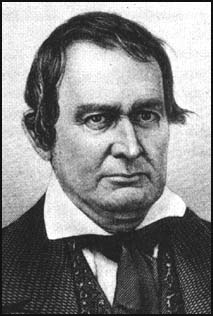 "I wonder that [abolitionist] Gerritt Smith should understand slavery so much better than most of the Northern people. "I wonder that [abolitionist] Gerritt Smith should understand slavery so much better than most of the Northern people.
"How true was his remark on a certain occasion, viz., that the South are laughing in their sleeves to think what dupes they make of most of the people at the North in regard to the real character of slavery.
"Well did Mr. Smith remark, that the system, carried out on its fundamental principle, would as soon enslave any laboring white man as the African. [Details].
"But, if it were not for the support of the North, the fabric of blood would fall at once.
"And of all the efforts of public bodies at the North to sustain slavery, the Connecticut General Association has made the best one. I have never seen anything so well constructed in that line as their resolutions of June, 1836. The South certainly could not have asked anything more effectual.
"But of all Northern periodicals, the 'New York Observer' must have the preference as an efficient support of slavery. I am not sure but it does more than all things combined to keep the dreadful system alive.
"It is just the succor demanded by the South. Its abuse of the abolitionists is |
-80-
| music in southern ears, which operates as a charm.
"But nothing is equal to its harping upon the 'religious privileges and instruction' of the slaves of the South. And nothing could be so false and injurious (to the cause of freedom and religion) as the impression it gives on that subject.
"I [Dr. Nelson] say what I know when I speak in relation to this matter. I have been intimately acquainted with the religious opportunities of slaves—in the constant habit of hearing the sermons which are preached to them.
"And I solemnly affirm, that during the forty years of my residence and observation in this line [c. 1806 - c. 1846], I never heard a single one of these sermons, but what was taken up with the obligations and duties of slaves to their masters.
"Indeed, I never heard a sermon to slaves but what made obedience to masters, by the slaves, the fundamental and supreme law of religion.
"Any candid and intelligent man can decide whether such preaching is not, as to religious purposes, worse than none at ail.
Ed. Note: Harriet Beecher Stowe, Key (1853), pp 244-250, cited Southern clergy refusal to preach the gospel to slaves.
The basis for slavers' banning reading by slaves includes the slaver / creationist dogma that blacks were not human but instead a separate species.
The only Bible messages such creatures would hear, if anything, was essentially only 'do as you're told'! See example of such 'do as told' sermon, by Bishop Meade, pp 14-18, supra.
Southern clergy motive in only preaching 'do as told' was concubines for themselves. |
"Again: It is wonderful how the credulity of the North is subjected to imposition in regard to the kind treatment of slaves.
"For myself I can clear up the apparent contradictions found in writers who have resided at, or visited, the South.
"The 'majority of slaveholders,' say some, 'treat their slaves with kindness.'
"Now this may be true in certain states and districts; setting aside all questions of treatment except such as refer to the body.
"And yet, while the 'majority of slaveholders' in a certain section may be kind, the majority of slaves in that section will be treated with cruelty.
"This is the truth in many such cases, that, while there may be thirty men who may have but one slave apiece, and that a house servant, a single man in their neigbborhood may have a hundred slaves, all field hands, half fed, worked excessively, and whipped most cruelly.
"This is what I have often seen.
"To give a case to show the awful influence of slavery upon the master, I will mention a Presbyterian elder, who was esteemed one of the best men in the region—a very kind master. I was called to his death-bed to write his will. He had what was considered a favorite house-servant, a female.
"After all other things were disposed of, the elder paused, as if in doubt what to do with 'Su.' I entertained pleasing expectations of hearing the word 'liberty' fall from his lips; but who can tell my surprise when I heard the master exclaim,
'What shall be done with Su? I am afraid she will never be under a master severe enough for her.'
"Shall I say that both the dying elder and his Su were members of the same church! the latter statedly receiving the emblems of a Saviour's dying love from the former!" |
In the Spring of 1847 the New York Evangelist had the following most instructive as well as frank acknowledgment:
-81-
| "To the shame of the Church it must be spoken, the foremost men in some of our philanthropic movements, in the interpretation of the spirit of the age, in the practical applications of Christianity, in the reformation of abuses, in the vindication of the rights of man, are men who make no profession, and whom we have no reason to believe tu be experimentally acquainted with Christianity.
"The Church has pusillanimously left not only the working oar, but the very reins of certain necessary reforms of the day, in the hands of men, who, if not before [previously] inimical to Christianity, will be made so by Christianity's neglect of what it is its proper mission to look after.
"They [non-Christian reformers] are doing practically with all their might, for humanity's sake, what the Church ought to be doing as heartily through its ministry and representative men for Christ's sake.
| Ed. Note: With so many "Christian" clergy being evil, they were making, not converts, but infidels, said Rev. William Patton, Making Infidels (1846). |
"And if they [non-Christian reformers] succeed, as succeed they will, in abolishing Slavery, in banishing intemperance, in killing war, in restraining licentiousness, in reforming social abuses, then the recoil upon Christianity, the antagonistic reaction from these Christianized sensibilities upon the cause of religion itself, will be disastrous in the extreme.
"Wo be to religion when irreligious men, by force of nature, or the tendency of the age, get ahead of the Church in morals and in the practical work of Christianity. In some instances they are already [1847] a long ways ahead. And, we might specify individuals and juurnals in this country that are far before the recognized organs of the Church in the advocacy of truth, and righteousness, and liberty. It would be difficult to say whether there is the more disgrace or danger in a fact like this.
"We learn from Scripture, and it is a little remarkable that it is the only exact definition of religion found in the sacred volume, that pure religion and undefiled before God, even the Father, is this, to visit the fatherless and widows in their affliction, and to keep one's self unspotted from the world. [James 1:27]
look not every man on his own things, but every man also on the things of others. [Philippians 2:4]
Remember them that are in bonds as bound with them [Hebrews 13:3];
whatsoever ye would that others should do to you, do ye even so to them." [Matthew 7:12]. |
The following are the declarations of an English Divine, but one whose praise is in all the American Churches, Rev. John Angell James:
| "Let the Church be what she ought to be, what she might be, and what she one day will be, and she would command the attention, secure the reverence, and obtain the submission of the world on all points of truth and morals.
"Slavery and wars at her bidding would come out of the [church and national] bodies [institutions] they have possessed, troubled, and tormented, just as the demons did, which, at the voice of |
-82-
| Christ, left the men who dwelt among the tombs, and, entering into the swine, left their former victims in liberty and peace.
"Men do not see the sin of slavery and war, however clearly they perceive and willingly acknowledge their evils.
"And why do they not see it? Because their spiritual vision is weakened by the feebleness of their piety.
"The sense of the spiritual eye is in the heart; and if that be dull and obtuse [seared], moral truth is not, and cannot be, clearly discerned.
"And who ought to be foremost in the Church but its pastors? If the Church is the light of the world, they are the light of the Church. "Instead of sinking to the level of the people, they should draw up the people to their own [ouught-to-be higher level]; instead of a timid, shrinking, time-serving spirit, and acting upon the law of expediency, let them, in the spirit of martyrdom—and what else, or less, is the spirit of the gospel?—proclaim from the pulpit, and, if need be, from the prison and the stake, the sin of whatever opposeth itself to the kingdom of God.
"When theChurch is what it ought to be, the world will be converted; and the Church will be what it should be whon its ministers are.
"A better Church will make a better world, and a better ministry will make a better Church. Let this be sounded forth through all lands." |
Clergy Power Over Laymen
The following extracts from the Annual Report of the Vermont Domestic Missionary Society, for 1841, signed by Rev. Samuel Delano, Corresponding Secretary, "in behalf of the Directors," gives the sentiment of that numerous and powerful body, embracing the strength of the whole Congregational and Presbyterian Church of that State:
| "The ministers are the heads of the churches, the leaders in the sacramental host of God's elect.
"NO MEASURE CAN BE CARRIED WITHOUT THEM, much less in opposition to them.
"And scarcely any proper measure can fail to succeed when the ministry put forth their power.
"In view of this fact, it is asked, with the utmost earnestness, ought they not, and, in view of their obligations and of the glorious results sought, will they not, come up to this work, and lead on the churches?
"The churches can be reached in no other way. No man can approach a church when the pastor interposes. HE CANNOT, AND HE MAY NOT IF HE CAN.
"To give Vermont to Christ—this is the peculiar work of the church of Vermont. It is the field given to these ministers and churches to cultivate and KEEP." |
Such extracts are only specimens of the numerous avowals of the Church that "no enterprise can fail to succeed" when she puts forth her power.
The Church then holds the key to the prison where humanity wails and weeps entombed from age to age.
Ed. Note: These "prisons" include:
slavery
alcoholism
blindness
crime
deafness
drugs
homelessness
more.
Note that clergy REFUSE to preach prevention, thus are accessory partakers. Partaking of others' sins is forbidden, see, e.g., Ephesians 5:7, 1 Timothy 5:22, John 17:15, 2 Corinthians 6:14-18, and Revelation 18:4.
Instead of partaking in evil, stated positively, people are to become partakers in the holy divine nature, 2 Peter 1:4. Example: “Let him that stole steal no more,” Ephesians 4:28. Don't be overcome by evil, Romans 12:21. Resist the devil, James 4:7 and 2 Peter 5:8-9.
Be holy, 1 Peter 1:16. Abstain from lusts, 1 Peter 2:11. |
-83-
Unnumbered millions have died in her Bastile [prison], on whose eye never dawned the rays of moral or mental instruction.
Millions yet linger there, whose cry falls all unheeded on her leaden ear.
| Ed. Note: For more on the South's reading ban, see
Rev. John Rankin, Letters (1821), p 21
Rev. Stephen Foster, Brotherhood (1843), p 35
Charles Sumner, Barbarism of Slavery (1860), p 134
Rev. Parker Pillsbury, Acts (1883), p 436. |
Millions yet linger there, whose cry falls all unheeded on her leaden ear.
The monstrous assumptions of the Clergy [oft lust-motivated], whereby the Church and people are held in their present guilty position [pro-slavery], cannot receive too much consideration. On them, after all, rests the tremendous responsibility of upholding and perpetuating [aiding, abetting, partaking in] the slave system.
The following Resolution, adopted by the General Associations of Massachusetts and Connecticut, is now the law of the whole Congregational and Presbyterian Church of the nation. It was passed, as will be seen, with direct reference to [retgaliation against] the labors of anti-slavery and other agents for the promotion of the causes of Reform:
| "Resolved, That the operations of itinerant agents and lecturers [e.g., Rev. Foster attending to speak at churches], attempting
to enlighten the churches in respect to particular points of Christian doctrine and Christian morals, and
to control the religious sentiment of the community on topics which fall most appropriately within the spheres of pastoral instruction and pastoral discretion as to time and manner,
without the advice and consent of the pastors and regular ecclesiastical bodies, are an unauthorized interference with the RIGHTS, duties, and discretion of the stated ministry,—dangerous to the influence of the pastoral office, and fatal to the peace and good order of the churches."
| Ed. Note: And their real concern, concubines for clergy! That would end if "itinerant" abolitionists exposés kept up! |
|
Still later the General Association of Massachusetts issued the following in their letter of statutes and instructions to the Churches:
| "We would call your attention to the importance of maintaining that respect and deference to the pastoral office which is enjoined in scripture, and which is essential to the best influence of the ministry on you and your children.
"One way in which this respect has been in some cases violated is in encouraging lecturers or preachers [e.g., Pillsbury] on certain topics of reform [e.g., anti-slavery] to present their subjects within the parochial limits of settled pastors without their consent (!!!!)
"Your minister is ordained of God to be your teacher, and is commanded to feed that flock over which the Holy Ghost hath made him overseer. If there are certain topics upon which he does not preach with the frequency or in the manner that would please you, it is a violation of sacred and important rights to encourage a stranger to present them.
"Deference and subordination are essential to the happiness of society, and peculiarly so in the relation of a people to their pastor. Let them despise or slight him, and he ceases to do them good, and they cease to |
-84-
| respect those things of which he is at once the minister and thesymbol. There is great solemnity in these words,—'Obey them that have the rule over you, and submit yourselves.'" [Hebrews 13:17]. |
The meaning of these enactments is thus given by two distinguished ministers in New England, Rev. Messrs. Fitcb and Towne, of Boston, in theNew England Spectator:
| "When a people have chosen a pastor, and he has been regularly inducted into office, they have so far surrendered up to him the right to discharge the appropriate duties of the office in the parish over which he is settled, that they themselves cannot send another to discharge these duties, all or any part of them, against his wishes, without an evident INVASION OF HIS TERRITORY.
"Whoever comes before a parish under these circum-stances is AN INTRUDER.
"And equally so is he who, after being admitted by the pastor, sets up his judgment in matters that fall properly under the pastor's control.
"These are both acts of trespass, and the perpetrators of them are, or ought to be, liable to ecclesiastical censure.
"The unfaithfulness or incapacity of the paster is no apology for the offence." |
Such are the monstrous decrees of our spiritual star-chambers. The constitution of the United States, bloody and barbarous as that Draco outrage on liberty and justice is [as per its being disregarded], expressly forbids Congress to pass any law "prohibiting the right of the people peaceably to assemble together." [First Amendment].
"But the Ecclesiastical parliaments of the nation, whose penalties are "everlasting fire," and "the damnation of hell," deliberately decree that if a Church member dare assemble thepeople, and bring before them an advocate of the claims of humanity, "without the consent of the pastor," he shall be visited with the terrors of discipline, and if he persist, of excommunication.
| "The unfaithfulness or incapacity of the pastor is no apology for the offence," say these [pretended] divine legislators. |
So then, had some father, alarmed for the security of his daughters, just blooming into womanhood, while an ordained and Doctorated adulterer had been for twenty years keeping beaten track from his pulpit to "the house of the strange woman,"—had some such father, regardless of the clerical mandate, introduced a lecturer on moral reform into the parish, his doom must have been expulsion from the Church, and if the assumption of the Church be true, from the kingdom of heaven.
The "unfaithfulness" of the foul deceiver to rebuke the sin of which he himself is most guilty, "is no apology for the offence."
The cool and deliberate manner of consigning to perdition
-85-
those who disobey the mandates of the Church, will be seen in the following letter. The member thus expelled was of most unblemished purity of character.
Miss W. had been voted to the doom of apostates.
| "Miss W.: It is my painful duty as pastor to send you the above vote.
"Now, if you are, in the sight of Christ, an excommunicated person, for a breach of covenant, no sympathy or protection, which any professed Church of Christ can afford you, will lessen your guilt, or restore you to membership in the Saviour's body.
"If we have done according to the mind of Christ, in this matter, 'whatsoever is loosed on earth shall be loosed in Heaven.' * * *
"Until you are truly penitent, you are, by a vote of a Church of Christ, declared to be cut off from a visible union wiih Him, and cast out among his enemies, and to the power of the god of this world, that your spirit may be saved in the day of the Lord Jesus.
"Let me affectionately and solemnly exhort you to consider your ways, and in time to repent, and escape the doom of apostates from Christ.
"I remain your friend,
"N. Adams,
"Pastor of Essex St. Church.
"Boston, June 1, 1840." |
But let us hasten on. Appalling, indeed, is the picture that truth and justice compel to be drawn.
The following extract of a "Circular Letter to the churches composing the Portsmouth Baptist Association," issued in 1842, shows the ministers of that denomination to be not less audacious in their usurpations. The letter is deploring that the former deference to the clergy is gone, and is seeking the cause and the remedy.
| "We are also aware that the ministry itself is chargeable, to no little degree, with bringing about such a state of things as we herein deplore.
"Maybe they have thought, by placing themselves more on a seeming level with their fellow citizens, by mingling in their debating clubs, and joining with them in their efforts to bring about certain moral improvements, that in this way they would get a nearer access to them with the gospel; but we think that by pursuing such a policy they have unavoidably lost that reverence which the people must have for their ministers over that which they cherish for other men, and lost also the end [goal] which they thought to gain by taking such steps.
"Nor is this all. Ministers have not been sufficiently respectful and decent in their intercourse towards each other, and the world and the church have |
-86-
| seen it, and taken undue liberties from it. Hence, the ministry has plunged a dagger at its own vitals: and now, as long as they continue to disrespect and accuse each other, they must not be surprised if they are disesteemed by others.
"Let them begin the work of reformation among themselves, and let them so demean [behave] themselves that the robes of their office shall be held in future by all as sacred and inviolable." |
Here is one of the largest clerical bodies in New Hampshire, or New England, confessing that its "seeming" (mark the word), seeming to be "on a Ievel with their fellow citizens," and "seeming" to "mingle in their efforts to bring about certain moral improvements," are only the most infamous hypocrisy; that it is done to deceive them into the embrace of a sectarian religion, which is here proved as corrupt and foul as the breath of perdition.
But the revelation is too dreadful for comment.
The whole treatment, by this and kindred bodies, of the anti-slavery enterprise, bears witness to the truth of this strange and monstrous confession. And the result they deplore is, that they are losing
| "that reverence which the people must have for their minister over that which they cherish for other men." |
A short time since [ago] the Rev. Dr. Woods, of Andover Theological Seminary, was called to preach a sermon at the ordination of his son as pastor of the Presbyterian church in Spring Water, New York. An extract or two will follow:
| "How often do we hear it said, and said truly, at the present day, that the ministry is not duly respected! And have we not here one of the causes of this?
"Ministers have not kept in their place. They have more or less neglected their sacred trust, and gone into other employments. This has opened the door for other men to thrust themselves into their place and assume their office.
"Is not this one of the reasons that the sacred office has lost so much of its sacredness?
"Open your eyes, brethren, and see how the enclosures of the ministerial office are broken down, and (I am sorry to say it) broken down chiefly by ministers themselves: so broken down that no one can find the line of separation between the ministry and secular employments!
"And who of you, brethren, are prepared to meet the natural consequences of this? Who of you are willing that every one called an evangelist, and every one called a lecturer,—that every man and woman, who are puffed up with pride and self-sufficiency, should thrust themselves into your pulpit, and assume the work, or any part of the work, of moral and religious instruction which belongs to you? * * * * * * * * *
"Those who go into the ministry ought scrupulously to confine themselves within the just bounds of their office, and to lay out |
-87-
| their time and strength upon their appropriate duties. If we would do the work of the ministry in the best manner we are capable of, we must abstain from all other employments that would interfere with it. * * *
"True, it puts a yoke upon us, but the yoke is easy; a burden, but the burden is light. If then we might leave our sacred work for some other, how could we make such a sacrifice? Who would willingly descend from a higher to a lower employment? Who would willingly practise such self-denial as to give up, even for a time, the blessed, honorable business of a gospel minister, for any other business which can be named, or any place which the world can offer?
"Other works, I admit, are honorable. But how much more honorable is this!
"The throne of a king is a high place, but how much higher is a pulpit." |
Thus did the venerable Doctor complain of the loss of reverence towards the ministry. And thus did he invest his son with royal honors and a "throne."
[Sarcasm:] How like Him who came in "the form of a servant," meek and lowly [Philippians 2:7] , and with "not where to lay his head" [Matthew 8:20] ; or those faithful disciples of his, who, instead of titles, or "thrones," or "reverence" even, were made the "off-scouring of all things." [1 Corinthians 4:13] .
While the pulpit is thus covetous of honor and reverence, it is not strange that it grows dainty as to the birth and circumstances of those who shall possess its royal prerogatives.
When, a year or two since [ago], the General Assembly was sittmg at Louisville, Kentucky, the subject of educating young men for the ministry came up for consideration. The Rev. Dr. Brown, President of Washington College in Pennsylvania, submitted these remarks:
| "There is, to my mind, a wrong bias on the subject of candidates for the ministry. We have given an undue prominence to educating POOR pious youth to the ministry.
"What is the record of the Old Testament? God in his wisdom instructed his servant Moses on this subject, and the priesthood was assigned to the HONORABLE AND NOBLE TRIBE OF LEVI. [Numbers 3:6-10].
"Now, sir, let us look on the other side. Jeroboam selected the priesthood from the lowest, the meanest, of the people.
"I do think that too much of the care of the Board is bestowed on those who are of families "NOT OF THE CLASS TO ELEVATE THE STANDING OF OUR CHURCH." |
At the seventeenth annual meeting of the American Home Missionary Society, the venerable Dr. Beecher offered a Resolution declaring
| "the STATED evangelical ministry is eminently the power of God for the conversion of the West." |
He supported
-88-
his resolution in a speech of some length, an extract of which follows:
| "A stated [fixed-location] ministry unites society also by stronag bonds. A good pastor is a sort of central power in society. He holds the affections of those with whom he dwells, and becomes a peace-maker among them.
"All these influences are peculiar to the permanency of the stated ministry.
"They are lost by the transient ministry [e.g., traveling abolitionist Rev. Pillsbury!].
"Instances of the effects thus produced [by such traveling clergy] might easily be mentioned.
"I could tell of a minister who, having preached there for fifty years, became the patriarch of the village. And once, when a lecturer came there whom he thought [pretended] unsafe, he put on his gown and wig and cocked hat and walked up one side of the street, and told his people they had better not go, and then walked home on the other. Every soul stayed at home!
"All that is healthful in society finds support in the stated ministry."
|
And [sarcastically!] this [50-year-man] is an example to be followed.
Let the people contemplate their condition and character.
The two following extracts will suffice. The first is from a letter of a clergyman in Maryland, giving an account of a revival that occurred some three years ago. It was copied into the Congregational Journal of 20th of April, 1843, the organ of the Congregational and Presbyterian church of New Hampshire, with this endorsement of its [lay-passivism] sentiments, and exhortation to other churches and ministers to imitate the [lay passivism] example thus set them:
| "Let ministers cultivating long neglected and unpromising fields be encouraged by this example. God will give the largest blessings to those who make the largest sacrifices [in suppressing their member activism proclivities].
"Let the lay members of our churches be admonished of their duty and responsibility [to be passive followers] by the diligence and success of their distant brethren in Maryland.
"A great part of the moral power of our churches is lost by the neglect of the brethren 'to occupy the talent' their Lord has given them" [meaning, be passive followers only!] |
And then follows the letter of the Maryland minister, Rev. Mr. Harkey, an extract of which reads thus:
| "The church must carry on revivals. Ministers alone cannot and ought not to do it. "The strength of the church of Christ has never been fully developed in this respect since the days of the apostles. All our meetings this winter have proved the efficacy of lay help.
"I have only preached, administered the ordinances, and superintended: the members have done the work,—members converted under my own labors.
"But, asks one, what can laymen |
-89-
| do? Answer, everything but preach and administer the ordinances!
"The whole church is a practical missionary society, and they 'go out into the highways and hedges and compel them to come in!'
"Ought it not to be so? I, as a pastor, have of course not heen idie, for during the months of January and February I preached fifty sermons, besides lectures at prayer meetings, &c., but the members carried on the meetings.
"But do not your men become stubborn and ungovernable when you send them to work, and all want to be preachers and take your place? asks another.
"I answer, No! They would not crook their finger without asking me first.
"I am their Pastor, their shepherd, their general, and they do not move until I give orders.
"This is right; and when men's hearts are right with God, they will not only not oppose their pastor or wish to take his place, but stand by him, uphold his hands, and pray for him."
Ed. Note: On the contrary, members are to reject evil clergy!
Clergy are more subtle in their evils now. Clergymen then directly attacked traveling reform lecturers; now they discourage member participation by less blatant approaches.
Anti-slavery was the LAST Bible-based reform; clergymen vowed 'never again,' and thereafter have obstructed still-needed societal reforms. |
|
It need not be added that the solemn exhortation to imitate such an example [lay passivism] is heeded in the church to a most melancholy extent, as this whole chapter of developments [including lay fear to even listen to an anti-slavery lecturer!] fully proves.
Within the last few years the prevalence of the Methodist and Miller doctrine, relative to [permitting] the public speaking and praying of women, has been such as in a very few instances to reach to the more dignified denominations, and measures have been taken to check the calamity. Against this innovation [allow women role] was at once arrayed the Hopkinton Association of Congregational Divines, a formidable body in New Hampshire. They unanimousiy enacted a statute in 1843, of which the following is a perfectly fair specimen:
"Not that women may not bear a part in the songs of the church, because this is an established part of public worship, and is not prohibited to women as public teaching and praying are; publicly to sing God's praise, under men as leaders, is, by implication, enjoined upon women, as is the celebration of the holy supper, and of the Saviour's resurrection, by keeping the first day of the week as holy time.
| Ed. Note: Note they first make this latter rule up; there is no such commandment! |
"Nor does the prohibition deprive females of any of the privileges of the Bible class, or religious conference, in which they are indulged with perfect freedom of speech, in answering the questions which their pastors, leaders, or catechists put to them.
"But, as to leading men, either in instruction or devotion, and as to any interruption or disorder in religious meetings, 'Let your women keep silence in the churches [1 Cor. 14:34];' not merely let them be silent, but let them keep or preserve silence.
| Ed. Note: What Paul really said was, 'Let your [Corinthian] women keep silence in the [Corinthian] churches,' a one-time memo in a one-time special circumstance, a rule never sent to any other church! |
"Not that they may not preach, or pray, or exhort merely, but they may not open their lips to utter any sounds audibly.
"Let not your women in promiscuous [both male and female attendees] religious meetings preach or pray audibly, or ex- |
-90-
| hort audibly, or sigh, or groan, or say Amen, or utter the precious words, 'Bless the Lord,' or the enchanting sounds, 'Glory! Glory!'" |
Ransack the records of papal or pagan despotism, and you look in vain for a grosser outrage on common decency, to say nothing of Christian liberty.
I dare not give utterance to the feelings that rush upon me towards those strangely infatuated men, who sustain these archangels of folly and depravity in such outrages on the wives and sisters of their love.
Such is the account the church renders of herself. No witness has been examined but such as she must approve, nearly none but such as she has furnished.
And they have given their testimony in their own way [own published words]. No keen and subtle cross-questioning has embarrassed them. No opposing counsel has been by to distort and pervert their words. Throughout the examination has been as just, especially to the church, as can be the trials of the great day of account [Judgment Day].
And what is the result? In the middle of the nineteenth century, surrounded by all its light, blessed with the experience of the ages past, and rocked with agitation as is the world on the great question of human freedom, the Protestant church has yet to learn that man cannot be the property of his fellow man.
That God, in the person of his children, may not be a marketable commodity, to be sold, leased, and mortgaged, and noted in the price current as other chattels.
Scarcely is there a Doctor of Divinity in the land (perhaps not one) wbo will not sit at the sacramental board with the holders of property in the bodies and spirits of men.
Ed. Note: Meaning that they acknowledge even the most vile, demonized, heathen, adulterous, depraved Churches as "true" churches of God. Just say the name of 'Jesus'!! and anything goes, no limits, no restraints! no sins barred! no matter how entrenched, continuing, repeated, vile!
As though NONE of the instructions on dealing with the unrepentant ever existed! |
[Christianity Less Moral Than Judaism]
Judaism was never thus atrocious. It returned no fugitives, and its jubilees proclaimed "Liberty through all the Land, to all the inhabitants thereof."
| Ed. Note: See details by Rev. John Fee, Anti-Slavery Manual (1849), pp 39-44 and 51-54
Harriet B. Stowe, Key (1853), pp 115-120
Rev. George Cheever, God Against Slavery (1857), pp 135-161. |
But our [allegedly] "better dispensation" returns the captive to his master; nor does a seventh or a fiftieth year jubilee ever ring joyfully on his ear.
Ed. Note: The reason: "verily, three fourths of all the Episcopalians, Methodists, Baptists, and Presbyterians, in eleven states of the Union, are of the devil."—Rev. James H. Smylie (1836), quoted by Rev. Stephen S. Foster, Brotherhood of Thieves (1843), pp 14-15.
Most so-called Christian clergymen are heathen, with an implacable hatred of God's law for running society.
Remember, the clergy was so ultra-vile that by 1841, they were mostly all excommunicated.
This excommunication has never been revoked. Most clergymen never repented, never became Christian, never ceased being "emperor [secular law government] worshippers," never ceased their implacable heathen hatred of God's law for running society. |
[Christianity Less Moral Than Islam]
Mahometanism is less barbarous. The slave code of Virginia punishes with death for seventy offences, when the offender is a slave, and only for six when the offender is a free white. And Virginia (so they tell us) is a Christian State.
Sir J. Malcolm, in his interesting "Sketches of Persia," says:
| "Slaves in the Mahometan countries are only liable, for any crimes they may commit, to half the punishment to which the freemen would be subject.
"The law proceeds on the ground of their not being supposed on a par, as to knowledge or social ties, witb other parts of the community." |
| Ed. Note: Full citation: Sir John Malcolm (1769-1833), Sketches of Persia, From the Journals of a Traveller in the East (London: John Murray, 1827, reprinted 1828, 1845 and 1849; and Philadelphia: Carey, Lea, & Carey 1828) |
-91-
Nor can any Mahometan hold in slavery a brother of the same faith. Not the Grand Sultan himself could hold his most valuable slave for an hour after he had professed himself a believer in the Koran.
Not so with us. A statute in some slave States expressly declares that
| "conversion to, and profession of the Christian religion is lawful for any slave, but shall never be considered as affecting his or her emancipation." |
Instead of this, it is generally regarded as enhancing the value of the slave, and a "revival" on a large plantation has often added greatly to the wealth of the owner.
And Mahometanism, even in the States of Northern Africa, is abolishing slavery by legal enactment, and as one of the reigning princes beautifully says, "for the glory of God, and to distinguish mankind from the brute creation."
[Letter from Prince of Tunisia]
Let the following document be well considered. And let it be remembered, too, that the writer is one of the "benighted heathen," for whose conversion the American church pretends to be laboring:
| "From the servant of God, the Musheer Ahmed Bashaw Bey, prince of the Tunisian dominions.
"To our ally, Sir Thomas Keade, Consul General of the British Government at Tunis.
"Whereas, our aversion to the thraldom imposed on the human kind, which debases it to the condition of the brute creation, is well known to you, having conversed togetber on this matter.
"Our attention has been directed to the repression of this traffic, as well as to its total abolition, with a due regard, however, to the interests of our subjects, so as not to cause them a loss of property.
"We commenced [this two-year abolishment programme] first by prohibiting their embarkation for foreign countries as objects of commerce, as we wrote to you on the 9th Rabih 1st, 1257 [1841].
"Subsequent to which we sent orders to places situated on the road of the caravans coming from Ghadames not to permit any person to enter our territory with any slave as an article of sale; and should any refuse to do so, and not return, the slave should be liberated to his loss, conformably to what we informed you on the 17th Rabih, 1258 [1842].
"We afterwards
abolished the market established for their sale in our capital (thus giving up the revenue which our Government reaped from it),
declared that all slaves that should enter our kingdom, by land or by sea, should be free;
and further ordered that every one born a slave in our dominions should be considered as free from the very instant of his birth, and that he could |
-92-
neither be sold or bought, as we informed you thereof on the 6th Elkuada, 1258 [1842].
"Our resolutions were likewise strengthened, and we felt a real satisfaction at the accord which existed between our sentiments and those expressed by the Anti-Slavery Society, which ennobles itself by upholding the dignity of mankind in the letter we rceived on its part, and which we answered on the Rabih 1st, 1258 [1842].
"This affair never ceased to be the object of our attention, as well as the central point of our consideration; and we have thought proper to publish that we have abolished Slavery in all our dominions, for we consider all slaves existing in our territory as being free, and do not recognize the legality of their being kept as property.
"We have sent some notaries to the sanctuary of Sidy Mahrez in town, and to the sanctuary of Exxawin Elboucaria, in the suburb of Bab Essuika, as well as in that of Sidy Manzour, in the suburb of Bab Eizezirah, with the object of writing in favor of such slaves as should present themselves to them a document constituting them free on our part, and which document shall be represented to us for the apposition of our seal, and no right of property on their persons shall be alleged by their masters.
"We have likewise sent the necessary orders to all the Governors in our Tunisian [now Libya] kingdom, and having determined on writing a circular to all the consuls of friendly governments in our capital, you shall equally with them receive a copy of such circular. We hasten to forward to you this letter, for you know our sentiments and what we spake together on the subject.
"We thank Providence for the aid it has afforded us in putting an end to this [slavery] business, which we know is also an object of attention to the great and illustrious British government; and we pray the Most High that our opinions be always in union with their own in every point. May the Lord keep you under his safe guard.
"25 Moharrem Elkram, 1262.
"22d January, 1846." |
Why should not an Arabian Board of Commissioners for Foreign Missions be established to propagate a better faith in the churches of the United States!!
[Protestantism Less Moral Than Catholicism]
Catholicism, too, has outstripped us.
Ed. Note: See Catholic history on the subject, especially Dr. Jaime Balmes' book El Protestantismo Comparado Con El Catolicismo (Barcelona, Spain: Brusi, 1842, 1844, 1849). The point of the book was to show Catholicism as more moral on slavery, more anti-slavery, than Protestantism.
Catholic nations were banning slavery before Protestant. |
One country alone [Cuba], on all the South American Continent, holds the withering curse of slavery as a part of its national or religious order. Mexico too had swept it away. In 1829 she abolished it by decree [as per the Pope telling Mexico to ban slavery]. This Protestant nation has been at war with her [Mexico] ever since.
The President [pro-slavery James Polk (1845-1849)] was right in his War Message [attacking Mexico in 1846 like Japan would attack Pearl Harbor, with no prior declaration of war] (though he did not mean
-93-
it), when he [President Polk] said "war existed [against the U.S.] by the act of Mexico." It was even so. But her "act" was the abolition of slavery [as per the Pope having told Mexico to ban slavery; Polk wanted the ban repealed].
The new Pope, Pius IX [1846-1878], is showing himself the inflexible foe of all oppression.
His predecessor [Gregory XVI (1831-1846)] even was high as heaven above American Protestantism in the scale of humanity.
Long ago [1839, i.e., eight years earlier] he [Gregory XVI] interdicted slavery as "utterly unworthy the Christian name."
The following is but a brief extract [of the full text]:
Bull of Pope Gregory XVI for the
Abolition of the Negro Slave Trade.
"On the 3d of December, 1839, the ninth year of the pontificate. * *
"Wherefore, we desiring to avert this disgrace from the whole confines of Christianity, having summoned several of our reverend brothers, their eminences the cardinals, to our counsel, and having maturely deliberated on the whole matter, pursuing the footsteps of our predecessors, admonish by our apostolic authority, and urgently invoke in thename of God all Christians, of whatever condition, that none henceforth
dare to subject to slavery, unjustly persecute, or despoil of their goods, Indians, Negroes, or other classes of men,
or to be accessories to others,
or furnish to them aid or assistance in so doing;
and on no account henceforth to exercise that inhuman traffic, by which negroes are reduced to slavery as if they were not men but automata or chattels, and are sold in defiance of all the laws of justice and humanity, and devoted to severe and intolerable labors.
"We further reprobate by our apostolic authority all the above described offences as utterly unworthy the Christian name; and by the same authority we
rigidly prohibit and interdict all and every individual, whetber ecclesiastical or laical, from presuming to defend that commerce in negro servitude under any pretence or borrowed color [excuse],
or to teach or publish in any manner, publicly or privately, things contrary to the admonitions which we have given in these letters." |
[Conclusion]
Thus sadly does our nation's [majority Protestant] religion contrast with Judaism, Mahometanism, and Catholicism. In how different a light is slavery regarded by the very highest dignities in the Protestant churches of this infatuated nation!
Dr. Winans, of Mississippi, publicly declares:
| "Christian ministers ought to hold slaves, and to be diffused throughout the South. Presbyterians, Baptists, Methodists should be slave-holders. There should be members and deacons, elders, and |
-94-
| bishops, too, who are slave-holders. The interests of the slaves require it." |
And Dr. Taylor, of Yale College, at the head of the Theological department, instructs his pupils, candidates for the ministry, that
| "if Jesus Christ were now on earth, he would, under certain circumstances, become a slave-holder." |
Professor Stuart, of Andover Theological Seminary, writes to President [Wilbur] Fisk, of Middletown Theological Seminary, that
| "slavery may exist without violating the Christian faith or the church." |
And President Fisk writes back again,
| "this doctrine will stand, because it is Bible doctrine." |
The justly Rev. J. C. Postell, of South Carolina, exhorted the citizens of Orangeburg and vicinity, at an immense gathering, on this wise:
| "Shun abolitionism as you would the devil. Do your duty as citizens and Christians, and in heaven you will be rewarded and delivered from abolitionism." |
And the American church, from Maine to Mexico, and from Cape Sable to Vancouver's, rings out her loud and long Amen to [vile] doctrines so horrible, so shocking to humanity.
The church has told us what she was, what she is, and what, in her own judgment, she might be. Half a century ago she knew and affirmed that slavery was the sum of every abomination. And if in the dim twilight of that period she saw thus clearly its character, how false and absurd is her present defence, that she waits for light and intelligence.
But the church, moreover, admits that she holds in her hands the power to set every captive free. She holds the key to his prison. She can say to the swelling tide of woes, that has for generations been beating upon the slave, thus far sbalt thou go and no farther.
On her own admission she has but to speak, and it is done. One of her brightest luminaries, Rev. Albert Barnes, declares [supra, p 78] that
| "if all the ministers and members of the churches were to do so simple a thing as the society of Friends [Quakers] have done, the system would come to an end." |
If the church believes her own admissions and declarations, what language can express the height and depth, the length and breadth, of her depravity? All the execrations [curses] of an outraged universe should, and soon will, fall on such a religion.
And yet they tell us this is the religion that is to give the world its millennium. To speak lightly of it (so must we believe) is the sin that "hath never forgiveness." It is the "blasphemy against the Holy Ghost." [Matt. 12:31-32.]
-95-
This is the gospel that is to abolish slavery, for the church, in the plentitude of her mad assurance, demands that its removal be left to her control and guidance. The Anti-Slavery enterprise she derides as superfluous, or denounces as "an unlawful and unwarrantable interference" with her prerogatives. She brands it as Infidelity, and warns the people to beware of it.
But the humanity of the nation is awaking, in spite of the sirocco breath of the [vile] church that has so long and so fatally poisoned everything within its influence. Statesmen and politicians are already opening upon the slave System with their fiercest batteries.
The spirit of Freedom is abroad among the nations, and the earth shakes beneath his mighty tread. He is saying to the North "Give up," and to the South "Keep not back."
Gloriously has England set [precedent, common law, and] the example of Immediate Emancipation.
  Other European nations are soon to follow, until throughout the Old World the song of universal deliverance shall swell away to heaven, loud as the voice of many waters, and sweet as the orisons of the morning stars. Other European nations are soon to follow, until throughout the Old World the song of universal deliverance shall swell away to heaven, loud as the voice of many waters, and sweet as the orisons of the morning stars.

 But in our land [the U.S.A.] shall slavery devour forever? But in our land [the U.S.A.] shall slavery devour forever?
Long ago the evil might have been stayed. Today there is a power [the church] which has but to speak, and it is done.
Only the decree of the church is needed, and the work is accomplished.
That all-conquering decree is withheld [refused to be said, by "Christianity's" evil clergy].
Ed. Note: But they decades later tried to steal the credit for slavery's abolishment! assuming the abolitionists were dead by then. Harriet Martineau (1802-1876), in Society in America (1837), § XVI, "Administration of Religion," had warned that once slavery was abolished, clergy might try to steal the credit: "if the clergy of America follow the example of other rearguards of society, they will be the first to glory in the reformation which they have done their utmost to retard."
Fortunately abolitionist Rev. Pillsbury was alive (1883), and wrote a rebuttal: Acts of the Anti-Slavery Apostles (Concord, N.H., 1883)! |
The evil [slavery] yet lives [1847], and direful are its bloody conquests.
Such a [morally depraved] church, what is it but the BULWARK—THE FORLORN HOPE OF SLAVERY?
[The End]
-96-
|
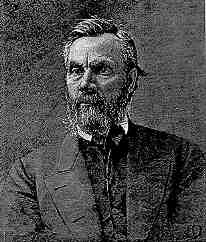 This site is one in a series on the abolitionists from before the 1861-1865 Civil War.
This site presents a book by one of them, Rev. Parker Pillsbury (1809-1898).
This site is one in a series on the abolitionists from before the 1861-1865 Civil War.
This site presents a book by one of them, Rev. Parker Pillsbury (1809-1898).
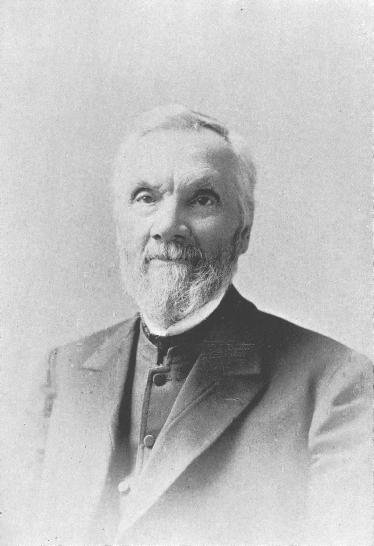
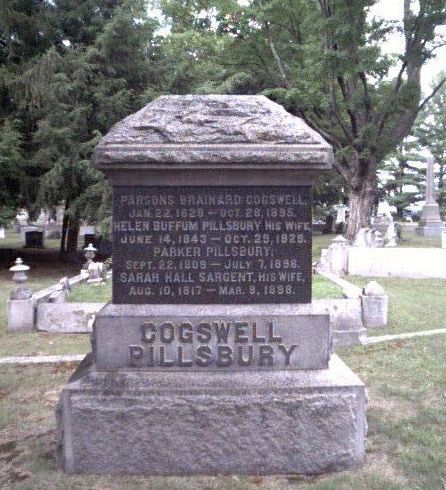
 See also the biography, Parker Pillsbury: Radical Abolitionist, Male Feminist, by Stacey M. Robertson (Ithaca, N.Y.: Cornell University Press, 2000), based on her Ph.D. dissertation, Parker Pillsbury, Antislavery Apostle: Gender and Religion in Nineteenth-Century U.S. Radicalism (Santa Barbara: University of California, 1994). [