
by citing the medical data on the subject 1836 to present, and by revealing what judges "everywhere" know, via data generated in the criminal processing system.
could and would prevent most crimes, prevent non-criminals being turned into criminals, prevent you and loved ones becoming victimized, prevent media citing you, and your tragedy, in one of their news "sob stories" ("if it bleeds, it leads"), and reduce the pressures for phony 'tough' or 'feel-good' solutions and punishments.
|
"[I]t is evident that . . . punishment is not imposed until after the deed is done. It is . . . directed against effects, but it does not touch the causes, the roots, of the evil."
"[W]e have but to look around us . . . to see that the criminal code . . . remedies nothing." The hope is "That which has happened in medicine [prevention] will happen in criminology."—Enrico Ferri, Lecture (Univ. of Naples, 24 April 1901), in The Positive School of Criminology: Three Lectures Given at the University of Naples, Italy, on April 22, 23 and 24, 1901 (Chicago: C.H. Kerr & Co., 1906 and 1912). Ferri (1856-1929) was a legal scholar involved in developing criminology as an academic discipline. Likewise, a then classic crime analyst, Cesare "Lombroso . . . understood crime as arising from the interplay of social and biological causes," says reviewer Elun Gabriel, on Cesare Lombroso, Criminal Man (1876), translated and edited by Mary Gibson and Nicole Hahn Rafter (Durham: Duke Univ Press, 2006). (Review). Eliminate the cause; the effect disappears. "Sublatâ causa, tollitur effectus: Otez la cause, l'effet disparaît."—Dr. Hippolyte Adéon Depierris, Physiologie Sociale (Paris: Dentu, 1876), p 328. Dr. Depierris (1810-1889) was a contemporary researcher on this subject in Ferri's era. "The solution to crime is not punishment. Crime is due to poverty, ignorance, emotional problems, and similar causes that cannot be reached by punishment. . . . Change a man's circumstances and you change the man," says Daniel P. Mannix, The History of Torture (New York: Dell, 1964), Chapter 20, p 214. "[L]ike eruptions on the human body," crimes "are symptoms of more fundamental conditions of personal or social deficiency or imbalance." For "the crime problem to be solved, the attack must be made at the source of the trouble and the remedy must be found in the removal of the causes."—Henry W. Anderson, Chairman, Committee on the Causes of Crime, National Commission on Law Observance and Enforcement (1931). See a similar analysis by Charles B. Towns, Ph.D., Habits That Handicap (New York: The Century Co, 1915), pp 248-249. Note "the truth of [the] remark [analysis] that behind every criminal deed lies a secret. But more important, we have glimpsed the utter futility, the sheer waste, of confining individuals in barred and turretted zoos for humans. [Evidence] makes a mockery of current penological pretense. It points the finger of ridicule at the sterile corridors of modern prisons . . . the custodial hierarchy—in short, the whole hollow structure . . . based upon expediency, untested hypotheses, unwarranted conclusions from a pseudo-science empiricism . . . [the] system flatters itself that it is doing other than substituting psychological for physical brutality. In spite of the self-flattery in which criminologists, penologists and the assorted professional and warder complement of the modern prison indulge . . . we [society] do nothing fundamental about crime or the criminal," says Robert M. Lindner, in Rebel Without A Cause: The Hypno-Analysis of a Criminal Psychopath (London: Research Books Limited, 1945), Summary, Part II, pp 320-321. Bluntly, "we have been making a wrong approach to our crime problem."—Earl Warren, Proscutor, Governor, Chief Justice of the United States, 4 Jan 1943, cited in Jim Newton, Justice for All: Earl Warren and the Nation He Made (New York: Riverhead Books, 2006), p 167. Thus Warren came "to the conclusion that crime prevention was more important than crime suppression." Flatly, or ironically, "punishment does not deter."—C. R. Jeffery, "Criminal Behavior and Learning Theory," 56 J. Crim. Law, Criminology & Pol. Sci. 294-300 (1965), a fact learned by every criminology student. For an example of the savagery in U.S. prisons, see, e.g., Jean Casella and James Ridgeway, "America’s Most Isolated Federal Prisoner Describes 10,220 Days in Extreme Solitary Confinement" (7 May 2011). If you would prefer to NOT be a crime victim, and would rather that the incident (e.g., your being murdered) be prevented, as distinct from your name being added to the list of those re whom the perpetrator was 'punished' or 'rehabilitated,' you should know that the 90% factor in prevention has long, long been known. |
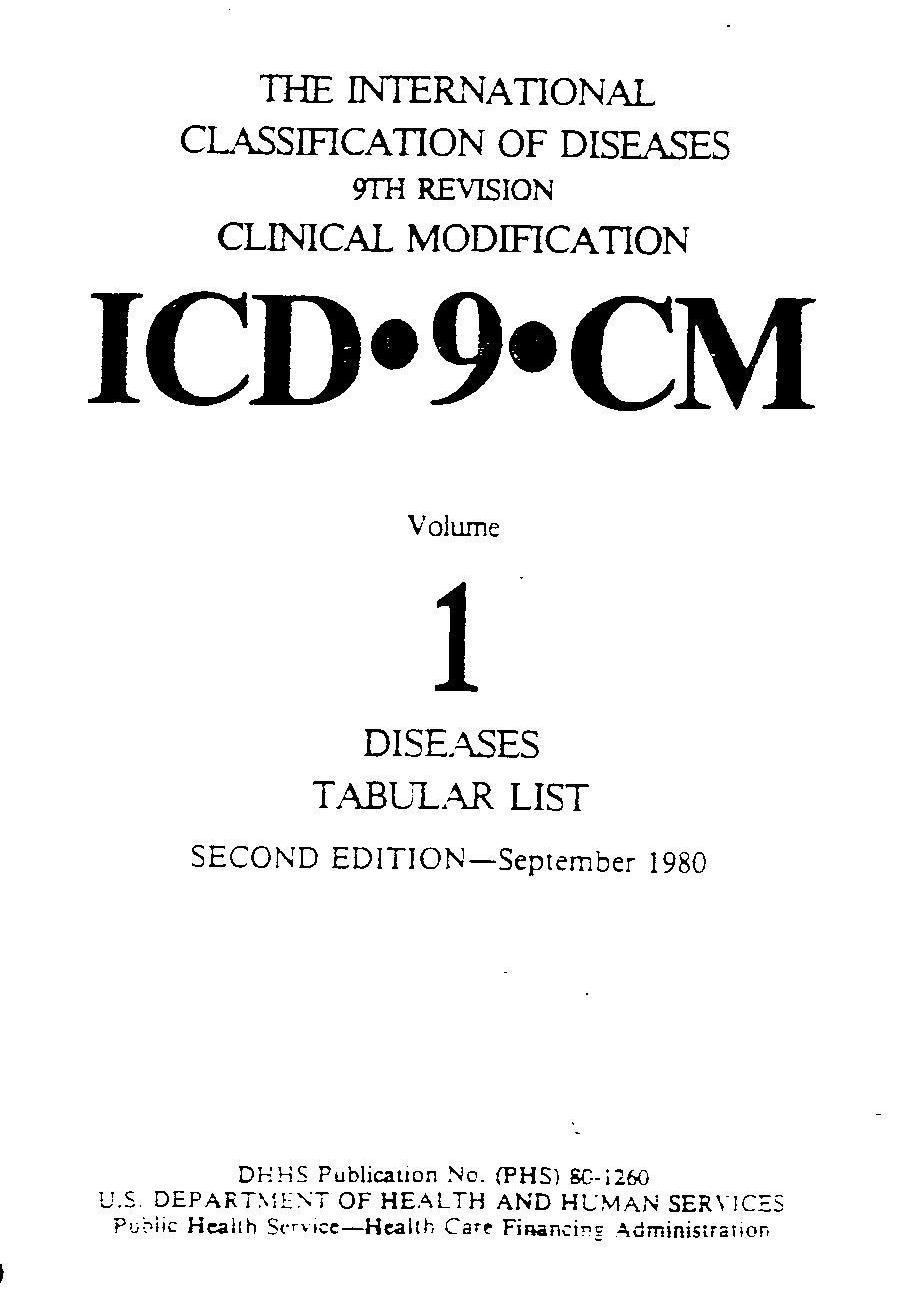 They found that most, about 90% of crime, is due to mental disorder, brain damage, impairing memory. 90% of crimes are committed by mentally ill persons, with one specific mental disorder, which is listed in the International Classification of Disease, page 233, medical coding number 305.1, "tobacco use disorder" (Washington, D.C.: U.S. Dept. of Health, Education, and Welfare, 1980).
| As Dr. Samuel Solly said in 1856, it would help readers on this subject if they would go to medical school, to study anatomy and physiology! Our ancestors did.
This site can't send you to medical school, but it can give you an overview of this one narrow facet of what is known, and some pertinent bibliography. So please keep reading this, the linked sites, and the medical references. 'The life you save may be your own.' |
| Decide Your Answer, Then Check Your Answer Below |
| "Nationwide, the [ratio] of smokers [to non-smokers] in prisons is 90 percent." McKinney v Anderson, 924 F2d 1500, 1507 n 21; 59 USLW 2544 (CA 9, 1991), affirmed and remanded by U.S. Supreme Court, 509 US 25; 113 S Ct 2475; 125 L Ed 2d 22 (1993). |
| A reader-friendly book on this subject is by Isaac Asimov, Ph.D., How Did We Find Out About Vitamins? (New York: Walker and Co, 1974), pages 8-10. |
| "Nationwide, the [ratio] of smokers [to non-smokers] in prisons is 90 percent." McKinney, supra, 924 F2d 1507, affirmed and remanded, 509 US 25, supra.
"In a survey of . . . incarcerated youths with an average age of 15.5 years, 94% were smokers. . . . Drivers who smoke are arrested for drunken driving more than three times as often as nonsmokers . . . receive 46% more traffic citations and are involved in 50% more automobile accidents than are nonsmokers, even when alcohol is taken into account." J. R. DiFranza, and M. P. Guerrera, "Alcoholism and Smoking," 51 J Studies Alcohol (#2) 130-135 (1990), p 134. |
See examples of data on the subject of smoker mental disorder, e.g.,
*Lennox Johnston, "Tobacco Smoking and Nicotine," 243 The Lancet 741, 742 (19 Dec 1942).
*Johnston, Smoking Cure, 263 Lancet 480-482 (6 Sep 1952);
*Brown, Tobacco Addiction, 50 Tex St J Med 35-36 (Jan 1954);
*Am Psychiatric Ass'n (APA), Diagnostic and Statistical Manual of Mental Disorders (1980) pp 159-160, 176-178, and (1987) pp 150-151, 181-182;
*Nat'l Org. for Reform of Marijuana Laws v Bell, 488 F Supp 123, 138 (D DC, 1980) (referencing tobacco as a drug)
*Caprin v Harris, 511 F Supp 589, 590 n 3 (D ND NY, 1981);
*Comment, Tobacco Addiction, 81 Mich Law Rev 237-258 (Nov 1982); and
*A. Ott, et al., Smoking, Dementia, and Alzheimer's Disease, 351 Lancet 1840-1843 (20 June 1998). (To acess Ott's article, register at the journal's website, http://www.thelancet.com.)
Department of Health, Education, and Welfare, National Institute on Drug Abuse Research Monograph 17, Research on Smoking Behavior, DHEW Publication ADM 78-581 p vi (Dec 1977); Robert DuPont, M.D., Teen Drug Use, 102 J Pediatrics 1003-1007 (June 1983); Fleming, et al., Cigarettes' Role in The Initiation And Progression Of Early Substance Use, 14 Addictive Behaviors 261-272 (1989); and Department of Health and Human Services, Preventing Tobacco Use Among Young People: Surgeon General Report (1994). Page 10 supports law enforcement, saying, "Illegal sales of tobacco products are common."
"The first step toward addiction may be as innocent as a boy's puff on a cigarette in an alleyway," said the U.S. Supreme Court in Robinson v California| For in-depth background, see
Note the contrast with, for example, the Netherlands. See "Netherlands Close Eight Prisons Due To Lack Of Criminals" (26 June 2013): "Declining crime rates in the Netherlands mean that although the country has the capacity for 14,000 prisoners, there are only 12,000 detainees, reported the nrc.nl." Note the contrast with the ancient world, "the Germanic tribes of the north" and "in England." "By and large, imprisonment was not used as a punishment," say Phyllis Elperin Clark, M.A., and Robert Lehrman, M.F.A., Doing Time: A Look at Crime and Prisons (New York: Hastings House, 1980, p 24. Instead of prison, and logically, restitution was made "to their victims," p 25. Indeed, note the contrast with even modern nations. The U.S. has a much higher incarceration rate than even so-called "dictatorships" (e.g., Libya, Zimbabwe, Saudi Arabia, China and Pakistan). Their incarceration rate is from 57 - 207 per 100,000. In contrast, New Jersey does 313 per 100,000, and 600 per 100,000 in Louisiana, Mississippi, Oklahoma and Texas. See data from Ronald Fraser, "Nation of gulags in land of the free" (Tuesday, 22 May 2007). Sarah Lazare, "Skyrocketing Prison Population Devastating US Society: Report" (2 May 2014) ("skyrocketing incarceration . . . has quadrupled the prison population and torn apart families, communities, society, and the lives of the incarcerated people.") Note Illinois, for example, population cited at Wikipedia (accessed Friday 25 October 2013), "12,875,255 (2012 est)." Illinois has "nearly 4 million men and women in our state with criminal records,” says Todd Belcore, at "Should Job Seekers Have to Reveal Criminal Record Upfront?" (Corporate Counsel, 25 October 2013). That's almost one-third the entire Illinois population of adults and children. The role of tobacco in crime is known world-wide. See, e.g., the article, "Heading to jail? You're likely a smoker" (Australia, 28 September 2011), repeating centuries old data, once again re-verified. Jenny Truax, "The U.S. System of Punishment: an expanding balloon of wealth, racism and greed" (28 October 2010) ("The prison system in the U.S. remained generally unaltered until the Civil War ended. Following the Civil War, slavery was abolished as a private institution, but the cleverly worded 13th Amendment provided a very large exception, stating: “Neither slavery nor involuntary servitude, except as a punishment for crime…shall exist within the United States.” In the ensuing months and years, states revised the Slave Codes into new “Black Codes,” imprisoning former slaves for acts such as missing work, handling money carelessly, and performing “insulting gestures.” A massive influx of former slaves into the penitentiary resulted, a new form of slavery was born, and the racialization of the U.S. punishment system took root. The unpaid labor of the newly created, mostly black, convict lease system helped the South achieve industrialization." Victor E. Kappeler, Ph.D., in "A Brief History of Slavery and the Origins of American Policing" (7 January 2014), says "The birth and development of the American police can be traced to a multitude of historical, legal and political-economic conditions. The institution of slavery and the control of minorities, however, were two of the more formidable historic features of American society shaping early policing. Slave patrols and Night Watches, which later became modern police departments, were both designed to control the behaviors of minorities." "Transportation Safety Administration [TSA] Agents: The Scum of the Earth" (Video, 26 November 2010) Paul Craig Roberts, Ph.D., "Police Are More Dangerous To The Public Than Are Criminals" (Tuesday, 17 September 2013) ("At the state and local level every American faces brutal, armed psychopaths known as the police. . . . The American police perform no positive function. They pose a much larger threat to citizens than do the criminals who operate without a police badge. Americans would be safer if the police forces were abolished.") |
Note the term “press prostitute” concerning media types, by George Seldes, Witness to a Century (New York: Ballantine Books, 1987), pp. 331, 347, and 297. Note the phrase, “crooked and prostituted journalist,” p 347. Seldes also said of one such, that “he had sold himself . . . for money,” p 399. Sadly, the term “press prostitute” is a “now disused term,” says p 331.
|
"Nowhere is the practice of smoking more imbedded than in the nation's prisons and jails, where the proportion [ratio] of smokers to non-smokers is many times higher than that of society in general." Doughty v Board, 731 F Supp 423, 424; 1989 WL 182545 (D Colorado, 1989). [See ALR Context]."Nationwide, the [ratio] of smokers [to non-smokers] in prisons is 90 percent." McKinney v Anderson, 924 F2d 1500, 1507 n 21; 59 USLW 2544 (CA 9, 1991), affirmed and remanded, 509 US 25; 113 S Ct 2475; 125 L Ed 2d 22 (1993).
"William Wilkes, a Canewdon shepherd, was hanged on 19th July 1898 for murdering his wife by kicking her to death after they had quarreled over some tobacco." Source: "Tobacco causes crime of passion," in the History Notebook (Issue # 32, November 1998) by the Essex Police.
By 1904, "it was found that nearly all of the incorrigible truants were cigaret fiends," and that "the Police Magistrates of this and other cities have stated again and again that the majority of juvenile delinquents appearing before them are cigaret fiends whose moral nature has been warped or destroyed through the instrumentality of this vice."—Charles B. Hubbell, President, New York City Board of Education (1904).
"Recent careful investigations by many persons show that cigarette smoking not only clouds the intellect, but tends to make criminals of boys. Dr. Hutchison, of the Kansas State Reformatory, says: 'Using cigarettes is the cause of the downfall of more of the inmates of this institution than all other vicious habits combined.' Of 4117 boys received into the Illinois State Reformatory, 4000 were in the habit of using tobacco, and over 3000 were cigarette smokers."—Alvin Davison, The Human Body and Health: A Text-book of Essential Anatomy, Applied Physiology, and Practical Hygiene: Advanced (New York: American Book Co., 1908).
"Investigations in prisons, and houses of correction, and State reform schools show that a vast majority of their inmates used Tobacco before they committed crime. . . . 'The more Tobacco, . . . the more . . . licentiousness, crime.'"—B. W. Chase, M.A., Tobacco: Its Physical, Mental, Moral and Social Influences (New York: Wm. B. Mucklow Pub, 1878), pp 70-71.
"The Chaplain of the State Prison, at Auburn, for the year 1854 . . . reports. . . that five-sixths, or five hundred, out of six hundred who were convicted for crime . . . use . . . tobacco. Outside of this statistical statement, my own investigations, in a much larger measure, corroborate the truth of this record."—James C. Jackson, M.D., Tobacco and Its Effect Upon the Health and Character (Dansville, NY: Austin, Jackson & Co, Pub, 1879), p 19.
And, "The testimony of those who have the care of our prisons and penitentiaries, is, that the inmates, most of whom have been habituated to using tobacco before they come there. . . . "—William A. Alcott, M.D., The Use of Tobacco: Its Physical, Intellectual, and Moral Effects on The Human System (New York: Fowler and Wells, 1836), p 19.
| "'Smuggling has well-understood meaning . . . signifying bringing . . . goods . . . importation . . . whereof is prohibited. Williamson v U.S., 310 F2d 192, 195 [CA 9, 1962]; 18 USC §§ 545-546.'" Black's Law Dict, supra, p 1389. |
"any person within the state" from action that "manufactures, sells or gives to anyone, any cigarette containing any ingredient deleterious to health or foreign to tobacco . . . ."
| Analysis of the Michigan Cigarette Control Law |
Another similiar incident is "Woman trashes supermarket after being refused cigarette" (10 June 2014). "An angry woman smoker turned violent and ransacked a supermarket . . . Saturday morning after her repeated requests for cigarettes was turned down by the shop’s staff. . . . [she] damaged weighing scales, office equipment, cash machines, cooling equipment, etc."
| Females | |
| Lifetime | Past Month | Lifetime | Past Month
| Tobacco | Alcohol | Marijuana | Cocaine/Crack | |
| Mother's Status | Child Conduct Disorders
| Nonsmoker | 40%
| Under 10 Cigarettes Daily | 70%
| 10 or More Cigarettes Daily | 81%
| --University of Chicago Study, | reported Jan 1996
| |
The U.S. population is 313.9 million (2012). "Adult correctional authorities supervised about 6,977,700 offenders at year end 2011, a decrease of 1.4% during the year," says Brian Doherty, "Americans Embroiled in Criminal Justice System Numbers Actually Decreasing" (3 January 2013). "An estimated 43.8 million people, or 19.0% of all adults (aged 18 years or older), in the United States smoke cigarettes," says Centers for Disease Control and Prevention, in "Current Cigarette Smoking Among Adults—United States, 2011," Morbidity and Mortality Weekly Report 2012;61(44):889–94 [accessed 2013 June 5], cited at "Adult Cigarette Smoking in the United States: Current Estimate." 43.8 million out of 313.9 million people means a mere 13.95% of all Americans smoke. 90% of the 6,977,700 offenders would make 6,279,930 smokers. 6,279,930 divided by 43.8 million shows 14.33% of smokers as criminals. That's about 1 in 7. And that's only the ones who were caught!
Taking 313.9 million as U.S. population, subtract 43.8 million smokers. That makes for 270.1 million in the nonsmoking category. It is among that number that the 10% of crime occurs. 10% of the 6,977,700 offenders are nonsmokers, i.e., 697,770. 697,770 divided by 270.1 million shows only 2.58337% are criminals.
To see the contrast, the ratio, divide the 14.33% smoker criminal rate by the 2.58337% nonsmoker criminal rate. The result is 5.5470. Smokers are more than five and a half times as likely to commit crimes than nonsmokers. Why is that? Let's note medical explanation.
"The action of smoking on the brain" includes "great irritability of temper," Samuel Booth, LSA, 1 The Lancet (#1748) 229 (28 Feb 1857).Thus, "crime keeps pace with the increased consumption of tobacco . . . . Statistics will bear me out in this assertion. Witness the necessity of providing 'reformatory schools' for juvenile delinquents—the inveterate smokers of the present,"—Dr. Hodgkin, 1 The Lancet (#1751) 303 (21 March 1857).
Smoker behavior includes "an alarming passion for fraudulently obtaining . . . money. This propensity to . . . vicious habits . . . I . . . ascribe . . . to . . . tobacco," J. Taylor, LSA, 1 The Lancet (#1749) 250 (7 March 1857).
"It is an undisputable fact, and one that should give us considerable concern, that . . . nearly all criminals are cigarette smokers. . . . [Toxicity] present in the smoke of the cigarette acts upon the brain cells and nerve tissues in such a manner as to bring about a degeneracy of these structures . . . develops criminal tendencies. . . . Whenever I read of a dastardly crime's having been committed, by inquiry I have found that in practically every such case the criminal was a cigarette addict. Go with me to any . . . court and ask the judge what percentage of . . . offenders . . . are cigarette smokers. He will tell you that nearly all of them are. I have never heard a lower estimate than 93 per cent." Daniel H. Kress, M.D., The Cigarette As A Physician Sees It (Mountain View, CA: Pacific Press Publishing Ass'n, 1931), p 67.
"John D. Quackenbos, M.D., of Columbia University, has said that 'the gravest of all the evils resulting from cigarette addiction is the lessening or complete loss of moral sensibility, with a conspicuous tendency to falsehood and theft. The moral propensities are eventually destroyed because of the destruction of those elements of the brain through which moral force is expressed. The [smoker] degenerates . . . for the penitentiary or the asylum.'" (Kress, supra, p 68).
|
1;
2;
3;
4;
5;
6;
7;
8;
9;
10;
11;
12;
13;
14;
15;
16;
17; 18; 19; 20; 21; 22; 23; 24; 25; 26; 27; 28; 29; 30; 31; 32; 33; 34; 35; 36; 37; 38; 39; 40; 41; 42; 43; 44; 45; 46; 47; 48; 49; 50; 51; 52; 53; 54; 55, 56 |
| "as a result of toxic or other organic destructive processes [the brain can be] considerably damaged or totally paralyzed."––Franz G. Alexander and Hugo Staub, The Criminal, the Judge, and the Public: A Psychological Analysis, 2d ed (Glencoe, Ill.: Free Press, 1956), p 119. |
|
"Judge Crane of New York City says: 'Cigarettes are ruining our children, endangering their lives, dwarfing their intellects, and making them criminals fast. [Smokers] seem to lose all sense of right, decency, and righteousness.'" “Judge Ben Lindsey, former judge of the Denver Juvenile Court, has said: 'One of the very worst 'habits' . . . is the cigarette habit. This has long been recognized by all the judges of the courts who deal with young criminals, and especially by judges of police courts, before whom pass thousands of men every year who are addicted to intemperate habits. These judges know that in nearly every case the [alcoholics] who appear before them . . . began [by] smoking cigarettes. One bad habit led to another. The nicotine and poison in the cigarette created an appetite for alcoholic drink. The cigarette habit not only had a grip upon them . . . but it invited all the other demons of habit to come in and add to the degradation that the cigarette began.'” “Hon. George Torrance, former superintendent of the Illinois State Reformatory, says: 'I am sure cigarettes are destroying and making criminals of more [youth] than liquor. . . . We have found that when a [youth] is guilty of a grievous offense, he is generally found to be a user of cigarettes.'” "Judge B. S. Shaw of Hart, Michigan, says: 'In every instance of juvenile delinquency in this court I have found that the boys were cigarette users.'" "Judge Allen of Lisbon, North Dakota, says: 'Every male juvenile delinquent brought before me for the last seventeen years has been a cigarette smoker.'" "Judge Pollock of Fargo, North Dakota, said: 'Every boy brought into this court the past sixteen years was a cigarette smoker.'" |
Pertinent Quotes From Others, Pp 72-74
|
"Dr. Hutchinson of the Kansas State Reformatory, said: 'Cigarettes are the cause of the downfall of more boys in this institution that all other vicious habits combined.'" "Dr. Coffin, who for over twenty years was connected with the Whittier Reform School of California, said: 'Fully 98 per cent of all youthful offenders who have been confined to this institution were cigarette [smokers], and 95 per cent were cigarette [addicts].'" "Miss Winters, principal of one of the largest schools for delinquent girls in America, has said concerning her institution, 'Out of over eleven hundred inmates, only twenty were nonsmokers of cigarettes.'" [about 1.8%!.] |
An example of smoker's impaired impulse control is this: to have the "sadistic life quite unimpeded," "liked blood," and the "powerless" aspects of the victim, said A. A. Brill, 3 International Journal of Psychoanalysis (#4) 430-444 at 437-8 (Dec 1922).
"[C]igarettes are . . . making criminals . . . . Cigarettes are not the effect of crime, but they are the cause of it. . . . Dr. Gentry, of Chicago, says . . . 'The only way to stop the increase of . . . criminals . . . is to stop the use of tobacco, and also the raising and manufacture of it. . . . The use of tobacco is a great crime.'" Theodore F. Frech and Rev. Luther H. Higley, The Evils of Tobacco and Cigarettes (Butler, Indiana: Higley Printing Co, 1916), pp 123-124.
Cigarettes render smokers "dépossédés du sens humain . . . par une impulsion qu'on ne peut qualifier que de folie . . . désordre . . . comme les bêtes fauves . . . . dégradation narcotique les abaisse . . . rage . . . déchirent, ils mutilent sans nécessité, par instinct féroce."—Dr. Hippolyte A. Dépierris, Physiologie Sociale, supra, p 342.
tobacco's violent and behavior-altering effects on animals, p 129, how it had already been used to poison somone (the 1851 Bocarmé murder case), pp 79ff, tobacco's mind-altering, behavior-impairing effects on people, pp 345-372, tobacco-produced delirium, p 202 (concept cited by Dr. Kolb, 1968, infra), tobacco's violence-producing effects (like that on animals) on people, p 342, and examples of this effect, pp 326-344.

“Judges . . . have remarked on [tobacco] as an almost invariable accompaniment and aggravator of juvenile delinquency.”—Pryns Hopkins, Ph.D., Gone Up in Smoke: An Analysis of Tobaccoism (Culver City, CA: Highland Press, 1948), p 254. And, “one will almost never find an adult criminal nor even a juvenile delinquent but who is a smoker,” p 43.
“[J]udges of juvenile courts everywhere recognize the close relationship that exists between cigarettes and crime. . . . Not only does the use of cigarettes produce a criminal tendency . . . it also produces what might be termed [psychopathy aka abulia aka anomie aka empathy-loss] . . . a condition in which lying, thieving, and murder become as natural as eating and drinking . . . .”—Bernarr MacFadden, The Truth about Tobacco (New York: Physical Culture Corp, 1924), pp 87 and 77, respectively, describing the psychopath (“predator”) concept, as per smoker deviance/licentiousness.
| For an example of this smoker brain-damage induced lack of empathy, note this example of smoker Jayne's reaction after causing a crash by his ignoring a stop sign, hitting oncoming traffic, killing five people and injuring others: “after Jayne caused the incident he got out, sat on the side of the road and said 'this is going to mean a world of hurt for me.' He lit up a cigarette and waited for the police.”
“Yes [says commentary], poor Jayne is in a world of hurt. Sounds like he didn’t even care that he killed 5 people and injured 3 more. 4 of the dead were children” (Details.) See also "Teens Ask for Smoke, Kill Woman When She Replies 'Get a Job': Cops" (NBC Philadelphia, 10 December 2012). "Police say three teens charged in the fatal shooting of a western Pennsylvania woman targeted her after she told them to 'get a job' when she saw them trying to bum a cigarette off her boyfriend." "Psychopathy is more widely spread today than ever before in the history of our civilization . . . it is assuming more and more the proportions of a plague . . . it is today ravishing the world with far greater ill-effects than the most malignant of organic diseases . . . it represents a terrible force whose destructive potentialities are criminally under-estimated,'" says Robert M. Lindner, in Rebel Without A Cause: The Hypno-Analysis of a Criminal Psychopath (London: Research Books Limited, 1945), § "The Problem: Criminal Psychopathy" § IV, pp 15-16. For overview of psychopathic traits in criminals, see, e.g., Prison Talk, JSTOR Review, and Springer Link. See also the references cited by Kenneth Magid, M.D., and Carole A. McKelvey, High Risk: Children Without a Conscience (Bantam Books, 1987). (Review). |
"Judge Brum, of Pottsville, Pa., charging the jury in the case of a young cigarette fiend, accused of murder, said: 'The fact that the prisoner is a cigarette fiend must be taken into consideration.' Pointing to the cigarette-stained fingers of the prisoner, he said that the number of cigarettes used by him 'was proof in his mind that the prisoner's brain was affected.'" (MacFadden, Truth about Tobacco, supra, pp. 88-89).
"What has been called a 'crime wave' in the United States the past few years has been misnamed. It is not a wave. It is a harvest—the natural result of the sowing . . . 'Sow tobacco, and reap crime' [i.e., tobacco causes crime]. The Criminal, published for detectives and police officers, says 93 per cent. of all criminals use tobacco before committing the crimes leading to their arrests. . . . Hon. George Torrance says: 'Of 4,117 boys received into the Illinois State Reformatory, since its organization on Jan. 8, 1893, 95 per cent. had the tobacco habit, and nearly all were cigarette smokers.'"—Will H. Brown, Tobacco Under the Searchlight (Cincinnati: The Standard Publishing Co, 1925), pp 62-64.
"The cigarette is often responsible for the worst sort of insanity—moral insanity; more than half the shocking crimes we hear of being committed by young lads are directly traceable to the cigarette habit. This is tobacco in the worst form. It deadens the sensibilities [including empathy for victims], wrecks the nervous system, weakens the brain, and all the evils of over-stimulation are the natural result. . . . It is like a pathologic moral version of Hogarth's 'Rake's Progress.'"—Dr. Bremen, cited by Meta Lander in The Tobacco Problem (Boston: Lee and Shepard, 1882), p 166.
| Note that when people, smokers, are unable to control their thoughts, are unable “to appreciate the wrongfulness of his [their] conduct,” and “to conform his [their] conduct to the requirements of the law,” display "moral insanity," they are deemed insane within the meaning of law. See, e.g., People v Matulonis, 115 Mich App 263; 320 NW2d 238 (1982). |
| Due to cigarettes' 90% role in crime, Judge Leroy B. Crane recommended, "Congress should stop the manufacture, sale, and importation of cigarettes."—Quoted by Prof. Bruce Fink, Tobacco (Cincinnati: Abingdon Press, 1915), p 19. As in 1892, Congress refused. |
| Smoker deviance, propensity to lie including making false accusations, commit crime including domestic assault, is notorious, including in movies. For example, recall the smoker (a) assaulting his daughter, (b) arranging false accusation of rape, (c) menacing a widow, (d) attempted breaking and entering into a judge’s house, and (e) assaulting the neighbor's children in the movie, To Kill a Mockingbird, Scene 32, (1962) with Gregory Peck, based on the book (1960) by Harper Lee.
Note also the movie, The Star Chamber (1983), with Michael Douglas, Hal Holbrook, Yaphet Kotto, etc., which emotionalized but carefully avoided citing causation, and had the star smoking throughout!! Avoiding causation/prevention information, is typical of "crime" movies and TV. And note also the crime-related movie A Clockwork Orange (1971) by smoker director Stanley Kubrick. He fascinated a nonsense aversion approach to crime, carefully avoiding the 90% tobacco factor! Typical! of the censorship of this type data. |
(John Wilkes Booth [FC # 9,899; FC # 16,423; 6 DC 306] accessory to tobacco farmer activity), Charles Guiteau [10 F 161; 14 Am St Trials 1-158], Leon Czolgosz [14 Am St Trials 159-231)
up to that time were smokers.
Adolf Hitler (Nazi) Catherine de Medici (royalty) P. S. Ferré (anti-royalist) Joseph Stalin (Bolshevik) Mao-Tse Tung (Communist).
*Herman Mudgett (1861-1896) (built a private gas chamber and crematorium in his 1880's hotel in downtown Chicago for the killing of 20-100 people) (Case at Com v Mudgett, 4 Pa. Dist. 739; 1895 WL 3712 (30 Nov 1895) aff'd 174 Pa 211; 34 A 588 [4 March 1896] )
*Jack the Ripper (London killer, 1880's)
*Leopold and Loeb (1924)
*Bonnie and Clyde Barrow (1930's robbers and killers)
*The Lisenba Case, the smoker who murdered his wives, 1932-1935, using hammer blows, snake bite, drowning, to collect accidental death insurance policies, deaths seeming so accidental the police were convinced, but fortunately not the insurance company. (Case at Lisenba v People of State of California, 314 US 219; 62 S Ct 280; 86 L Ed 166 (8 Dec 1941) (Context))
*Al Capone, Chicago smoker and crime boss (Tax conviction case at Capone v U.S., 56 F2d 927; 30 STC 885 (CA 7, 27 Feb 1932) cert den 286 US 553; 52 S Ct 503; 76 L Ed 1288 (2 May 1932))
* Harry Strauss ("Pittsburgh Phil," killed about 500 people, 1930's)
*William Heirens (killed four, 1946)
*The Sadistic Burning-by-Cigarette Case (Case at Commonwealth v Farrell, 322 Mass 606; 78 NE2d 697 (12 April 1948) )
*Howard Unruh (killed 13, Camden, New Jersey, 1949)
*William Cook (an habitual criminal, Missouri, killed ten people 1950-1951)
*Edward Gein (killed three women, Wisconsin, 1950's (details in book Deviant, by Prof Harold Schechter; and movie Ed Gein)
*Charles Starkweather (killed eight, Nebraska, 1957-1958)
*Law student Crooker murdered his paramour when she said she'd leave him. (Case at Crooker v California, 47 Cal 2d 348; 303 P2d 753 (1957) aff'd 357 US 433; 78 S Ct 1287; 2 L Ed 2d 1448 (30 June 1958) (Context))
*In this brain-damaged smoker murder case, Robinson, a smoker with suicidal tendencies, shot himself in the head, killed his infant son and common-law wife, and was convicted and jailed. (Case at Pate v Robinson, 22 Ill 2d 162; 174 NE2d 820 (1961) cert den 368 US 995 (1962) rev 345 F2d 691 (CA 7) aff'd 383 US 375; 86 S Ct 836; 15 L Ed 2d 815 (7 March 1966) (Context))
*Mr. Giles: In this rape case, the three defendants had accosted a girl on a date parked by woods, "demanded money and cigarettes," then raped the girl.
GILES CASE AND APPEALS LIST
Giles v Maryland, 229 Md 370, 183 A2d 359 (18 July 1962) app dism 372 US 767; 83 S Ct 1102; 10 L Ed 2d 137 (22 April 1963) (initial case)
Giles v Maryland, 231 Md 387, 190 A2d 627 (6 May 1963) (denial of motion for new trial)
Giles v Maryland, 239 Md 458, 212 A2d 101 (13 July 1965) vacated and remanded 386 US 66; 87 S Ct 793; 17 L Ed 2d 737 (20 Feb 1967) (post-conviction proceedings)
*Robert Charles Browne (Colorado killer of 20 - 48, from 1970 - 1995, "A Life of Killing"; "Affidavit details Colo. killer's claims")*Mr. Innis: In this crime case, the smoker was involved in kidnapping, robbery, and murder. (Case at Rhode Island v Innis, 120 RI; 391 A2d 1158 rev'd 446 US 291; 100 S Ct 1682; 64 L Ed 2d 297 [12 May 1980])
*John Wayne Gacy (Illinois killer, exploited contractor job to entice victims, killed 33)
GACY CASE AND APPEALS LIST
People v John Wayne Gacy, 103 Ill 2d 1; 82 Ill Dec 391; 468 NE2d 1171 (6 June 1984) cert den 470 US 1037; 105 S Ct 1410; 84 L Ed 2d 799 (4 March 1985) (initial case)
People v John Wayne Gacy, 125 Ill 2d 117; 125 Ill Dec 770; 530 NE2d 1340 (5 Dec 1988) cert den 490 US 1085; 109 S Ct 2111; 104 L Ed 671 (22 May 1989) (post-conviction issues)
Gacy v Welborn, 1992 WL 211018 aff'd 994 F2d 305 (CA 7, Ill, 12 April 1993) cert den 510 US 899; 114 S Ct 269; 126 L Ed 2d 220 (3 Oct 1993) (habeas corpus issues)
*Jeffrey Dahmer (the Wisconsin cannibal, 1991—demanded and got a court order to be allowed to smoke in the smoke-free jail, or he'd refuse to tell where the bodies were!)
*Adolf Hitler, Catherine de Medici, P. S. Ferré, Joseph Stalin, Mao-Tse Tung (who killed in their governmental roles)
*Charles Manson, a life of crime ending in four murders (Cases at State v Manson, 61 Cal App 3d 102; 132 Cal Rptr 265 (1976) (Tate murders) and 71 Cal App 3d 1; 139 Cal Rptr 275 (1977) (Spahn murders))
*The Giles Cigarette Assault Case. It involved bodily injury to a child caused by a lighted cigarette. (Case at State v Giles, 183 Neb 296; 159 NW2d 826 (21 June 1968))
*Ferrandin (killed family, 1842)
*Troppmann (killed family, 1800's)*Albert Fisher (killed women)
*Lee Harvey Oswald (1963; "had a history of repeated episodes of uncontrolled impulsive assaultive behavior . . . in a number of street fights and tried to commit suicide"—classic smoker symptoms)
*Ted Bundy (killed women) (Incidently, telling a putative authority, Dr. James Dobson, what he evidently wanted to hear, Bundy blamed pornography!! not his tobacco-induced brain damage!)
BUNDY CASE AND APPEALS LIST
Bundy v State of Florida, 471 So 2d 9 (9 May 1985) cert den 479 US 894; 107 S Ct 295; 93 L Ed 2d 269 (14 Oct 1986) (initial case)
Bundy v Dugger, 816 F2d 564 (CA 11, 2 April 1987) cert den 484 US 870; 108 S Ct 198; 98 L Ed 2d 149 (5 Oct 1987) (habeas corpus case)
488 US 1036; 109 S Ct 887; 102 L Ed 2d 1009 (23 Jan 1989) (issue of a stay)
*Charles Whitman (Texas tower shooter, shot 41, killed 17, had brain cancer)
*Lawrence Brewer (Texas dragging death case, 1998)
*Richard Speck (had "symptoms of serious brain disease," killed 8 nurses, Chicago, July 1966). At People v Richard Speck, 41 Ill 2d 177; 242 NE2d 208 (22 Nov 1968) rev 403 US 946; 91 S Ct 2279; 29 L Ed 2d 855 (28 June 1971)*E. W. Hensley (age 17, killed 28 people, Texas, 1973)
* Richard Allen Davis (lifelong criminal, who while on parole kidnapped and brutally murdered 11 year old Polly Klauss in 1993. While interrogated, Davis was smoking one cigarette after another. [Shown on TV program American Justice which mentioned that Davis has no conscience nor empathy for his victims--classic smoker symptoms.]
*Larry Ashbrook (At Wedgwood Baptist Church, Texas, killed seven, then himself, September 1999)
* Gary Ridgway, Seattle's Green River Killer (note profile item 24, the probable tobacco connection, known in law enforcement since the 1830's! Background by the lead detective, Sheriff David Reichart, Chasing the Devil: My Twenty-Year Quest to Capture the Green River Killer (New York: Little, Brown & Co, 2004.)
*John Muhammad (Maryland sniper, killed several, has smoker symptom pattern, October 2002)
*Charles A. McCoy Jr. (smoker Ohio sniper late 2003-early 2004, a gambler, "history of mental illness" known to occur disproportionately among smokers)*Dennis Rader, the Kansas "BTK" killer of ten (has smoker symptom pattern including conscienceless and aphasia)
*Steve Green, killer in the Haditha massacre, embarrassing US Army (photo, smoking, p 35, in Sarah Childress and Michael Hirsh, "An Itchy Trigger Finger," Newsweek pp 34-35 (7 August 2006)
*Ronald Jayne, Jr., after causing a crash while rushing out to buy cigarettes, by his ignoring a stop sign, hitting oncoming traffic, killing five people and injuring others: “after Jayne caused the incident he got out, sat on the side of the road and said 'this is going to mean a world of hurt for me.' He lit up a cigarette and waited for the police.” “Yes [says commentary], poor Jayne is in a world of hurt. Sounds like he didn’t even care that he killed 5 people and injured 3 more. 4 of the dead were children” (Details; Subsequent Sentencing. (June 2007)
*Steven Phillip Kazmierczak, tatooed Northern Illinois University shooter of five persons (February 2008)
*Nicholas T. Shele, killed eight people in the Midwest after years of committing other crimes, captured while smoking (2 July 2008)
*Jim David Adkisson, Knoxville, Tennessee, church shooter July 2008, with typical smoker symptoms, e.g., wife abuser, drunk driver, suicidal, misperception of reality, and undeterred
*Vince Weiguang Li, took a smoke break, then strikingly brutally, revoltingly attacked, stabbed and beheaded fellow bus rider 31 July 2008
*Adam Lanza, shot mother and 26 other people at Sandy Hook Elementary School, Connecticut (December 2012) (played with cigarette lighters, was developmentally disordered; product of divorced parents; committed suicide)
* Aaron Alexis, shot 12 people at Navy Ship Yard, Washington, D.C. (Monday, 16 September 2013) ("had exhibited signs of mental illness dating back more than a decade, including a recent episode . . . hallucinations . . . exhibiting symptoms of mental illness since at least his early 20s . . . described by people who knew him as paranoid and delusional" and as overreacting to small matters) (This incident was especially preventable, the "red flags" were missed according to the Secretary of Defense Chuck Hagel, as, for example, the Navy knew to have not enlisted him in the first place, pursuant to anti-negligent hiring principles (1905-present), Army precedent (1898), hiring criteria precluding hiring applicants with "medical findings which . . . would make him a hazard to himself or others," says the federal applicant analysis form, Standard Form 78, "Certificate of Medical Examination" ("Conclusions" section, 1969 ed), and pertinent advisory provided to the Navy by the U.S. Army Aeromedical Research Laboratory (USAARL) Report No. 86-13, “Smoking and Soldier Performance,” by Frederick N. Dyer, Ph.D. (Fort Rucker, AL) (June 1986), p 149. And subsequent post-employment information was likewise not acted upon.)
| Note the contrast between modern law and the example of the ancient world, "the Germanic tribes of the north" and "the two . . . Germanic tribes, the Angles and the Saxons, [who] settled in England." "By and large, imprisonment was not used as a punishment," say Phyllis Elperin Clark, M.A., and Robert Lehrman, M.F.A., Doing Time: A Look at Crime and Prisons (New York: Hastings House, 1980), p 24. Instead, restitution was made "to their victims," p 25.
So, "we should ask how the idea of prison took root in our culture. . . . for most of Western history, the prison sentence was practically unknown," p 18. What changed? "When the Normans conquered England in 1066, two different forms of [so-called] justice met. The [power-mad] Norman kings were not 25used to the Anglo-Saxon idea of leaving justice in private hands, but they were quick to see the advantage of fines as a form of punishment. They made one change . . . instead of paying the fines [restitution] to their victims, offenders were now ordered to pay the money to the king," pp 24-25. "We do know that crime simply does not decrease as penalties get tougher," p 119. One “important factor [in the British monarchy having decided to begin defining crimes] was . . . to build up a strong central government. Acts [previously legal] became crimes. “As the king [government] became more powerful, legislation against private crime increased and after the Norman conquest [of England by William the Conqueror, 1066] a distinct body of criminal law evolved for the first time. . . ." “As part of his policy of strengthening the central government, Henry II (1154-89) established the system [leading to modern] judges. “[In the] reign of Henry VII [1485-1509] . . . a strong central government [did] emerge . . . reflected by a great increase in the types of crimes against which legislation was passed. . . . “Under the Stuarts [1603-1689; King James I, Charles I, Charles II, James II], the need to raise money for the crown led to [yet more] new crimes being defined.”—“Crime,” Encyclopædia Britannica, Vol 6, pp 754-758 (this quote, pp 756-757) (1963). One “device of Edward [IV] [1461-1483] for filling his exchequer was a very stringent [law] enforcement [policy]; small infractions of the laws being made the excuse for exorbitant fines. This was a trick which Henry VII. [1485-1509] was to turn to still greater effect.”—“English History,” Encyclopædia Britannica, 11th ed., Vol 9, pp 466-587 (this quote, p 520) (1910). “Queen Elizabeth I preferred to use convicts as [forced labor]. By 1602 . . . Elizabeth appointed a commission to enlarge the list of crimes for which offenders could be sent [into forced labor for the government]”—Doing Time, supra, p 30. The bottom line is, many politicians and their accessories do NOT want to prevent crime. They have motives to assure that more and more crimes are committed. |
| The brain, including "the cingulum, the hippocampus, the thalamic and hypothalamic nuclei, and the more complex masses of the basal ganglia, midbrain, and amygdala . . . has . . . functions including the modulation and control of . . . behavior . . . especially violent behavior . . . brain disease can disrupt [the brain's] ability to control behavior." And, "alterations in the structure . . . invariably produce changes in . . . behavior, with results ranging [up to] terrifying rage." See Vernon H. Mark, M.D., and Frank R. Ervin, M.D., Violence and the Brain (New York: Harper & Row, 1970), p 24.
"The injury or destruction of critical parts of the brain . . . affects behavior in a most dramatic fashion. A tiny damage to the midbrain, for example, will put an end to all meaningful behavior by producing profound and permanent coma," p 140. Even a single "lesion in the brain is able to destroy even [otherwise permanent ability to obey] "rules governing behavior, " p 142. Wherefore "we physicians have almost all encountered as a symptom of disease, violent behavior. . . ," p viii. (This is another way of saying the 1924 observation that "[J]udges of juvenile courts everywhere recognize the close relationship that exists between cigarettes and crime," supra.) "The brain is unique among body organs in that it does not function exclusively within the confines of the body. . . . the brain operates outside the skull, confirming and interacting with . . . outside events . . . it has the capacity, after perceiving these events, to store them for future reference in its own tissue. This process, of course, is what we call memory, and it is an essential part of learning," p 140. Memory "is imbedded in our brain and its use is dependent on the function or malfunction of the cerebral tissue. Major parts of the memory circuit are in the same anatomical location as the limbic brain," p 141. An "aspect of 'memory' in the social sense is the ability to retain and follow cultural rules governing behavior. . . . A lesion in the brain is able to destroy [this process, thus degrade] behavior," p 142. "Basically, then, violent behavior is governed most closely by the structures of the limbic brain," p 16. "[S]tudies of patients with injuries known to involve chiefly the temporal lobe indicate that these patients tend to be inappropriately combative—that is, they show the effects of limbic dysfunction," p 57. Many criminals they analyzed "were not only impulsively violent, they had difficulty in restraining their impulses in all other areas of their lives too. [They were not] deterred by the knowledge or threat of punishment, because the [brain] mechanisms that keep most of us from immediately acting on our impulses were deficient or absent in them . . . unable to control their behavior, no matter what the circumstances. . . . It is impossible . . . to re-educate [counsel, rehabilitate] or to threaten such people into behaving rationally. They are too easily provoked . . . too unable to control their inappropriate reactions," p 147. "As doctors, we view individual violence as a medical as well as a social problem . . . many of the individuals who act violently have brain diseases . . . . [M]ore often than not . . . violence . . . is related to brain dysfunction," p 5. "Most people consider brain disease to be a rare phenomenon. It is likely, however, that more than ten million Americans [1970] suffer from an obvious brain disease. . . . We do not mean to say that all of these brain-diseased people are violent. What we are saying is that an appreciable percentage of the relatively few individuals guilty of repeated personal violence are to be found in this . . . population whose brains do not function in a perfectly normal way," p 5. "The classical example of a [damage] of the brain that produces changes in behavior is the virus encephatlitis that causes rabies—a disease whose very name, rage in French, rabia in Italian, and Wut in German—means madness or rage. The early symptoms of rabies may include mental aberrations . . . assault, alcoholism, and periods of violent rage. . . . In animals . . . a prominent symptom is the occurrence of an extremely vicious, and uncontrolled attack of rage, which is why the cry of 'mad dog' has always provoked such fear . . . the rabies virus . . . characteristically infects the limbic system of the brain," p 58. Violence results as brain damage affects "how the brain perceives, fails to perceive, or misperceives incoming stimuli. For instance, [such] a person . . . generally does not attack others without what he considers to be provocation. What happens is that the brain misperceives some incoming stimulus—a harmless gesture, or a joking remark, let us say—as extremely threatening or enraging, when it is in fact not so. If another driver cuts his car off at a stoplight, his brain interprets it as a deadly insult, and he reacts accordingly," pp 6-7. (Such inappropriate reaction to what is not in fact "provocation" constitutes "universal malice.") |
| "As in the night, imagining some fear,
How easy is a bush supposed a bear." —Benjamin I. Lane, The Mysteries of Tobacco (New York: Wiley and Putnam, 1845), p 85. |
| ". . . . a long literature exists on use of tobacco and its derivatives in [Indian] ceremonial trance induction, witchcraft, divination . . . . Native use of tobacco parallels that of other hallucinogenic substances . . . .
"The amounts of harman and norharman in cigarette smoke are about 10-20 mcg. per cigarette. This is about 40 to 100 times greater than that found in the tobacco leaf, indicating that pyrosynthesis occurs in the leaves during the burning . . . . "harmine in relatively small doses crosses the blood-brain barrier and causes changes in the neural transmission in the visual system."—Oscar Janiger, M.D., and Marlene Dobkin De Rios, M.D., "Nicotiana an Hallucinogen?," 30 Econ Bot 149-151 (April-June 1976). |
| The book, The Criminal Personality, Vol. 1, A Profile for Change [New York: J. Aronson], 1976, by Samuel Yochelson, PhD., M.D., and Stanton E. Samenow, Ph.D., provides insight. At 316, “Each criminal’s belief in his personal uniqueness is manifested early. . . . The criminal’s sense of uniqueness is expressed everywhere. . . . For a criminal to accept advice is for him to lose his uniqueness, his identity. . . . He does not need it; he knows it all. When it comes to issues of right and wrong, legal and illegal, he makes his own rules.”
At 315, “The criminal . . . emphasizes his total difference from other people.” At 316, the criminal “operates on the basis of being one of a kind, different from everyone else. . . . The criminal believes that no one can have the thoughts that he has. His belief in his uniqueness is an outgrowth of the way the criminal shuts others out or his life. He is very secretive . . . closing the channels for communication . . . The criminal's sense of uniqueness is expressed everywhere.” At 315, “If one compares human beings on the basis of the important issues that they must race in their lifetimes, one finds that most of the issues are faced in common, rather than being peculiar to individuals. All humans have generally similar physical needs and are generally alike in their bodily functions. . . . The criminal, however, emphasizes his total difference from other people. Although he pays lip service to what he has in common with others, a pervasive sense of uniqueness constitutes the cornerstone of his self-image.” At 365, “The criminal does not think about ‘I can’t’ when he says it. Verbalizing it is habitual, to the extent that it sometimes rolls off his tongue before he even gives the matter at hand any thought.” At 364, “the criminal does say ‘I can't’ to express his refusal to act responsibly. Occasionally, the noncriminal does this to avoid something unpleasant. The criminal does it constantly.” At 365, “‘can't’ is equivalent to ‘don't want to’ or ‘won’t.’ ‘I won’t’ indicates his refusal to perform on someone else's terms. . . . When approached by a therapist or another agent of change about living responsibly, the criminal makes statements couched as ‘I can't,’ . . . If he continues with ‘I can't,’ this amounts to an affirmation that he wants something else and is not willing to give up . . . .” At 366, “The self-deception occurs when the criminal repeats ‘I can't’ so often that he half-persuades himself that he cannot be different. . . . His failure in turn gives him license for more crime, insomuch as he always has recourse to the argument that he tried but ‘could not' make it. He has shown himself and the world that he ‘can't’ change.” At 365, “‘I can't’ is extremely useful when the criminal is held accountable and pressure is applied. If others say that he can do something, he debates the point, offering a variety of excuses to reinforce his position.” Indeed, “What reinforces his saying ‘I can't’ is its effectiveness. People tend to excuse the criminal, because they think he lacks the capability to do some things.” Trained professionals, of course, recognize that, p. 364, “the criminal does say ‘I can't’ to express his refusal to act responsibly.” At 368, “When the criminal actually does encounter circumstances that by almost any standards are adverse, he creates a vicious circle by responding in a nonconstructive manner. Rather than adopt an approach of enduring the situation or trying to improve it, he responds with irresponsibility, which makes things worsen.” At 372-373, “This . . . is understandable: it allows the criminal to preserve his self-image. His mind is closed . . . To examine an alternative position could damp his plans. That is, if he is really sensitive to others and listens to them, he runs the risk that he will hear ideas opposed to his position. It can be truly said that, for this very reason, the criminal rarely holds a discussion with anyone. He wants to be the one who prevails. Thus, he does not ‘discuss’ a topic . . . he imposes his view. An interchange of ideas would become a power contest; so, rather than seriously consider the merits of another's position, he demands that his ideas be accepted. The criminal has little, if any, basis for understanding a noncriminal's perspective on most things. . . . In this and a multitude of other instances, the criminal is deaf and blind to responsible viewpoints.” At 372, “From early in childhood, youngsters are taught to put themselves in the shoes of others. Most people learn to do this in a responsible way, but not the criminal. He demands every consideration and every break for himself, but rarely stops to think about what other people think, feel, and expect. . . . Along with his lack of consideration of others, he has little regard for rules, customs, and laws. ‘My thinking would never extend as far as a consideration of what might be the reason for a rule and how it might be helpful to others. Not only that, but the circuit of my thinking is far shorter. All I think is, “There's a rule. How do I get around it?” In my equation, rule equals how to avoid. . . . I never look at the reason for a rule because it would usually involve some consideration for others, some interaction, and when I want something, that's foreign to my nature.’” At 377, “When the criminal is held accountable for failing to honor obligations, he responds with a variety of excuses.” At 401, “All his life, people have begged and pleaded with the criminal to make the effort to change. However, he has put the burden on others to give him reasons why he should.” At 403, “We are describing a general pattern of the criminal: failure to ascertain the facts. The criminal is not a fact-finder . . . He gets an idea, forms an opinion based on it, and then believes it as an established fact. Facts are not sought, because the criminal thinks that he already has the information he needs. As one scholarly criminal put it, his style of thinking is ‘Cogito, ergo est’––‘I think, therefore, it is.’” At 408, “Sometimes a criminal is evaluated in light of the details of a single crime that are brought out by an investigation. But one crime for which a criminal is apprehended does not tell the whole story. He has usually committed many undetected crimes.” At 419, “the criminal progressively gets himself into more trouble.” At 405, such is foreseeable since “The criminal's tubular vision leads him to make decisions in line with how things look to him at the time. . . . there is no conceptual thinking . . . Thus, he habitually forms erroneous conclusions and makes faulty decisions.” At 413, “The most important factor in the criminal’s response to deterrents is that he has to decide whether or not to heed them. It is a matter of his choice. . . . Eventually either the idea is eliminated by choice in favor of something else or the deterrents are removed by the process of corrosion and cutoff. ‘Corrosion’ is our designation for a mental process in which . . . deterrents are slowly eliminated until the desire to commit an act outweighs the fears to the point where the desire is implemented. . . . he considers himself immune from apprehension, and thus a successful crime seems ensured.” At 413, “The gradual process of corrosion occurs up to a point, and then a mental process that we call ‘cutoff’ comes into play. Cutoff allows the criminal instantly to dispose of deterrents . . . freeing him to act. . . . It could be said that corrosion is a gradual cutoff, giving way to an abrupt final cutoff before violation.” At 413, “The gradual process of corrosion occurs up to a point, and then a mental process that we call ‘cutoff’ comes into play. Cutoff allows the criminal instantly to dispose of deterrents . . . freeing him to act. . . . It could be said that corrosion is a gradual cutoff, giving way to an abrupt final cutoff before violation.” At 414, “The criminal makes the cutoff . . . a cornerstone of his life. It allows him to do as he wants. In search of triumph and conquest, he cuts off deterrents, including experience.” At 416, “The criminal . . . can cut off the cutoff,” “The criminal always has control over his own thinking.” At 436, “The criminal's idea of 'justice' is not being caught; 'injustice' is interference with his plans. There may be other, relatively minor, injustices such as being informed on or being handled roughly by the authorities. Any environmental factor that contributes to his being apprehended is considered unfair. But the inherent injustice is getting caught, never what responsible people would consider the injustice of the crime. In fact, he has no shame about what he has done, no thought about people whom he has harmed, and little concern about his own family.” At 437, “He does not believe that he should have to be accountable to anybody. This belief may be obscured by a barrage of other issues that the criminal raises” to “camouflage what to him is the basic injustice––being apprehended and confined.” Relative to criminals assisting each other when one is caught, p. 436 states, “in his thinking, they are obligated to do this.” Pages 439-440 cover “the psychology of escape thinking.” To a criminal, “As far as he is concerned, it is his ‘right’ to leave. If he is caught, lt is a blatant injustice for anyone to punish him for the attempt . . . .” At 440-441, “Probation or parole is regarded as merely another obstacle to surmount, and not a particularly formidable one . . . The criminal does with the authorities what he has done all along . . . He sizes up the person with whom he is dealing and anticipates what it will take to satisfy him. . . . This is part of the pattern of feeding others what the criminal thinks they want to hear.” Appeals are “not . . . particularly formidable” when criminals are willing to commit additional crimes, such as falsification, “to surmount” the “obstacle.” At 441, a criminal “will satisfy his interrogator on whatever score is necessary, and that usually puts an end to the questioning. At 444-445, “From the criminal’s point of view, it certainly makes sense for him to tell any story that will reduce personal jeopardy. When held accountable, he tries to avoid incrimination. Misrepresentation, vagueness, distortion, and calculated lying are among the means to accomplish this end.” At 449, “Throughout his life, the criminal has considered it a putdown not to be in total command of himself, as well as in control of others.” At 450, “The criminal is mentally ready to commit crimes of one or more types. He may not have chosen a particular time and place, but he is ready for any occasion. . . . A variety of circumstances determine the commission.” At 453, “Any of them can do almost anything at any time, owing to the violating patterns that have been present in their thinking. When a ‘Madison Avenue’ executive cracks someone's skull, it is no surprise to us, because we know that, even if he has never been violent before, violence has been present in his thoughts as a way in which he would like to deal with the world.” At 450, “The crime itself appears to be impulsive, because of its suddenness, but the fantasy pattern has occurred repeatedly. . . . To the observer, the crime may be totally out of character for a person who has not been a ‘criminal.’ But in every case that we have studied, we have established that the crime at issue was preceded by long-standing violating patterns in thought and action.” At 452, ''The criminal resorts to whatever he deems necessary to deal with a threat to his control of a situation. Many follow the basic pattern shorn in the following specific instance. C held up a public official and his wife as they were getting into their car. When the man came around the side or the car, C saw him as 'going to play the superman hero' and shot him in the stomach.” At 453, “all his life, the criminal has been calculating, scheming, and controlling. His behavior may appear to be impulsive or compulsive, because it is sudden to the observer.” Such At 453, “Incipient criminal thinking has preceded the crime in question.” “No crimes have occurred when they were thought of for the first time. No criminal is foolish enough to act so rashly. Incipient criminal thinking has preceded the crime in question. The idea has been considered. but rejected, many times before. . . . What has been so striking and consistent is that, to a man, our criminals have eventually revealed to us that what they did was an exercise of choice, and that all crimes were products of prior thinking.” At 516, “the criminal is using the tactic of trying to make someone other than himself the target of discussion.” At 516-7, “Another tactic is threatening to ruin the reputation of the” victim “or to embarrass him . . . .” |
|
"Drugs . . . increase aggression. . . . Radioactive labeling . . . reveals that it [a brain-impacting drug] exerts its influence within the limbic system, effectively shutting off the emotional parts of the brain from the influence of the overarching cortex. Insight, judgment, and reasoning are impaired. Reponsibility and intention melt away, leaving the individual at the mercy of his now unleashed aggressive impulses. Episodes of sudden unprovoked violence . . . have become common."—Richard M. Restak, M.D., The Mind (New York, Bantam Books, 1988), p 283.
In fact "as a rule [people] are not going to commit murder unless . . . head injury [brain damage] significant neurological impairments are . . . present. . . . brain damage, the major cause of such impairments, is very common in persons who have been examined by a neurologist because of their violent behavior or acts. The damage is confirmed by abnmormal EEG readings and PET scans." Restak, supra, p 282. There is "clear evidence that control, responsibility, and intention can be altered by abnormal electrical discharges within the brain. . . ." Restak, supra, p 282. "Violence [due to] mental illness may involve hallucinations, delusions . . . violence can also be cold, casual, callous . . . . 'They have little or no conscience or sense of guilt, tend to project blame when they get into trouble. They are unreliable, untruthful . . . but they are often convincing because they believe their own lies. There is a vast gult between what they say and what they do. They are impulsive, the whim of the moment being paramount. They are given to periodic and often senseless antisocial behavior which may be either aggressive or passive and parasitic.'" "'They lie and steal, seemingly with total disregard for the consequences.'" Restak, supra, p 310, quoting neuropsychiatrist Frank Elliott. Centuries of evidence shows "that our [human] rationality is dependent on the normal functioning of tissue within our skulls. . . . in the presence of a barely measurable electrical impulse within the nlimbic system, our much vaunted rationality can be replaced by savage attacks and seemingly inexplicable violence. What's more, the violent mind is violent only sporadically and explosively." "Moments later [the person is] contrite and puzzled. 'What happened?' . . . 'Why did I do that?'" Restak, supra, pp 280-282. |
30 June 2006 Report showing "2,245,189 prisoners were held in Federal or State prisons or in local jails" Wednesday, 29 November 2006, report showing that a record seven million people — or one in every 32 American adults — were behind bars, on probation, or on parole at the end of last year. Of those, an astounding 2.2 million people were actually in prison or jail, an increase of 2.7% over 2005. From 1995 to 2003, inmates in federal prison for drug offenses have accounted for 49% of the growth in the total federal prison population.
| POPULATION | CRIMES | RATIO | |
| Nonsmokers | |||
| Smokers | |||
| Total |
Everyone A Nonsmoker: 86% Crime Reduction
| POPULATION | CRIMES | RATIO | |||||
| Nonsmokers | |||||||
| New Nonsmokers | | Total | |
Results of Having A Mere 14
Crimes When There Had Been 100
|
Suggestion:
Easy hiring (along with disregarding 'crime prevention' in order to, instead, do so-called 'crime fighting') was a factor leading to the current excess of officers. All in the system know this. However, in agencies, it is management policy that "every action or decision . . . must be intended to keep the institutional machinery working," says David W. Ewing, "Canning Directions: How the Government Rids Itself of Troublemakers," Harpers 16, 18, 22 (August 1979). For example, in the FBI, a supervisor who found an employee working too diligently, fired her, to keep budgets and staffing high! Too bad about Americans who might be endangered, or killed! Re officers who want to "blow the whistle," want to actually proactively prevent crime via the long-established data of which you seeing an overview here, they can easily foresee being fired, because whistle blower protection laws are worthless to actually protect employees. The subject of worthlessness of employee-protection laws has been cited by many analysts including but not limited to Thomas M. Devine and Donald G. Aplin, "Whistleblower Protection—Gap Between Law and Reality," 31 Howard Law J (#2) 223 (1988). |
| Henry Fielding, An Enquiry into the Causes of the Late Increase of Robbers, &c. (London: A. Millar, 1751) | Albrecht von Haller, , Elementa Physiologiae: Elements of Physiology (Lausannae, 1757) (cited brain importance in pyschic functions; advocated post-mortem brain examinations)
| Cesare Beccaria, Crime and Punishments (1764) (established the science of criminology, advocated deterrence)
| John Howard, LL.D., F.R.S. (1726-1790), The State of the Prisons in England and Wales,With Preliminary Observations and an Account of Some Foreign Prisons and Hospitals (Warrington, W. Eyres, 1777; repr. Abingdon, Oxon.: Professional Books, 1977)
| Benjamin Rush, M.D. (1746-1813), Two Essays on The Mind: An Enquiry into the Influence of Physical Causes upon the Moral Faculty, and On the Influence of Physical Causes in Promoting an Increase of the Strength and Activity of the Intellectual Faculties of Man (New York, Brunner/Mazel, 1786 reprinted 1972)
| Benjamin Rush, M.D., A Plan for the Punishment of Crime: Two Essays (Philadelphia: Pennsylvania Prison Society, 1787 reprinted 1991)
| Philippe Pinel, M.D., Traité médico-philosophique sur l'aleniation mentale; ou la manie (transl. Medico-Philosophical Treatise on Mental Alienation or Mania) (1801) (described psychopathy as “mania without delirium”)
| William A. Alcott, M.D., The Use of Tobacco (New York: Fowler and Wells, 1836), p 19
| Isaac Ray, A Treatise on the Medical Jurisprudence of Insanity (London: G. Henderson Pub, 1839)
| Wilhelm Griesinger, , Die Pathologie und Therapie der Psychischen Krankheiten: Pathology and Therapy of Psychic Disorders (Stuttgart: Krabbe, 1845) (explained all mental disorders in brain pathology terms)
| Adolphe Jacques Quetelet, Sur la Statistique Morale et Les Principes Qui Doivent en Former la Base [On Moral Statistics and the Principles Which Must Form The Basis] (Belgium, 1848)
| J. M. Harlow, "Passage of an Iron Rod Through The Head," 39 Boston Med and Surg J (#20) 389-393 (13 Dec 1848) [like the above-cited "shot through the head" cited by Green, supra]
| H. J. Bigelow, "Dr. Harlow's Case of Recovery from the Passage of an Iron Rod Through The Head," 19 Am J Med Sci 13-22 (1850) [He didn't.]
| Robert Reid Howison, Reports of Criminal Trials (Richmond: Geo. M. West & Bro, 1851) (published "in hope of learning the origin and cure of crime")
| Auburn, NY, State Prison Observations (1854)
| P. Broca, "Sur la faculté du langage acticulé," 6 Bull Soc Anthropol, Paris 337-393 (1865)
| J. M. Harlow, "Recovery from the Passage of an Iron Rod Through The Head," 2 Pub Mass Med Soc 327-347 (1868) [Confirming no recovery.]
| C. Wernicke, Der Aphasische Symptomencomplex (Breslau: Cohn und Weigert, 1874)
| H. A. Depierris, M.D., "Le Tabac Pousse Au Crime," pp 326-344 of Physiologie Sociale: Le Tabac (Paris: Dentu, 1876)
| David Ferrier, MD, FRS, FRCP, "The Goulstonian Lectures on the Localisation of Cerebral Disease," 1 Brit Med J 399-447 (23 March 1878)
| N. Sizer, Forty Years in Phrenology: Embracing Recollections of History, Anecdote and Experience (New York: Fowler and Wells, 1882)
| Emil Kraepelin, Lehrbuch der Psychiatrie (1883) (cited brain pathology in mental disorders, citing symptom patterns, developing systematic classification)
| Claude E. Bourdin, Le Tabac et les Prisonniers (Reims, France: P. Lajoye, 1884)
| Maurice de Fleury, L'âme du Criminel (Paris: F. Alcan, 1898)
| Henry Havelock Ellis (1859-1939), The Criminal, 3rd ed (London: Walter Scott Pub, 1901) [Quoted]
| Enrico Ferri, Lecture (Univ of Naples, 24 April 1901)
| Charles Goring, MD, The English Convict: A Statistical Study (Darling and Son, Ltd, for H.M. Stationery Office, 1913) (details)
| William Healy, The Individual Delinquent: A Text-book of Diagnosis and Prognosis for All Concerned in Understanding Offenders (Boston: Little, Brown, and Co, 1920)
| William Healy, Mental Conflicts and Misconduct (Boston: Little, Brown, 1920)
| William Healy and Augusta F. Bronner, Delinquents and Criminals: Their Making and Unmaking: Studies in Two American Cities (New York, Macmillan Co, 1926)
| William Healy and Augusta F. Bronner, The Structure and Meaning of Psychoanalysis as Related to Personality and Behavior (New York: A.A. Knopf, 1930)
| William McDougall, "Of the Words Character and Personality," 1 Character and Personality 3-16 (1932)
| L. L. Thurstone, "The Vectors of Mind," 41 Psychol Rev (#1) 1-32 (Jan 1934)
| B. J. Alpers, "Relation of the Hypothalamus to Disorders of Personality: Report of A Case," 38 Arch Neur Psych 291 (1937)
| Hervey Cleckley, The Mask of Sanity (St. Louis, MO: Mosby, 1941) (“Beauty and ugliness, except in a very superficial sense, goodness, evil, love, horror, and humor have no actual meaning, no power to move him [the psychopath]”)
| N. Q. Brill, H. Seidemann, H. Montague, B. Balser, "Electroencephalographic Studies in Delinquent Behavior Problem Children," 98 Am J Psychiatry (#4) 494-498 (Jan 1942)
| W. T. Brown, C. I. Solomon, "Delinquency and the Electroencephalograph," 98 Am J Psychiatry (#4) 499-503 (Jan 1942)
| D. Hill, D. Watterson, "Electroencephalograph Studies of Psychopathic Personalities," 5 J Neurol Psych 47 (1942)
| J. M. Gehman, "Tobacco and Juvenile Delinquency," pp 217-241 of Smoke over America (NY: Roycrofters, 1943)
| D. Curran and P. Mallinson, "Psychopathic Personality," 90 J Mental Science 266-286 (1944)
| D. Hill, "Cerebral Dysrhythmia: Its Significance in Aggressive Behavior," 37 Proc R Soc Med 317 (1944)
| Foster Kennedy, Harry R. Hoffman, and William H. Haines, "Psychiatric Study of William Heirens," 38 J Crim Law and Criminology (#3) 311-341 (1947-8)
| D. Stafford-Clark, F. H. Taylor, "Clinical and Electroencephalograph Studies of Prisoners Charged With Murder," 12 J Neurol Neurosurg Psychiatry 325 (1949) Norval Morris, LL.M., Ph.D., The Habitual Criminal (New York: Longmans, Green & Co, 1951)
| D. Hill, D. A. Pond, "Reflections on One Hundred Capital Cases Submitted to Electroencephalo-graphy," 98 J Ment Sci 23-43 (Jan 1952)
| Franz G. Alexander and Hugo Staub, The Criminal, the Judge, and the Public: A Psychological Analysis, 2d ed (Glencoe, Ill.: Free Press, 1956)
| J. M. MacDonald, "A Psychiatric Study of Check Offenders," 116 Amer J. Psychiat. 438-442 (November 1959)
| Ben Karpman, M.D., "The Structure of Neurosis," 4 Arch Criminal Psychodynamics 599-647 (Fall 1961)
| Tony Parker and Robert Allerton, The Courage of His Convictions (New York: Norton, 1962) |
S. B. Guze, V. B. Tuason, and P. D. Gatfield, et al., "Psychiatric Illness and Crime With Particular Reference to Alcoholism," 134 J Nerv Ment Dis 512-521 (1962)
| W. McCord and J. McCord, The Psychopath: An Essay on the Criminal Mind (Princeton, NJ: Van Nostrand, 1964)
| N. Malamud, "Psychiatric Disorder with Intracranial Tumors of Limbic System," 17 Arch Neurol 113 (1967)
| B. Brown, "Some Characteristic EEG Differences Between Heavy Smoker and Non-Smoker Subjects," 6 Neuropsychologia (#4) 381-388 (Dec 1968)
| S. B. Guze, D. W. Goodwin, and J. B. Crane, "Criminality and Psychiatric Disorders," 20 Arch Gen Psychiat 583-591 (May 1969)
| Denis Williams, "Neural Factors Related to Habitual Aggression," 92 Brain 503-520 (1969)
| A. G. Reeves and F. Plum, "Hyperphagia, Rage and Dementia Accompanying A Ventromedial Hypothalamic Neoplasm," 20 Arch Neurol 616 (1969)
| C. Ounstead, "Aggression and Epilepsy: Rage in Children With Temporal Lobe Epilepsy," 13 J Psychosom Res 237 (1969)
| Z. A. Sayed, S. A. Lewis and R. P. Britain, "An Electroencephalograph and Psychiatric Study of 32 Insane Murderers," 27 Electroencephalogr Clin Neurophysiol 335 (1969)
| Tony Parker, The Frying-Pan: A Prison and its Prisoners (New York: Basic Books, 1970) |
Fred A. Killefer and W. Eugene Stern, M.D., "Chronic Effects of Hypothalamic Injury: Report of a Case of Near Total Hypothalamic Destruction Resulting from Removal of a Craniopharyngioma," 22 Arch Neurol 419-429 (May 1970)
| S. Currie, K. W. G. Heathfield, R. A. Henson, and D. F. Scott, "Clinical Course and Prognosis of Temporal Lobe Epilepsy," 95 Brain 173 (1971)
| M. A. Falconer, "Reversibility by Temporal Lobe Resection of the Behavior Abnormalities of Temoral Lobe Epilepsy," 289 N Engl J Med 451 (1973)
| Ernst A. Rodin, "Psychomotor Epilepsy and Aggressive Behavior," 28 Arch Gen Psych 210-213 (Feb 1973)
| Zimring, Franklin E., Gordon J. Hawkins, Deterrence: The Legal Threat in Crime Control (Chicago: Univ of Chicago Press, 1973)
| P. B. Sutker & C. E. Moan, "A Psychosocial Description of Penitentiary Inmates," 29 Arch. Gen. Psychiat. (#5) 663-667 (Nov 1973)
| Herbert Fingarette, "Addiction and Criminal Responsibility," 84 Yale Law J 413 (1975)
| Herbert Fingarette and Anne F. Hasse, Mental Disabilities and Criminal Responsibil-ity (Berkeley: U of Cal Press, 1979) (Example)
| Robert Lehrman and Phyllis E. Clark, Doing Time: A Look at Crime and Prisons (Hastings House, Jan 1980) (Excerpt)
| P. J. Esling and A. R. Damasio, "Severe Disturbance of Higher Cognation After Bilateral Frontal Lobe Ablation: Patient EVR," 35 Neurology 1731-1741 (Dec 1985)
| Joseph R. DiFranza and M. P. Guerrera, "Alcoholism and Smoking," 51 J Studies Alcohol (#2) 130-135 (1990), p 134
| Robert Hare, Ph.D., Without Conscience: The Disturbing World of the Psychopaths Among Us (1993)
| Donald R. Lynam, T. E. Moffitt, and M.A. Stouthamer-Loeber, "Explaining the Relation Between IQ and Delinquency: Class, Race, Test Motivation, School Achievement, or Self-Control? 102 J Abnormal Psy (#2) 187-196 (May 1993)
| Terrie E. Moffit, Donald R. Lynam; and Phil A. Silva, "Neuropsychological Tests Predicting Persistent Male Delinquency," 32 Criminology (#2) 277-300 (May 1994)
| Tony Parker, The Violence of our Lives: Interviews with American Murderers (New York: H. Holt, 1995)
| D. A. Martell, "Causal Relation Between Brain Damage and Homicide: The Prosecution," 1 Semin Clin Neuropsychiatry (#3) 184-194 (July 1996)
| A. Raine, P. Brennan, B. Mednick, and S. A. Mednick, "High Rates of Violence, Crime, Academic Problems, and Behavioral Problems in Males With Both Early Neuromotor Deficits and Unstable Family Environments," 53 Arch Gen Psych 544-549 (1 June 1996)
| M. Eronen, P. Hakola, and J. Tiihonen, "Mental Disorders and Homicidal Behavior in Finland," 53 Arch Gen Psych 497-501 (1 June 1996)
| L. A. Teplin, K. M. Abram, and G. M. McClelland, "Prevalence of Psychiatric Disorders Among Incarcerated Women: I. Pretrial Jail Detainees," 53 Arch Gen Psych 505-512 (1 June 1996)
| B. K. Jordan, W. E. Schlenger, J. A. Fairbank, and J. M. Caddell, "Prevalence of Psychiatric Disorders Among Incarcerated Women : II. Convicted Felons Entering Prison," 53 Arch Gen Psych 513-519 (1 June 1996)
| M. Virkkunen, M. Eggert, R. Rawlings, and M. Linnoila, "Prospective follow-up study of alcoholic violent offenders and fire setters," 53 Arch Gen Psych 523-529 (1 June 1996)
| S. Hodgins, S. A. Mednick, P. A. Brennan, F. Schulsinger, and M. Engberg, "Mental Disorder and Crime: Evidence From a Danish Birth Cohort," 53 Arch Gen Psych 489-496 (1 June 1996)
| D. M. Fergusson, M. T. Lynskey, and L. J. Horwood, "Comorbidity Between Depressive Disorders and Nicotine Dependence in a Cohort of 16-Year-Olds," 53 Arch Gen Psych 1043-1047 (1 Nov 1996)
| Donald R. Lynam, "The Early Identification of Chronic Offenders: Who Is The Fledgling Psychopath?" 120 Psychol Bull (#2) 209-234 (1996)
| Lynam DR, "Pursuing the Psychopath: Capturing the Fledgling Psychopath in a Nomological Net," 106 J Abnormal Psy (#3) 425-438 (1997)
| M. Sarazin, B. Pillon, P. Giannakopoulos, G.Rancurel, Y. Samson, and B. Dubois, "Clinicometabolic Dissociation of Cognitive Functions and Social Behavior in Frontal Lobe Lesions," 51 Neurology 142-148 (July 1998)
| D. R. Lynam, "Early Identification of The Fledgling Psychopath: Locating the Psychopathic Child in The Current Nomenclature," 107 J Abnormal Psy (#4) 566-575 (Nov 1998)
| T. A. Widiger and D. R. Lynam, "Psychopathy and the Five-Factor Model of Personality." In T Millon (Ed), Psychopathy: Antisocial, Criminal, and Violent Behaviors (pp 171-187) (New York: Guilford, 1998)
| L. Cohen, L. Angladette, N. Benoit, and C. Pierrot-Deseilligny, "A Man Who Borrowed Cars," 353 Lancet (#9146) 34 (2 Jan 1999). (For access, register at www.thelancet.com)
| |